Latest News
-
 4 ways to make your first skydive feel more manageable November 10, 2026
-
 What’s the Scariest Part of Skydiving? How Freefall Feels November 9, 2026
-
 Parental Consent for Skydiving and Young Jumpers November 8, 2026
-
 How to Position Your Body and Breathe During Freefall November 7, 2026
-
 Pressure Changes During Skydiving: Why Your Ears Hurt November 6, 2026
What’s the Scariest Part of Skydiving? How Freefall Feels
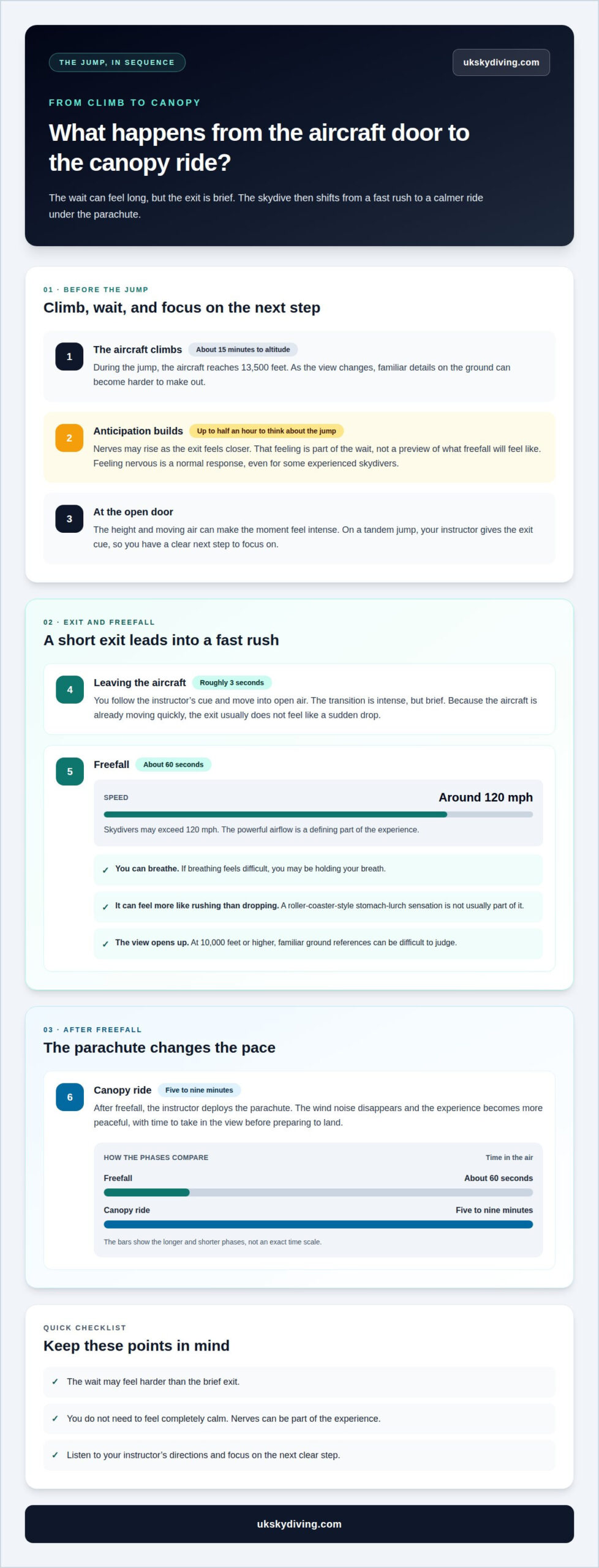
November 9, 2026 12:00 amWhat if the scariest part of skydiving happens before you leave the aircraft? When people ask what’s the scariest part of skydiving, anticipation as the exit approaches is often the answer. That nervous build-up is understandable, even if freefall feels different from what you expect.
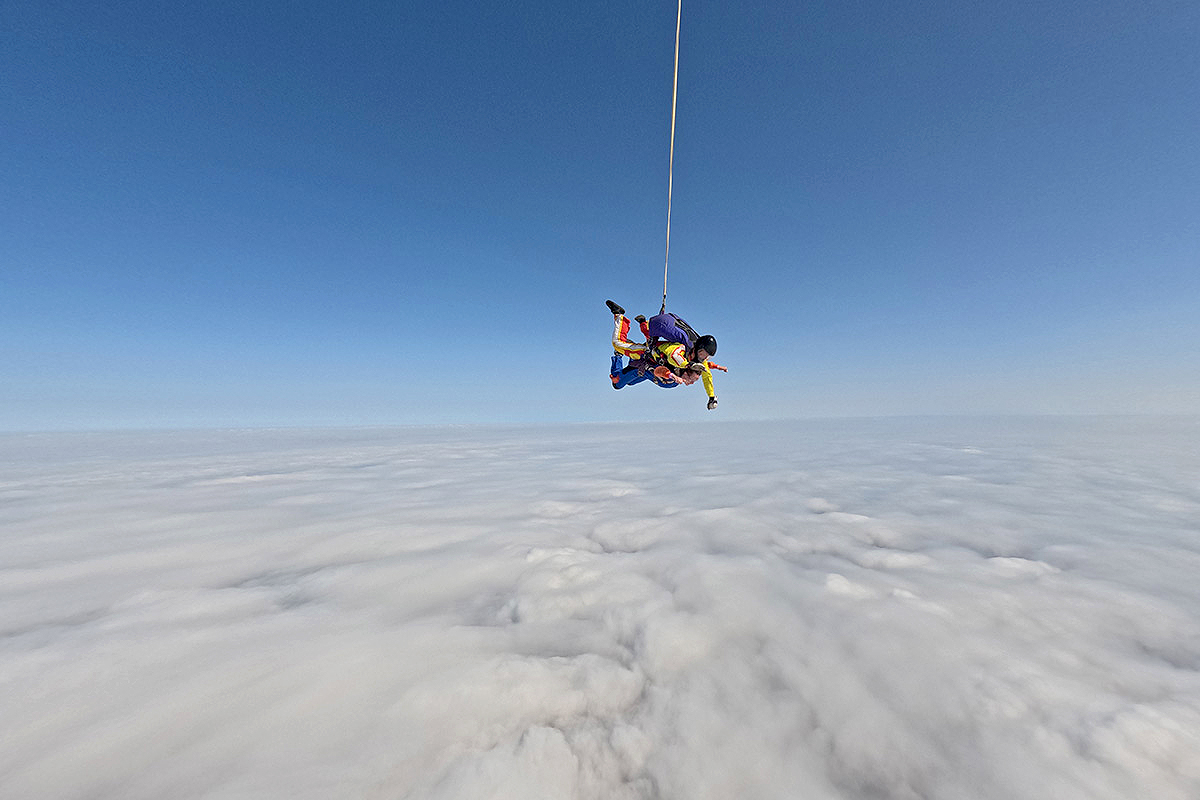
The aircraft is already moving quickly, so stepping out doesn’t usually feel like a sudden drop. Instead, you’ll experience a powerful rush of air, with freefall reaching around 120 mph and lasting about 60 seconds. You can breathe, and that familiar stomach-lurch sensation from a roller coaster isn’t usually part of it.
If the thought of the door opening makes your stomach flutter, you’re not alone. This article explains what the exit and freefall can feel like, why the wait may be the hardest part, and why nerves are a normal response. You’ll also learn what changes when the parachute opens and the pace becomes calmer.
Key Takeaways
- Understand why the wait to exit can feel more daunting than the jump itself.
- Get a clearer sense of the shift from intense freefall to a calmer canopy ride.
- Recognise that feeling nervous before jumping is a normal part of the experience, even for some experienced skydivers.
- Explore how a tandem skydive or an Accelerated Freefall course could suit your next step into skydiving.
What freefall feels like
Freefall combines powerful airflow, speed and a wide-open view. It lasts about 60 seconds, while the canopy ride gives you several minutes to take in the surroundings.
The Sensation of Falling
Freefall feels more like rushing through the air than dropping straight down. The aircraft is already moving at roughly the speed a skydiver travels after exit, so leaving it usually doesn’t create a sudden falling sensation.
At 10,000 feet or higher, familiar ground reference points can disappear, making the height feel difficult to judge. You may notice the force of the air and the vast view instead. Freefall also doesn’t usually create the stomach-dropping feeling associated with a roller coaster, so the sensation can surprise first-time jumpers.
Breathing in Freefall
You can breathe during freefall, even with air rushing past your face. The sensation is intense, but the airflow doesn’t mean you’re unable to breathe.
If it feels difficult to breathe, you may be holding your breath. Remembering to breathe can help you stay present and take in the experience instead of focusing only on the speed. On a tandem jump, your instructor is with you, so you can focus on the moment and follow their guidance.
Freefall Speed
Skydivers can travel at around 120 miles per hour during freefall, and may exceed 120 mph. That answers the question of how fast skydivers fall: it’s a high-speed rush, not a slow descent.
The aircraft is already travelling quickly when you exit, which helps explain why the transition doesn’t feel like a sudden drop. At that speed, airflow becomes a defining part of the experience. Knowing this beforehand can make the sensation less mysterious, even though it’s hard to imagine the rush from the ground.
Freefall and Canopy Time
Freefall lasts about 60 seconds, while the canopy ride lasts five to nine minutes. That contrast gives the skydive two distinct phases: a brief, fast rush followed by more time to look around.
After freefall, the instructor deploys the parachute. The wind noise disappears as the canopy opens, and the experience becomes more peaceful. You can enjoy the view during the longer canopy ride before preparing to land. The change of pace is striking: an intense minute gives way to several calmer minutes in the air.
Exiting the aircraft
The aircraft ride to altitude can leave time for nerves to build. During the jump, the plane climbs to 13,500 feet, and the exit lasts roughly three seconds.
Anticipation Before the Exit
Anticipation is the mental build-up before the aircraft door opens, and it can make the wait feel harder than the exit itself. The plane ride may give you up to a half hour to think about the jump. As the view changes, nerves can rise because the moment feels closer. That reaction is part of waiting, not a preview of how freefall will feel.
Fear at the Open Door
At the open door, the height feels immediate. You can see the landscape below and feel air moving through the aircraft. The contrast between the cabin and open sky can make nerves spike. On a tandem jump, your instructor gives the exit cue, giving you a specific action to focus on rather than imagining every possible outcome. The doorway can feel intimidating without defining the whole experience.
Climbing to altitude usually takes about 15 minutes. During the jump, the aircraft reaches 13,500 feet, and familiar details below become harder to make out. That gradual change gives you a clear sense of the climb, while leaving time for thoughts about the exit to build.
Leaving the aircraft takes roughly three seconds. You follow the instructor’s cue and move into open air, rather than waiting at the doorway for a long pause. The transition is intense but brief. Separating that short moment from the longer wait can make the sequence easier to picture.
Explore what to expect from a first skydive as you consider taking that step.
Anticipation and anxiety before a skydive
Anticipation can make the plane ride feel more challenging than the jump itself. Skydiving involves unfamiliar sensations, so feeling scared before leaving the aircraft is understandable.
The build-up has a clear timeline. The ride to altitude can give you up to a half hour to think about jumping, and each change in the view can make the exit feel closer. Your feelings may shift from excitement to nerves, then back again. Naming that anticipation can help you recognise it as part of the wait, rather than a sign that you can’t do the jump.
Age, weight and health all matter when considering tandem skydiving in the UK. There isn’t one age or weight figure that applies as a universal requirement, and individual health circumstances can affect suitability.
Skydiving accident and serious-injury statistics can be hard to compare because different sources may define accidents differently or measure them over different periods. An incident count and a serious-injury rate describe different things.
For a tandem jump, you’re securely harnessed to a professional instructor. Tandem instructors may have thousands of jumps behind them, so you have an experienced person alongside you during the experience.
Even experienced skydivers can get butterflies, so nerves aren’t limited to first-time jumpers. During the plane ride, focus on the next clear step, such as listening to your instructor’s directions. You don’t need to feel completely calm to take part. Understanding what you’re feeling can make the anticipation less mysterious and help you decide how you want to approach the jump.
How normal it is to feel nervous before skydiving
Feeling nervous before a jump is a normal response to an unfamiliar experience. Even experienced skydivers can get butterflies. On your first tandem jump, the aircraft, open door and decision to leave can each bring a different wave of nerves. You don’t need to feel completely calm for those feelings to be real or to take the next step.
Fear can come from imagining the unknown, not just from the jump itself. You might worry about how the harness feels or what the moment of exit will be like. Naming the specific concern gives you something clear to discuss with your instructor. It can also help you separate what you know from what your imagination adds.
To manage fear before your first skydive, focus on one immediate step at a time. Listen to your instructor’s directions and bring your questions to them before the jump. If your thoughts race during the aircraft ride, return your attention to a simple action, such as listening for the next instruction. This won’t make your nerves disappear, but it can make the experience feel less overwhelming.
Remember that nervousness and excitement can sit side by side. You might feel apprehensive while still wanting to go ahead. Give yourself room to notice both feelings instead of judging them. Being scared doesn’t automatically mean you can’t enjoy jumping. The experience unfolds through distinct moments, from preparation with your instructor to the view under canopy.
If you’re considering a tandem jump, get in touch about your first skydive and share what’s making you nervous.
UK Skydiving
UK Skydiving offers experiences for different goals, whether you’re curious about your first skydive or want to learn the sport. Knowing that nerves are normal can help you decide which kind of experience feels right for you.
For beginners, the Tandem Skydive Experience means you’re securely harnessed to a professional instructor for a jump from up to 13,000 feet. You can focus on taking in the experience while your instructor guides the jump. If the thought of leaving the aircraft is what worries you, knowing you’ll be connected to an instructor may help make the experience easier to picture.
If you’re interested in progressing beyond a first jump, the Accelerated Freefall (AFF) Course is a route to explore. It’s for people who want to learn to skydive solo. The options serve different aims, so consider whether you want a one-off tandem experience or to develop your skills.
Charity Jumps connect a skydive with fundraising, while Video and Photo Packages can capture the experience. They’re relevant if sharing the moment or supporting a cause is part of what makes jumping meaningful to you. As you consider which experience fits your reasons for jumping, you can raise any concerns you have.
Feeling nervous doesn’t have to settle the decision on its own. Use what you’ve learned about the aircraft exit, freefall and calmer canopy ride to understand what lies ahead. UK Skydiving offers experiences to consider, whether you’re taking a first step or looking towards further training.
Contact UK Skydiving to discuss your questions and the experience you’re considering.
Take the Next Step at Your Own Pace
If you’re still wondering what’s the scariest part of skydiving, remember that your feelings matter more than anyone else’s expectations. You don’t have to prove anything by jumping, and you don’t need to rush your decision. Give yourself space to think about what interests you, what worries you and what would help you feel informed.
A conversation can be a useful next step, even if you’re still weighing up the idea. Share your questions and get a clearer sense of which experience might suit your goals. Whether you’re curious, keen to learn or considering a jump for a cause, start with what feels right for you.
Contact UK Skydiving with your questions, and take the next step when you’re ready. Feeling nervous doesn’t take away from the courage it takes to explore something new.
Frequently Asked Questions
What Is The Scariest Part of Skydiving?
For many first-timers, the hardest part is anticipating the jump. If you’re wondering what’s the scariest part of skydiving, it may be uncertainty about what happens next, rather than one sensation that frightens everyone. Break the experience into smaller moments: preparation, listening to your instructor and taking in the view. That can make the unfamiliar easier to picture.
Is It Scary to Skydive?
Skydiving can feel scary because it’s unfamiliar and intense. People react differently: one person might focus on the open aircraft door, while another feels more nervous during the climb. The experience changes after the parachute opens, bringing a different pace and atmosphere. Knowing these stages feel distinct can help you understand what you’re signing up for, without expecting yourself to feel only excitement.
Should You Go Skydiving If You’re Scared?
Feeling scared doesn’t automatically mean you shouldn’t skydive, but the decision should be yours. Consider what’s behind the fear: is it uncertainty about the experience, or do you feel pressured to take part? Write down your main concern and discuss it before deciding. A tandem jump is designed for beginners, with you securely harnessed to a professional instructor, but you should proceed only if you’re comfortable choosing it.
Should I Skydive if I’m Afraid of Heights?
Being afraid of heights doesn’t automatically tell you how you’ll feel during a skydive. For example, standing near a high balcony gives you nearby edges as clear visual reference points. At altitude, those details can be harder to distinguish, changing how height feels. Consider whether your fear comes from looking down from a fixed place or from being high above the ground. That distinction may help you decide what to ask.
What Actually Keeps You Safe?
A tandem system has a main parachute and a reserve parachute, plus an Automatic Activation Device. The device is designed to deploy the reserve when specified altitude and speed conditions are met. The instructor deploys the parachute during the skydive, and a certified parachute rigger packs, inspects and seals the reserve. These are separate safety features, not a guarantee that risk is absent.
What do first-time skydivers say is the scariest part of skydiving?
There isn’t one answer that fits every first-time jumper, but anticipation is often described as the hardest part. The aircraft ride gives you time to think about the jump, so nerves can build as the moment approaches. Someone else may find the open door most confronting. Identify which part worries you personally, then talk through that specific concern with your instructor before jumping.
Categorised in: Blog