Latest News
-
 4 ways to make your first skydive feel more manageable November 10, 2026
-
 What’s the Scariest Part of Skydiving? How Freefall Feels November 9, 2026
-
 Parental Consent for Skydiving and Young Jumpers November 8, 2026
-
 How to Position Your Body and Breathe During Freefall November 7, 2026
-
 Pressure Changes During Skydiving: Why Your Ears Hurt November 6, 2026
How to Position Your Body and Breathe During Freefall
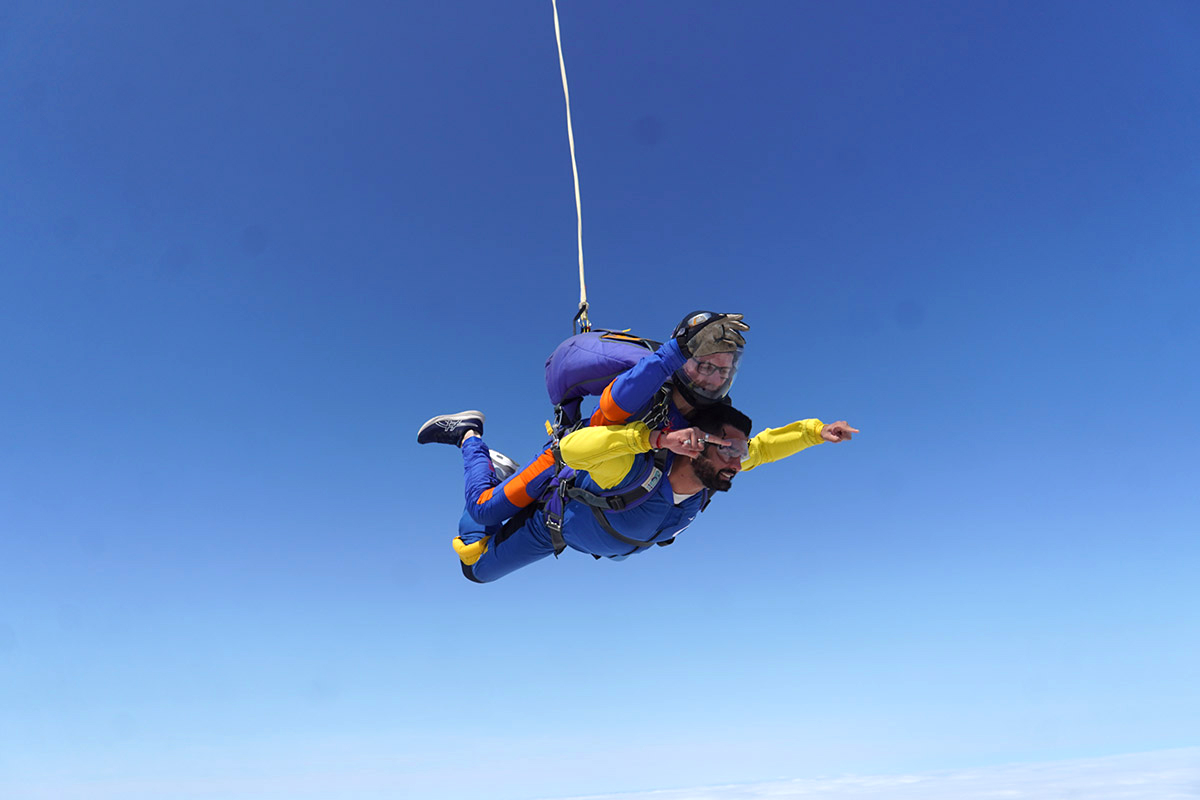
November 7, 2026 12:00 amFreefall feels intense, but you can breathe throughout it. If you’re wondering whether it’s hard to breathe in freefall, usually it isn’t. Rushing air and excitement can make each breath feel unfamiliar at first.
That concern makes sense. The wind is loud, your body is moving through the air, and it’s easy to tense up or hold your breath without meaning to. A typical tandem freefall lasts about 45 to 60 seconds, so a few calm, steady breaths can help you stay relaxed and enjoy the moment.
You’ll learn what breathing feels like during freefall and how to make it easier with a comfortable body position, a lifted chin and relaxed muscles. We’ll also cover simple ways to avoid breath-holding and what to do if the airflow feels overwhelming. Then you can focus less on worrying about your breathing and more on the incredible experience around you.
Key Takeaways
- Understand why breathing is manageable at typical skydiving altitudes and what can make it feel unfamiliar.
- Use a steady breathing rhythm and a deliberate exhale to help avoid breath-holding as you leave the aircraft.
- Lift your chin, look towards the horizon and relax your face and shoulders to make the airflow feel less intense.
- Discover how the Accelerated Freefall (AFF) Course can support you if you want to progress towards solo skydiving.
Can You Breathe When Skydiving?
Yes, you can breathe during freefall, and breathing is generally manageable for healthy people during short exposure at typical skydiving altitudes. Freefall airspeed is around 120 mph, with speeds of up to 160 mph, while typical jump altitudes range from 10,000 to 14,000 feet.
- Understand the altitude. A jump may begin at 14,000 feet or even 18,000 feet, where the air is about 40% less rich in oxygen than air at ground level. That doesn’t mean you suddenly can’t breathe. For healthy people, short-term exposure at typical skydiving altitudes generally doesn’t cause breathing problems, and a typical jump doesn’t require an oxygen tank. The change in oxygen availability can still make calm, steady breathing feel more important. Try imagining each breath as 40% deeper, rather than taking quick, shallow breaths. A typical tandem freefall lasts about 45 to 60 seconds, so focus on relaxed breathing through this brief, intense part of the jump.
- Notice what changes the sensation. At altitude, thinner air means less oxygen is available with each breath. Strong airflow, excitement and cold, dry air can also make breathing feel different from breathing on the ground. In some people, especially those with asthma or exercise-induced bronchoconstriction, cold air may temporarily narrow the airways. Keep your breathing steady and pay attention to how your body feels, rather than assuming that fast wind means you can’t inhale.
- Take breathing or lung concerns seriously. If you have a history of fainting or a medical condition that could affect your ability to skydive, discuss your circumstances with a healthcare provider before jumping. Asthma or other breathing difficulties deserve particular thought because cold, dry air can affect some airways. Don’t dismiss a relevant condition as ordinary nerves. Share the concern before the jump so it can be considered alongside your health and the demands of a brief freefall.
Avoiding rapid breathing and breath-holding
Adrenaline can make your breathing quick and shallow, especially as the aircraft approaches the exit. These steps can help you keep your breathing steady as you move from the ground into freefall.
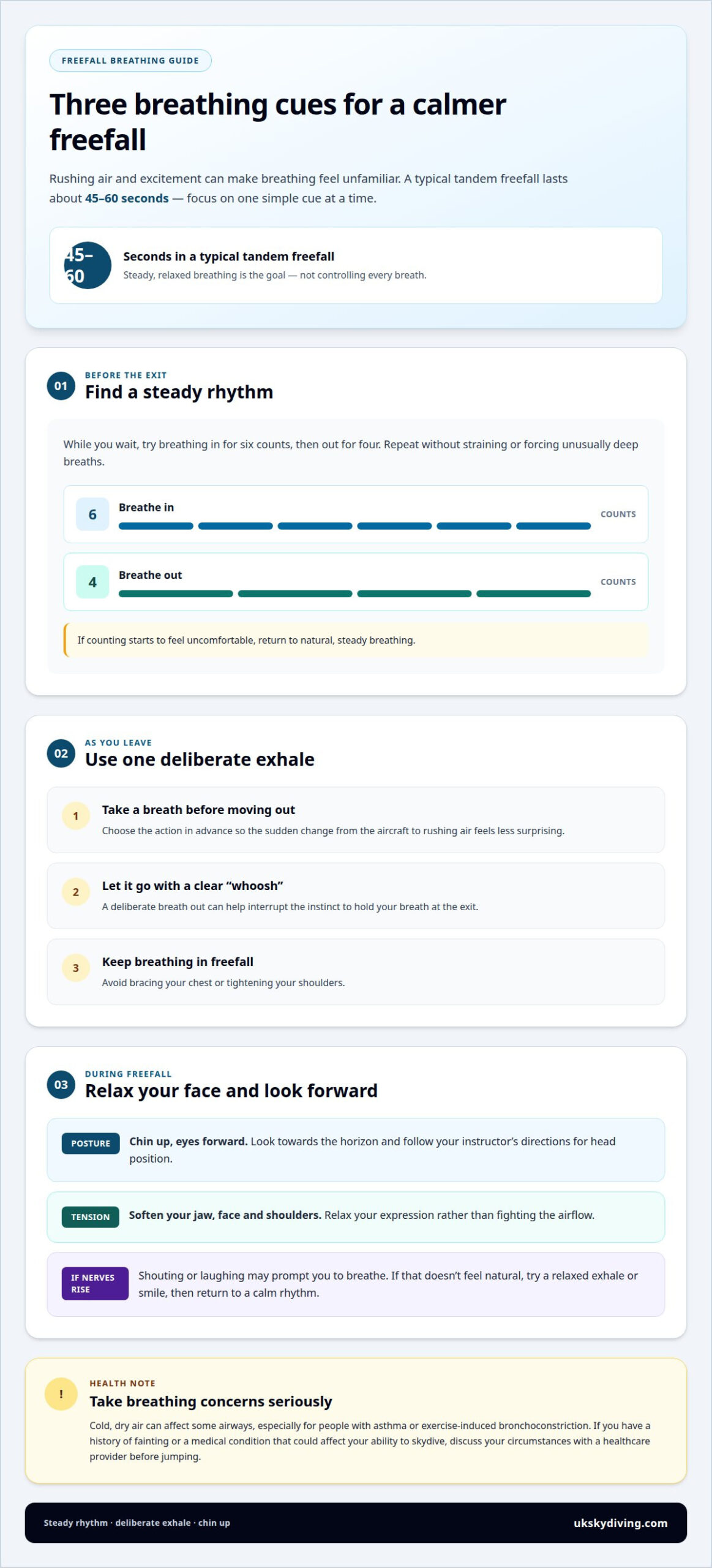
- Practise a steady rhythm during the ascent. Breathe in for six counts, then out for four counts. Repeat this pattern while you wait, without straining or forcing unusually deep breaths. A counted rhythm gives your attention a simple task when excitement builds. If the count starts to feel uncomfortable, return to natural, steady breathing instead. The aim is to stay relaxed, not to control every breath.
- Exhale as you leave the aircraft. A deliberate breath out can interrupt the instinct to hold your breath at the exit. Take a breath before moving out, then let it go with a clear “whoosh” as you leave. Keep breathing once you’re in freefall rather than bracing your chest or tightening your shoulders. The change from standing in the aircraft to rushing through the air is sudden, so choosing one simple action beforehand can help.
- Use your voice if nerves take over. Shouting or laughing during freefall can prompt you to breathe and help show a tandem instructor that you’re responsive. You don’t need to force a shout if it doesn’t feel natural. Try a relaxed exhale or a smile instead, then notice whether your jaw, hands and shoulders are tensing. Consciously soften those muscles and return to a calm rhythm. If you’re preparing for your first skydive, remember that normal conversation is difficult in rushing airflow, so focus on breathing rather than talking.
Body position and airflow across the face
Your head and posture can help make the rushing air feel less intense. During freefall, keep your chin lifted and look towards the horizon.
- Lift your head and find the horizon. Looking forward helps keep your chin up, which can make airflow across your face feel less overwhelming. Avoid tucking your chin towards your chest, even if the wind makes you want to curl inwards. Choose a point on the horizon and keep your gaze there. This gives you a simple visual focus instead of watching the ground rush past. In a tandem jump, follow your instructor’s directions for your head position.
- Keep your body in the taught freefall position. A stable, comfortable posture helps you face the airflow without fighting it. Listen to the instructions before the jump, then follow them as you leave the aircraft. Don’t try to twist or make sudden movements to escape the wind. If your face feels tense, soften your jaw and let your expression relax. A smile can help you release facial tension while keeping your head lifted.
- Let the air pass without holding your breath. Strong wind can feel startling against your cheeks, lips and nose, but that sensation doesn’t mean you need to turn your face away. Keep looking towards the horizon and breathe steadily. You can exhale or shout if it helps you relax. It’s easy to forget your posture when adrenaline takes over, so return to one clear cue: chin up, eyes forward. In a tandem skydive, concentrate on that cue and the instructor’s guidance rather than trying to control every part of your position.
Breathing during freefall
Breathing in freefall can feel unfamiliar, even when air is moving freely. These steps can help you distinguish rushing wind from breathing concerns.
-
Identify Why Freefall Breathing Feels Difficult
Notice what’s happening before changing your breathing. Strong airflow, cold, dry air and stress can make each breath feel more deliberate, even though you can breathe in freefall. The noise also makes ordinary conversation difficult, so don’t judge your breathing by whether you can speak normally. Compared with a wind tunnel, a skydive involves altitude, outdoor conditions and the intensity of the jump, though both expose your body to moving air.
-
Consider Asthma During Freefall
Consider how your asthma responds to cold air before jumping. Cold, dry air can slightly increase airway resistance or trigger temporary airway narrowing, particularly in people with asthma or exercise-induced bronchoconstriction. If you have a medical condition that could affect your ability to skydive, discuss your circumstances with a healthcare provider before jumping. Describe any previous breathing symptoms and their triggers, such as cold air or exercise.
- Focus on one calm breath at a time. Breathe steadily and avoid tensing your chest or shoulders. Strong wind can make airflow feel forceful, so try breathing through your nose and relaxing your face as you exhale. Smiling may ease facial tension and keep your attention on the moment. If your chest feels tight, shouting may prompt you to inhale naturally. Remember, noisy airflow and difficulty speaking don’t automatically mean you can’t breathe. Pay attention to your body, follow your training and focus on steady breaths while jumping.
UK Skydiving: Accelerated Freefall (AFF) Course
UK Skydiving’s Accelerated Freefall (AFF) Course is a next step if you want to progress towards skydiving solo. The breathing techniques in this guide can help you feel more prepared, while AFF is for people ready to develop their skills beyond a single experience. If you mainly want to experience freefall with an instructor, a Tandem Skydive Experience may suit you better. The choice depends on whether you want a tandem jump or a course towards solo skydiving. Practise calm breathing and listen carefully to instructions as you prepare. If you’re considering AFF, contact UK Skydiving to discuss your next step.
Make your next move with confidence
If you’re still wondering whether it’s hard to breathe in freefall, use that question to guide a practical next step: choose the type of jump that suits your goals and discuss any breathing concerns before you go. UK Skydiving offers a Tandem Skydive Experience for experiencing freefall with an instructor, an Accelerated Freefall (AFF) Course for progressing towards solo skydiving, and Charity Jumps that combine a skydive with fundraising.
You don’t need to feel completely fearless before taking that step. Asking clear questions and understanding what to expect can help you feel more prepared. A skydive is a remarkable challenge, and choosing the right experience lets you approach it at your own pace.
Contact UK Skydiving to ask about breathing and discuss which experience feels right for you. Your next great adventure can start with one conversation.
Frequently Asked Questions
Can you breathe in freefall?
Yes, you can breathe in freefall. If you’re wondering, “Is it hard to breathe in freefall?”, healthy people generally don’t have breathing problems during brief exposure at typical skydiving altitudes. A typical jump doesn’t require an oxygen tank. If you notice yourself tensing your chest, relax your shoulders and breathe naturally. The wind may feel dramatic across your face, but it doesn’t stop you inhaling.
Can you suffocate while skydiving?
A typical skydive doesn’t cause suffocation. Skydivers can breathe during freefall, and a typical jump doesn’t require an oxygen tank. Rushing air can make breathing feel unfamiliar, especially if you’re anxious or tense. Focus on relaxing your body rather than bracing or holding your breath. If you have a condition that could affect your breathing, discuss it with a healthcare provider before jumping.
Can you talk while skydiving?
You can yell or laugh during freefall, but rushing airflow makes a normal conversation difficult. A shout is a simple way to express excitement and shows that you’re breathing. Don’t worry about forming full sentences. Save conversation for after landing, and use a laugh or cheer to share the moment in the air.
Do You Get The Stomach Drop Feeling When Skydiving?
The classic stomach-drop feeling doesn’t usually happen as you leave the aircraft. The plane is already moving forward, so exiting doesn’t feel like stepping off a stationary ledge. You may feel a different sensation during turns under the parachute, when the force can swing your body sideways. If you’re concerned about motion sickness, an instructor can adjust how the parachute is flown.
Is it possible to pass out while skydiving?
Passing out during a skydive is rare and isn’t a normal part of the experience. Staying hydrated and eating before your jump can help reduce the risk of fainting. If you’ve fainted before or have a medical condition that could affect your ability to skydive, discuss your circumstances with a healthcare provider before jumping. Address any history of fainting before your jump.
Is it difficult to breathe during a skydive freefall?
The question “Is it hard to breathe in freefall?” has a straightforward answer for healthy people: usually, no. Strong wind and stress can make breathing require more conscious attention. Cold, dry air may temporarily narrow the airways in some people, especially those with asthma or exercise-induced bronchoconstriction. If you have asthma, consider how cold air affects you and discuss relevant concerns with a healthcare provider before jumping.
Categorised in: Blog