Latest News
-
 4 ways to make your first skydive feel more manageable November 10, 2026
-
 What’s the Scariest Part of Skydiving? How Freefall Feels November 9, 2026
-
 Parental Consent for Skydiving and Young Jumpers November 8, 2026
-
 How to Position Your Body and Breathe During Freefall November 7, 2026
-
 Pressure Changes During Skydiving: Why Your Ears Hurt November 6, 2026
4 ways to make your first skydive feel more manageable
November 10, 2026 10:00 amYour first skydive doesn’t have to feel effortless to be unforgettable. A little preparation can make the day feel more manageable, even when nerves and excitement arrive together.
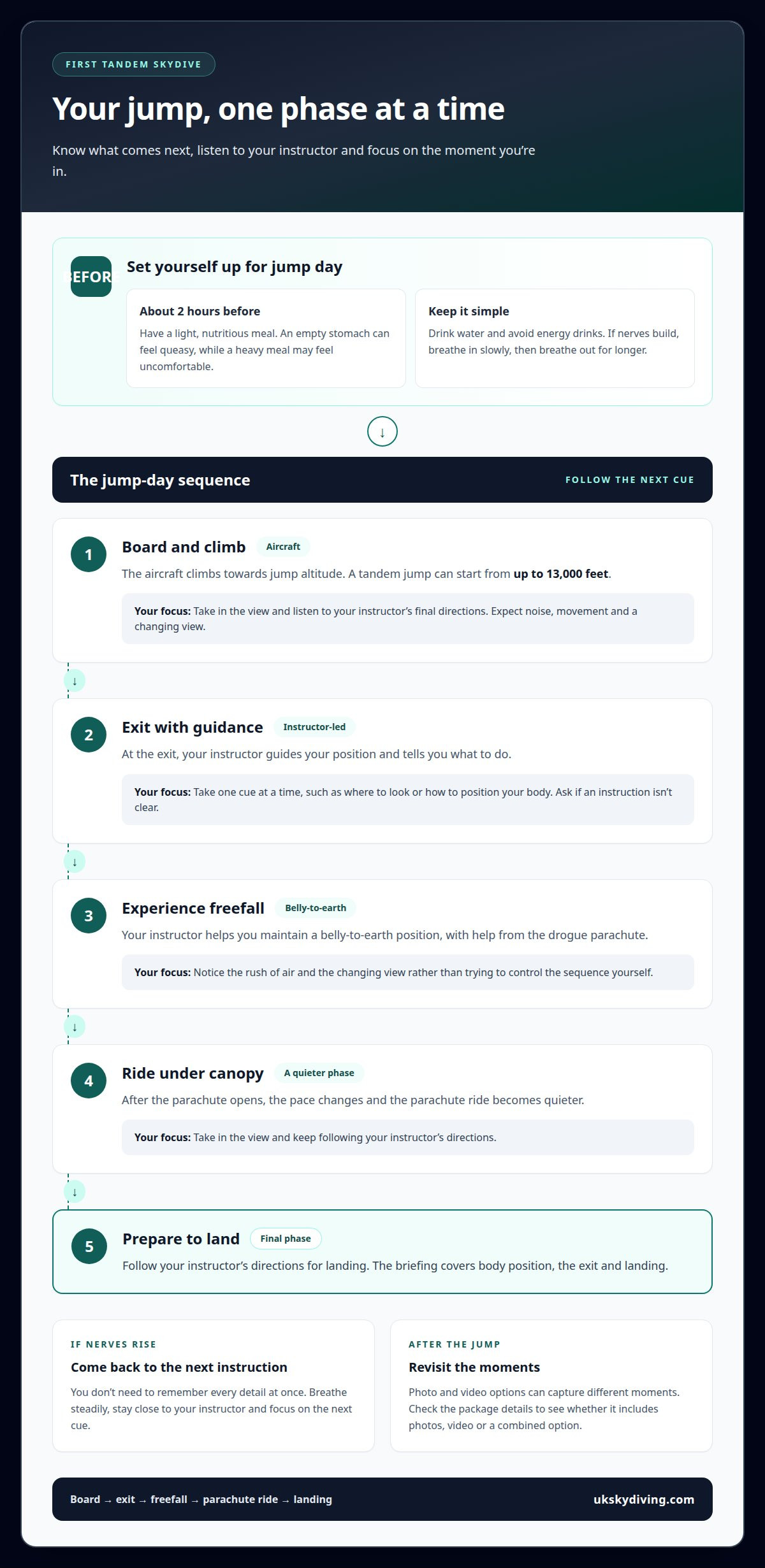
Learning how to make the most of your first skydive starts before you reach the plane: know what to expect at check-in, listen closely to your briefing and let your instructor guide you through each step. On jump day, focus on one moment at a time, from the climb to altitude to the parachute ride and landing.
This guide covers practical ways to feel prepared, manage pre-jump nerves and enjoy the experience as it unfolds. You’ll also learn how photo and video packages can help you keep a vivid record of your first leap.
Key Takeaways
- Arrive prepared for check-in, pay close attention to the briefing and understand what your chosen package includes.
- Use steady breathing and focus on your instructor’s directions to make the moments before exit feel more manageable.
- Know how the plane ride, freefall, parachute ride and landing fit together, and prepare with suitable food and drink.
- Consider photo and video options if you’d like to revisit the experience after your jump.
Check-in, briefing and equipment
For your first tandem skydive in the UK, bring government-issued identification and arrive by the time stated in your booking confirmation. Follow the drop zone’s travel directions and allow time to check in before your scheduled activity. If you have long hair, bring a hair tie to secure it before putting on your equipment.
Check-in is also the time to raise anything that could affect your jump. Pay close attention during the briefing, and ask your instructor to clarify any instruction you’re unsure about. You’ll receive guidance on body position, the exit and landing. During equipment preparation, follow staff instructions as they fit you with a jumpsuit and tandem harness.
Medical paperwork matters too. If you have a condition listed on Form 115C, you must be certified fit to skydive, with Form 115D signed by your GP. Allow time to arrange this before jump day, rather than leaving it until arrival. A full night’s rest also helps you arrive ready to listen and take part in the briefing.
Booking, travel and cancellation policies differ between UK drop zones, so read your booking confirmation for the arrival time, directions, rescheduling terms and cancellation conditions. Before paying, check what’s included and whether optional extras, such as photo or video packages, cost extra. Review any separately charged items in the booking terms. This helps you plan your travel and budget without surprises at check-in.
Managing nerves before a first skydive
Nerves are normal before a first jump. While you’re waiting, try a breathing reset: breathe in slowly, then breathe out for longer. Repeat a few times and focus on the next instruction, not the whole jump. A good night’s rest before jump day can also help you arrive alert and ready to listen.
As the aircraft climbs, expect noise, movement and a changing view through the windows. Stay close to your instructor and listen for each direction. Before you exit, your instructor will guide your position and explain what to do. You don’t need to remember every detail at once. Focus on the next cue, such as where to look or how to position your body, and ask if an instruction isn’t clear.
UK age and weight requirements depend on the drop zone and jump type. Health suitability depends on your circumstances. If you have a condition listed on Form 115C, you must be certified fit to skydive, with Form 115D signed by your GP. Raise concerns before jump day so you understand the required steps.
Tandem skydiving carries risks, so follow the briefing and your instructor’s directions throughout. Weather can also change the plan: jump times depend on conditions, and early mornings are often calmer with clearer visibility. If conditions aren’t suitable, the schedule can be delayed or cancelled. For a clear picture of what a first jump involves, explore the tandem skydive experience.
Plane ride and jump-day expectations
About two hours before your jump, have a light, nutritious meal. An empty stomach can leave you feeling queasy, while a heavy meal may feel uncomfortable. Drink water and avoid energy drinks. Be ready to follow the day’s sequence, from boarding the aircraft to landing.
Once aboard, the aircraft climbs towards the jump altitude. For a tandem jump, the experience can start from up to 13,000 feet. Use the climb to take in the view and listen to your instructor’s final directions. The aircraft noise and height can make the moment feel intense, so focus on the next instruction rather than trying to take everything in at once.
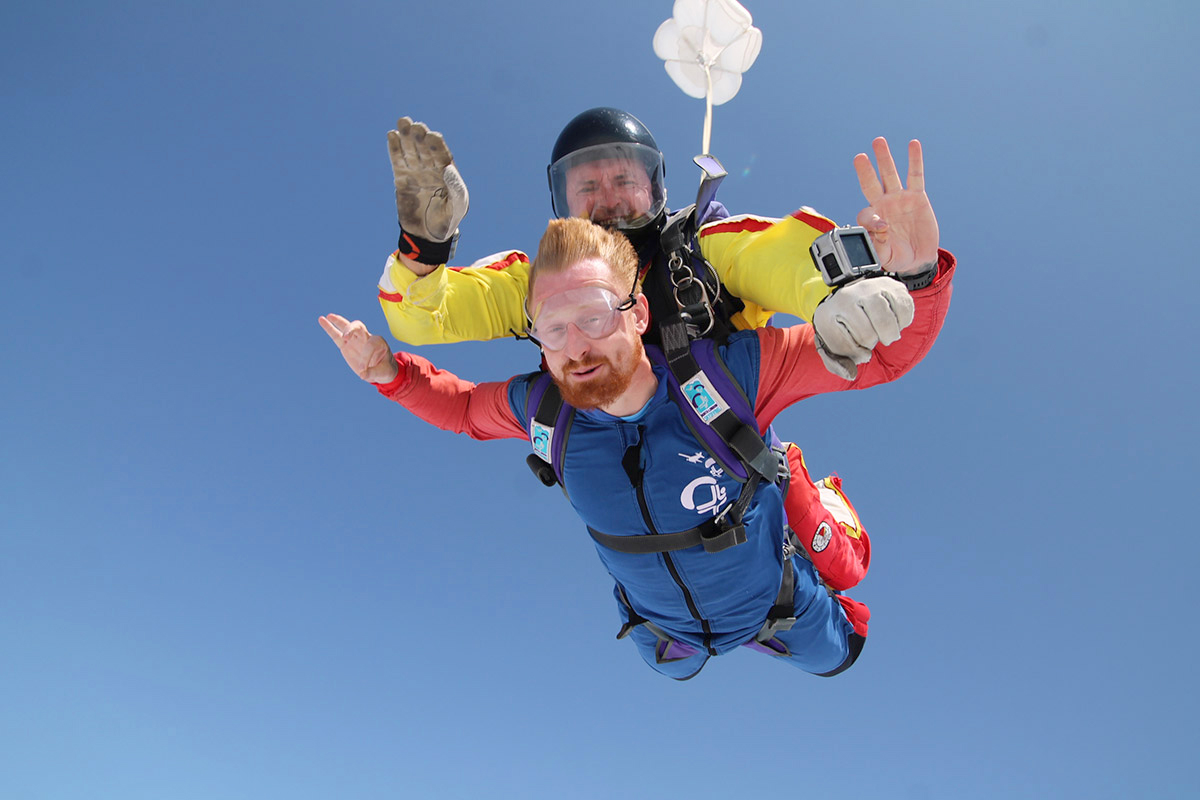
At the exit, follow your instructor’s cues. During tandem freefall, your instructor helps you maintain a belly-to-earth position, with help from the drogue parachute. Notice the rush of air and changing view rather than trying to control the sequence yourself. After the parachute opens, the pace changes. Take in the quieter canopy ride, then follow your instructor’s directions for landing.
In short, a tandem jump involves boarding and climbing, an instructor-guided exit, freefall, a parachute ride and landing. Let each phase have its moment. If you’re planning your budget, compare what your booking includes with optional extras, such as photo or video packages. The jump format and selected extras affect the cost, so review the details before booking. That helps you avoid unexpected add-ons and decide whether recording the jump is part of your plan.
Recording the experience with photos and video
A first skydive moves through distinct moments: the aircraft climb, exit, freefall, parachute ride and landing. Photos or video can help you revisit details that pass quickly in the excitement. Before booking, decide whether you’d prefer still images, video footage or both. Then read the package details to understand what you’re selecting.
Think about what you’d most like to remember. You may want a record of your face before exit, the freefall itself or your reaction after landing. Photo and video packages can capture the experience differently. Choose based on the memories you value, rather than assuming every package includes the same format or moments.
Keep your expectations practical. The jump is fast-paced, and it’s normal not to notice every detail as it happens. A recording can give you another perspective afterwards, but it doesn’t replace taking in the view and following your instructor’s directions. During the jump, focus on the experience. You can enjoy the images or footage afterwards and take time to relive the thrill.
Before you choose an add-on, look at the package description and note what it says about photos, video or combined options. If you’re booking for a special occasion, consider which moment you’d most like to share with friends or family. UK Skydiving offers Video and Photo Packages for recording your jump. Explore photo and video options as you plan how to keep a record of your first skydive.
UK Skydiving: Tandem Skydive Experience
UK Skydiving offers a Tandem Skydive Experience for beginners who want to jump securely harnessed to a professional instructor. The jump is from up to 13,000 feet, giving you the chance to experience skydiving without committing to solo training. If you’re wondering how to make the most of your first skydive, start by choosing an experience that matches what you want from the day.
With a tandem jump, your instructor guides you through the experience, so you can focus on their directions and the changing view. The briefing explains what to expect and how to respond at key moments. Ask about anything you’d like clarified, then concentrate on one cue at a time. Knowing how to make the most of your first skydive can be as simple as staying present and letting the experience unfold.
Consider the Tandem Skydive Experience for a one-off adventure, a personal milestone or a memorable day with someone. For many people, tackling a skydive is part of a broader passion for bucket-list adventures, whether that means local thrill-seeking or planning bespoke holiday travel with services like ronyegsafaris.com. If you want to learn to skydive solo, UK Skydiving also offers an Accelerated Freefall (AFF) Course. Charity Jumps are an option if you want to combine a skydive with fundraising. The right choice depends on your aim: trying something new, learning a skill or supporting a cause.
UK Skydiving also offers Video and Photo Packages if you’d like a record of your jump. Think about the moments you’d most want to revisit or share, and whether recording the experience fits your plans. Take time to decide what matters to you before choosing your next step. If a tandem jump feels right, contact UK Skydiving to discuss your plans.
Choose the experience you want to remember
Your first jump can be more than a box ticked. Think about what you want the experience to mean: a personal challenge, a shared fundraising effort or the start of learning to skydive. That intention can help you choose the right next step and feel more connected to the day.
A useful way to make the most of your first skydive is to focus on the feeling you want to carry away, rather than trying to do everything perfectly. UK Skydiving offers a Tandem Skydive Experience for beginners, Charity Jumps for fundraising and an Accelerated Freefall (AFF) Course for those who want to learn to skydive solo. Each offers a different way to take your interest further.
If you’re ready to explore what suits your plans, contact UK Skydiving. Take the next step at your own pace, and look forward to an experience you’ll be proud to remember.
Frequently Asked Questions
What’s the Deal with First-Time Skydiving?
For a first jump, tandem skydiving lets you experience the jump securely harnessed to a professional instructor. If you’re curious about learning to jump solo, that’s a different route: UK Skydiving’s Accelerated Freefall (AFF) Course provides structured training. Consider whether you want a one-off adventure or a course of instruction, then choose the option that fits your goal.
What should I wear and bring for a first skydive?
Choose comfortable clothes that let you move easily, and wear secure footwear that stays on your feet. Avoid loose accessories that could distract you or get in the way while you prepare. Keep personal belongings together before gearing up, and leave valuables somewhere secure. The drop zone supplies the jump equipment, while your booking information explains what to bring for your visit.
How can I stay calm and enjoy my first skydive?
Tell your instructor clearly if one moment worries you, such as leaving the aircraft or landing. They can explain what to expect and which direction to follow. During the jump, focus on one instruction at a time rather than trying to predict every sensation. After landing, take a moment to notice how you feel before rushing to describe the experience.
How much does a first tandem skydive cost in the UK, and what is included?
The price depends on the jump and the options you select, and is provided after a quote request. Check the quote to see what the Tandem Skydive Experience includes, then look for separately priced extras such as Video and Photo Packages. Comparing the listed inclusions with your priorities helps you understand the total cost before deciding. No single price applies to every booking.
What are the UK age, weight and health requirements for skydiving?
UK age and weight requirements depend on the drop zone and jump type. Health suitability depends on your circumstances. Anyone with a condition listed on Form 115C must be certified fit to skydive, with Form 115D signed by their GP.
What are the risks and safety record of tandem skydiving?
Tandem skydiving carries risks, so follow the briefing and your instructor’s directions throughout. For information about the safety record, contact the drop zone directly.
Categorised in: Blog