
Latest News
-
 Skydiving as a Confidence Booster: How One Jump Can Change Your Life September 20, 2026
 -
 How to Convince Your Parents to Let You Skydive September 19, 2026
 -
 How to Land a Parachute Safely: A Beginner’s Guide September 18, 2026
 -
 Static Line vs AFF: Choosing Your Path to Solo Skydiving in 2026 September 17, 2026
 -
 Skydiving A License: Your Passport to the Skies September 16, 2026
What Shoes to Wear for Skydiving: The Ultimate 2026 Footwear Guide
August 11, 2026 10:00 amYour choice of footwear is the only thing standing between a flawless landing and an accidental barefoot trek across a Cambridgeshire field. It sounds dramatic, but when you are hurtling toward the earth at 120mph, the last thing you want is to see your favourite trainer arching away into the clouds. You have likely spent the morning wondering what shoes to wear for skydiving and whether your current wardrobe is up to the task of a 15,000ft leap. It is completely natural to feel a flutter of nerves about losing a shoe in freefall or protecting your ankles during a grass landing in the unpredictable UK weather.
We understand that this is more than just a jump; it is a life-altering milestone that deserves professional preparation. This guide provides the exact footwear blueprint you need to stay safe and focused on the adrenaline surge. You will discover the specific safety requirements set by British Skydiving, learn which shoes are strictly banned at the drop zone, and get practical tips for your morning prep. We are here to ensure you feel confident, secure, and ready to embrace the ultimate thrill with total peace of mind.
Key Takeaways
- Understand why your footwear choice is critical for managing 120mph winds and ensuring a smooth, safe landing on the drop zone.
- Discover exactly what shoes to wear for skydiving to ensure you meet British Skydiving safety standards while staying comfortable throughout the experience.
- Identify the specific “no-fly” footwear, such as boots with hooks or slip-on shoes, that are strictly prohibited for safety reasons.
- Master the final checks for laces and fit on the morning of your jump so you can board the aircraft with total confidence.
- Learn how professional gear preparation allows you to stop worrying about your equipment and fully embrace the life-changing thrill of your freefall.
Why Your Choice of Footwear Matters for a Safe Landing
Skydiving is the pinnacle of human experience. It is a high-speed, adrenaline-fuelled journey that transforms your perspective on the world. While you might be focused on the breathtaking view from 15,000 feet, every piece of your gear must be up to the challenge. Deciding what shoes to wear for skydiving is a critical part of your professional preparation. Your footwear isn’t just a style choice; it’s a functional tool designed to handle extreme wind speeds and a precision landing on the Cambridgeshire turf.
The landing is the most vital moment for your feet and ankles. It is the glorious conclusion to your 120mph freefall. Most tandem landings in the UK involve a controlled, seated slide. This technique requires your feet to be positioned correctly to ensure a smooth transition from the air to the earth. If your shoes are bulky, loose, or inappropriate, they can interfere with this process. Safety is our absolute priority, and the right shoes ensure you can focus entirely on the thrill of the jump.
The Physics of Freefall and Your Feet
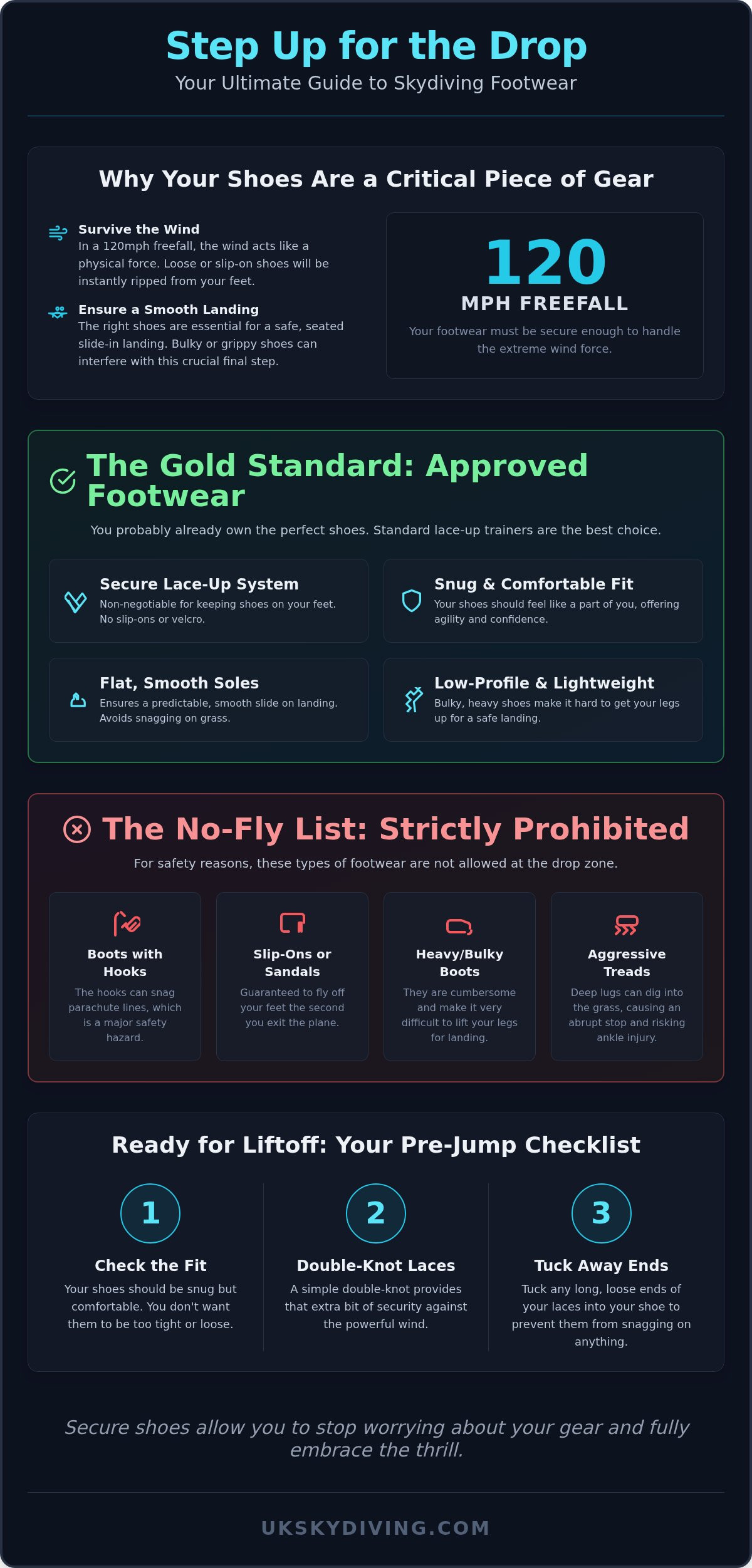
Freefall is intense. You are hurtling through the sky at 120mph. At these speeds, the wind behaves like a physical force. If your shoes are loose or poorly secured, the rushing air can easily strip them from your feet. Imagine the frustration of completing the jump of a lifetime only to realise one of your trainers is now a permanent resident of a farmer’s field. A secure, lace-up fit is non-negotiable for keeping your property where it belongs.
During the freefall itself, you won’t actually feel the weight of your shoes. The sensation is one of total freedom and weightless exhilaration. However, knowing your footwear is locked on tight provides the mental reassurance you need to enjoy the moment. While your parachute is the primary piece of safety equipment, your shoes are the supporting cast that ensures the entire experience is seamless from exit to earth.
The Tandem Landing Slide
We teach every tandem student the “legs up” position. This is the gold standard for a safe arrival. As you approach the drop zone, your instructor will command you to lift your legs toward your chest. This allows the instructor to make the initial contact with the ground, usually resulting in a soft, seated slide across the grass. It’s a fun, simple way to finish your adventure.
Smooth soles are your best friend during this slide. You want footwear that can glide over the grass without catching or digging in. This prevents any sudden jolts to your ankles or knees. By choosing the right trainers, you are choosing a safe, professional, and exhilarating end to your milestone event.
The Gold Standard: Why Trainers Are the Best Shoes for Skydiving
You don’t need NASA-grade equipment to conquer the clouds. In fact, the most sophisticated piece of gear you’ll bring to the drop zone is likely already sitting in your hallway. When first-timers ask what shoes to wear for skydiving, they are often thrilled to learn that standard lace-up trainers are the absolute gold standard. They offer an unbeatable combination of flexibility, comfort, and protection. Whether you are walking to the aircraft or preparing for a seated slide on the grass, your trainers are your best allies.
Many international guides will talk about “sneakers,” but for our jumps in Cambridgeshire, we stick to the classic British trainer. You want something that feels like a second skin. Trainers provide the agility you need in the plane and the protection required for a safe, exhilarated arrival. They are designed to move with you, ensuring you feel light and unrestricted as you prepare for the ultimate adrenaline surge.
The Ideal Skydiving Trainer
Security is everything. You are about to experience freefall at 120mph; this is not the time for slip-ons or velcro. You need a secure lace-up system that keeps the shoe firmly anchored to your foot. Ensure the sole isn’t excessively chunky or heavy. Bulky heels can be cumbersome when you’re trying to tuck your legs into the correct position for landing. The ideal trainer for your jump is a low-profile, lace-up shoe that fits snugly and features a smooth exterior free of hooks or loops.
Why Flat Soles Win Every Time
Professional skydivers almost exclusively wear flat-soled shoes like Vans or Converse. There’s a brilliant reason for this. Flat soles provide a predictable, consistent surface for the landing slide. They don’t have aggressive treads that might catch on the grass or the fabric of your jumpsuit. This predictability is vital for a smooth arrival. You want to glide, not snag.
Flat soles also give you a better “feel” for the floor of the aircraft. When you’re moving toward the door for that life-changing exit, you want to feel stable and grounded. Many experts across the globe recommend this approach in any comprehensive skydiving footwear guide. Skate-style shoes are particularly popular because they are built for durability. They can withstand the rigours of multiple jumps while keeping your feet protected. Running shoes with a decent grip are also a fantastic choice, provided they aren’t overly bulky. Trust your trainers; they are the key to a safe and exhilarating adventure.
The No-Fly List: Shoes You Should Never Wear to Jump
While we love the thrill of the skies, safety is the foundation of every exhilarating leap. Some footwear choices are simply non-negotiable. If you arrive at our Cambridgeshire drop zone in the wrong gear, our instructors will have to ground your feet until you find a suitable replacement. Understanding what shoes to wear for skydiving means knowing exactly what to leave in the wardrobe. Prohibited footwear isn’t just about comfort; it’s about preventing life-threatening gear malfunctions and ensuring a flawless landing for both you and your instructor.
High heels, wedges, and platform shoes are strictly banned. They are a disaster waiting to happen during the landing slide. Imagine trying to tuck your legs up and slide on grass while wearing a four-inch stiletto. It’s impossible. These shoes pose a massive risk of ankle injury and could easily strike your instructor during the descent. We want your experience to be a triumphant milestone, not a trip to the local A&E. Keep the fashion statements for the post-jump celebrations.
The Hidden Danger of Hiking Boots
Many adventurers assume hiking boots are the perfect choice for an outdoor activity. However, traditional hiking boots with metal lace hooks are the biggest “no-go” in the skydiving industry. These small metal hooks are a major safety hazard. During the critical moment of parachute deployment, a loose line can snag on a metal hook. This can lead to a “line over” or a dangerous entanglement that prevents the canopy from opening correctly.
The risk is real. Because of this, most UK drop zones will flatly refuse to let you board the aircraft if your boots have exposed hooks. Even if you try to cover them with duct tape, the profile of the boot is often too bulky for a comfortable tandem harness fit. Stick to smooth-sided trainers to ensure your gear operates exactly as designed.
Why Open-Toed Shoes Stay on the Ground
Sandals, flip-flops, and sliders have no place at 13,000 feet. The temperature at altitude is significantly colder than on the ground; often dropping by 15 to 20 degrees Celsius. In the blast of a 120mph freefall, open-toed shoes offer zero protection against the biting cold. More importantly, they offer no security. A flip-flop will be stripped from your foot the second you exit the plane, becoming a dangerous projectile for anyone below.
Slip-on shoes are equally problematic. Without a secure lace-up system, the force of the wind will simply peel them off. We want you to focus on the sensory explosion of freefall, not the sight of your sandal drifting toward the North Sea. Choose footwear that is locked on tight, protecting your toes and your pride.
Preparing for Your Jump: Laces, Fit, and Final Checks
Selecting your footwear is the first victory in your skydiving journey. But once you’ve decided what shoes to wear for skydiving, the way you secure them on the morning of the jump becomes your next priority. A shoe that is perfectly safe on the ground can become a liability if it’s loose or poorly tied. Professional preparation is the bridge between a good experience and a legendary one. You want to board that aircraft knowing every detail is handled.
Your instructor is the ultimate authority on gear. Before you even approach the aircraft, they will perform a final, meticulous check of your harness and your footwear. They are looking for absolute security. Don’t just tie them; feel them. Your shoes should be snug enough to feel like a part of your body but not so tight that they restrict your blood flow. We ensure you feel confident and ready before your feet ever leave the hangar floor.
The Double-Knot Rule
A standard bow is fine for a stroll through the park. It is not enough for a 120mph freefall. The sheer force of the wind can catch a loose loop and whip it undone in seconds. To prevent this, we insist on the double-knot rule. It’s a simple, effective way to ensure your trainers stay exactly where they belong while you’re hurtling through the air. This small step provides massive peace of mind.
Follow these steps for total security:
- Tie your standard bow as tightly as is comfortable.
- Secure that bow with a second, firm knot.
- Tuck the remaining loops and lace ends deep inside the sides of your shoe.
This tucking technique creates a smooth, aerodynamic profile. It removes any chance of the wind catching the laces or, more importantly, any risk of them snagging on the aircraft door or equipment during your exit. It’s about being sleek, safe, and ready for action.
Dressing for the Cambridgeshire Climate
Our drop zone in Cambridgeshire is a beautiful expanse of green, but the British weather is famously unpredictable. Even on a sunny day, the grass can be damp with morning dew or soft from a light shower. When deciding what shoes to wear for skydiving in these conditions, remember that most tandem landings involve a seated slide. Your shoes will make direct contact with the turf as you return to earth. You aren’t just jumping; you’re arriving with style on a natural landing strip.
Expect your trainers to get a little bit muddy or grass-stained during the slide. It’s a badge of honour from your adventure. Embracing the possibility of a little mud is part of the authentic skydiving experience. We highly recommend bringing a spare pair of shoes and a fresh set of socks for the journey home. There’s nothing quite like the feeling of slipping into clean, dry shoes after the adrenaline-soaked triumph of a landing.
Ready for Your Adventure at UK Skydiving?
You’ve done the research. Your trainers are ready. You finally know what shoes to wear for skydiving to ensure a safe, spectacular landing on the Cambridgeshire turf. Now, it’s time to shift your focus from your feet to the horizon. Skydiving is more than just a checklist of gear; it’s a transformative personal milestone that will stay with you forever. Our team is waiting to guide you through every heart-pounding second of the thrill. This is your moment to step outside the ordinary and embrace the extraordinary.
Booking your jump is the first step toward a life-altering accomplishment. We specialise in turning first-time flyers into legends. From the moment you arrive at our facility, you’ll feel the high-energy excitement that defines our community. We don’t just offer a service; we provide a gateway to a new perspective on life. You’re about to join an elite group of adventurers who have looked 15,000 feet down and said “yes.”
What to Expect on the Day
When you arrive at the drop zone, the atmosphere is electric. You’ll start with a professional briefing where our expert instructors walk you through every phase of the jump. They will perform a meticulous final gear check, ensuring your harness is snug and your footwear is secure for the 120mph wind. We’ve seen every type of trainer imaginable. We know exactly how to keep you safe. Our goal is to provide total peace of mind so you can focus on the sensory explosion of the freefall without a single worry about your equipment.
Take the Leap with Confidence
It’s time to stop overthinking the small details and start embracing the rush. Whether you’re looking for a personal challenge or want to support a cause through our charity jump opportunities, the reward is the same: an unparalleled sense of accomplishment. The freefall is an experience that words cannot capture. It’s a peak life event that redefines your limits. You’ll leave the aircraft as one person and land as another, carrying a memory that never fades.
Your journey to the clouds begins today. Don’t let another season pass you by without experiencing the ultimate adrenaline surge. Secure your tandem experience now and prepare for the most exhilarating day of your life. The sky is calling!
Step Into the Sky with Confidence
You are now fully equipped with the professional knowledge to conquer the clouds. From understanding why flat-soled trainers are the ultimate choice to mastering the double-knot for 120mph winds, you have solved the puzzle of what shoes to wear for skydiving. You know to leave the hooked boots and sandals at home, ensuring your focus remains entirely on the sensory explosion of freefall. With your footwear sorted and the Cambridgeshire climate in mind, the only thing left is to experience the rush for yourself.
Our team at UK Skydiving specialises in first-time tandem experiences right here in the heart of Cambridgeshire. Our professional instructors have thousands of jumps under their belts, providing the expert oversight you need to feel safe and exhilarated. This is your moment to create a permanent, life-altering memory. Stop waiting for the perfect moment and make it happen today. Book your life-changing tandem skydive today! We can’t wait to see you at the drop zone for the adventure of a lifetime.
Frequently Asked Questions
Can I wear my expensive designer trainers for a skydive?
You can wear designer trainers as long as they are lace-up and closed-toe, but we don’t recommend it. Skydiving is a high-energy sport where your footwear will face 120mph winds and a grass landing slide. There is always a chance they could get scuffed or stained by the Cambridgeshire turf. It is much better to choose a reliable, mid-range pair of trainers that you don’t mind getting a little bit of “adventure” on.
What happens if one of my shoes falls off during the jump?
If a shoe falls off during freefall, it is unfortunately lost to the fields below forever. This won’t compromise your safety, as your professional instructor manages the landing, but it will make your walk back to the hangar quite lopsided. This is exactly why we emphasize the double-knot rule. Ensuring your laces are tight and tucked away is the best way to keep your property attached during the rush.
Are boots ever allowed for skydiving if I need ankle support?
Boots are only permitted if they have a completely smooth exterior with no metal lace hooks. Most modern hiking boots feature hooks that can snag on parachute lines, making them a serious safety risk. Because our tandem landings involve a seated slide with your legs lifted, you don’t actually need heavy ankle bracing. If you want extra support, a pair of high-top trainers is a much safer and accepted alternative.
Do I need to wear thick socks with my skydiving shoes?
Wearing a comfortable pair of athletic socks is a smart move for any jumper. The air at 15,000 feet is significantly colder than on the ground in Cambridgeshire, so a little extra insulation is welcome. You don’t need specialized thermal gear; a standard pair of sports socks will do the trick. This keeps your feet snug and ensures you stay focused on the breathtaking views rather than the temperature.
Can I jump barefoot if it is a very hot summer day?
Jumping barefoot is strictly prohibited for safety reasons, regardless of the weather. When considering what shoes to wear for skydiving, you must prioritize protection. You need a solid sole to protect your feet during the aircraft exit and the landing slide on the grass. Even on a scorching UK summer day, the wind chill at altitude is intense, and your feet need a barrier against the elements.
Will my shoes get ruined or muddy during the landing?
Your shoes won’t be ruined, but they will likely pick up some grass stains or a bit of mud. Since tandem students perform a seated slide, your feet will make contact with the drop zone turf. If there has been recent rain, they might get a little damp. Most trainers clean up easily after the event, but we always suggest bringing a spare pair of shoes for a comfortable journey home.
Should I buy new shoes specifically for my first skydive?
Can I wear Converse or Vans for my tandem jump?
Converse and Vans are excellent choices and are very popular among the skydiving community. Their flat soles are perfect for the landing slide because they don’t have aggressive treads that might catch on the grass. They are also lightweight and low-profile, making it easier to tuck your legs up when your instructor gives the command. Just remember to double-knot those laces before you board the plane!
Categorised in: Blog