Latest News
-
 Skydiving as a Confidence Booster: How One Jump Can Change Your Life September 20, 2026
 -
 How to Convince Your Parents to Let You Skydive September 19, 2026
 -
 How to Land a Parachute Safely: A Beginner’s Guide September 18, 2026
 -
 Static Line vs AFF: Choosing Your Path to Solo Skydiving in 2026 September 17, 2026
 -
 Skydiving A License: Your Passport to the Skies September 16, 2026
What Can You Do With an A Licence? Your Guide to Life as a Certified Skydiver
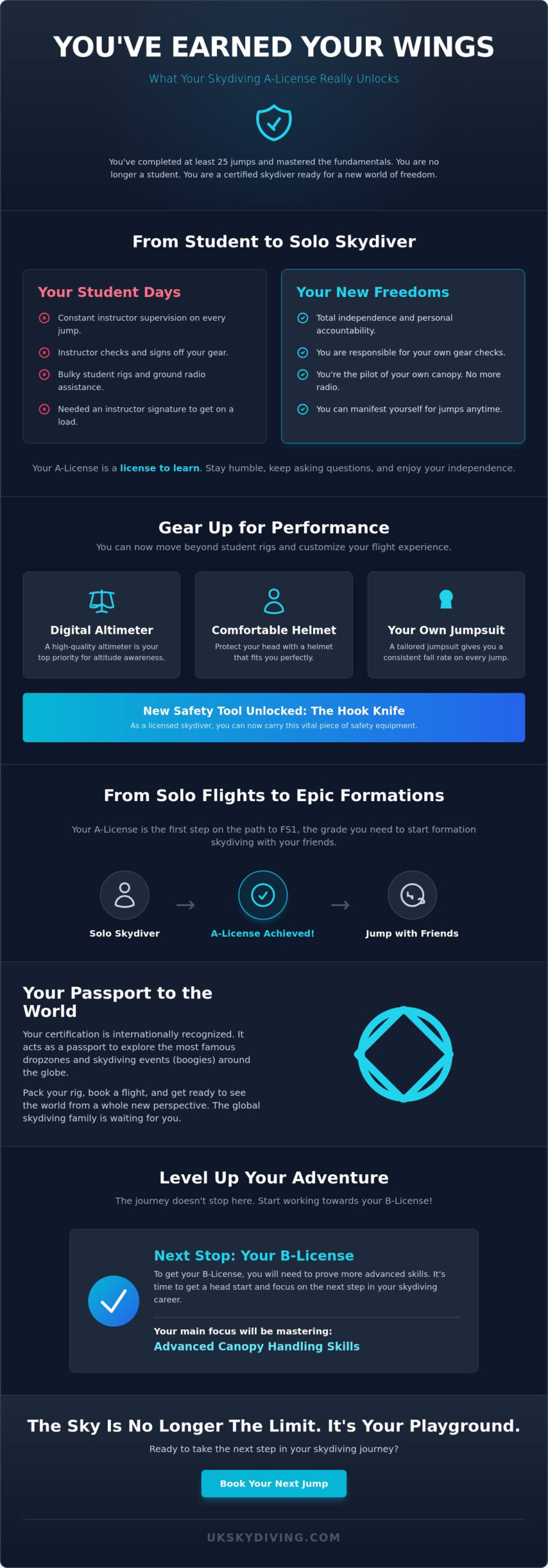
May 16, 2026 12:00 amThe moment your instructor signs that proficiency card, your entire world changes forever. You aren’t just a student anymore. You are a certified skydiver with the ultimate ticket to the clouds. It is completely normal to feel a mix of total euphoria and a little bit of “now what?” after hitting your 25 jump milestone. If you have been asking yourself what can you do with an A license skydiver status, the answer is: absolutely everything. You have earned this moment through grit and determination, and you’re now part of an elite global family.
This guide is your roadmap to the exhilarating life that starts right after you finish your training. We will show you exactly how to navigate your new freedoms, from the excitement of choosing your first parachute to planning epic trips to international dropzones. You’ll discover how to safely jump with your friends and what steps you need to take to reach your B Licence. Get ready to turn that nervous energy into pure confidence as you become a true part of the skydiving community. The sky is no longer the limit. It is your new playground.
Key Takeaways
- Say goodbye to constant supervision and embrace the total freedom of managing your own gear checks and landings.
- Find out exactly what can you do with an A license skydiver status and how it opens the door to high-performance equipment.
- Understand the path to your FS1 grade so you can transition from solo jumps to epic formation skydiving with your friends.
- Take your skills global and learn how your certification acts as a passport to the world’s most famous dropzones and boogies.
- Get a head start on your B Licence requirements by discovering the advanced canopy handling skills you need to master next.
The Freedom of the Skies: What Your A Licence Actually Means
The A Licence is the first major milestone in a skydiver’s career. You have spent weeks or months under the watchful eye of instructors, but that chapter is finally closed. Reaching this point means you’ve successfully completed at least 25 jumps and mastered the fundamental skills of freefall and canopy control. It’s more than just a piece of paper. It is your official transition from a student to a qualified solo skydiver. You’ve proven you have the skills to handle the intensity of the air, and the community is ready to welcome you with open arms.
You are now a certified athlete in one of the most exciting sports on the planet. Many new jumpers ask themselves what can you do with an A license skydiver status the moment they get that stamp. The most immediate change is the removal of the safety net. You no longer need an instructor to stand over your shoulder while you check your pins or supervise your landing pattern. This freedom is exhilarating, but it also comes with a new level of personal accountability. You’re the pilot now, making the calls that keep you safe and your adrenaline pumping.
Skydiving operates under a fascinating framework of self-regulation. While the FAA provides the legal groundwork, organisations like the USPA manage the day-to-day safety standards that keep us all flying. Learning about Skydiving regulation in the United States gives you a deeper look into how this community maintains such an impressive safety record. You are now a vital part of that system. Every jump you make contributes to the legacy of this incredible sport.
Saying Goodbye to Student Status
The visible signs of your student days are gone. You can finally ditch the bright yellow student flight suit and the clunky radio strapped to your chest. There is no one on the ground talking you through your flares anymore. You are the master of your own canopy flight. Even the way you spend your day at the dropzone changes. You can now manifest yourself for loads without hunting down an instructor for a signature. It’s a liberating feeling that makes you feel like a true regular at the hangar.
The Power of Independent Decision Making
With great freedom comes the need for sharp focus. You are now responsible for checking the weather and deciding if the winds are within your personal limits. Trusting your own gear checks is a huge psychological leap, but it’s one you’re fully prepared for. You must maintain intense altitude awareness without someone there to remind you. Remember that the A Licence is often called a license to learn. It is the foundation of your safety education, not the end of it. Stay humble, keep asking questions, and enjoy every second of your new independence.
New Rules and New Gear: The Technical Perks of Being Licensed
Earning your credentials is a total game-changer for your equipment setup. You can finally step away from those bulky, one-size-fits-all student rigs and start looking at gear designed for high-performance flight. This transition is about more than just looking cool on the flight line. It is about comfort, precision, and personal safety. When you wonder what can you do with an A license skydiver qualification, one of the biggest thrills is finally customizing your flight experience. You now have the right to carry a hook knife. This is a vital safety tool that British Skydiving regulations permit once you are licensed, giving you an extra layer of protection during your canopy descent.
High-performance gear allows for much better flight control during your entire skydive. You will notice the difference the second you leave the aircraft. Smaller, more responsive parachutes become an option as you gain experience and confidence. This allows you to feel the air in a way you never could during your first 25 jumps. While you are still learning the ropes, having equipment that fits your body perfectly makes every landing feel more intuitive and safe. You can find the full breakdown of the skills and knowledge expected of you in the USPA A-License Requirements. Following these standards ensures you are ready for the gear upgrades that await you.
Your First Equipment Purchases
Don’t rush into buying a full rig immediately. Start with the essentials that make the biggest impact on your safety and comfort. A high-quality digital altimeter and a snug-fitting, comfortable helmet should be at the top of your list. Owning your own jumpsuit is also a massive win. It ensures your fall rate remains consistent on every jump because the fabric and fit are tailored to you. When you aren’t fighting an oversized student suit, you can focus entirely on your body position and the sheer joy of freefall. If you are still working toward this goal, our AFF course is the ultimate way to fast-track your journey to gear ownership.
Understanding Canopy Progression
Moving from a large student wing to an agile sport canopy is an adrenaline rush like no other. However, you must respect the learning curve. Every new A Licence holder needs a thorough gear briefing before switching to a new parachute model. Wing loading is a critical concept you will master as you progress through the ranks. It is tempting to downsize fast, but staying on a larger, more forgiving wing helps you build the muscle memory needed for perfect flares. You want a canopy that grows with your skills rather than one that punishes small mistakes. Precision comes with practice and the right technical knowledge.
Jumping with Friends: The Path to FS1 and Formation Skydiving
The solo jumps are incredible, but the sky truly comes alive when you share it with others. You have probably watched groups of friends high-fiving in the plane and wondered what can you do with an A license skydiver status to join them. In the UK, your A Licence is your passport to solo flight, but it does not give you the green light for group dives just yet. To jump with your mates, you must earn your FS1 (Formation Skydiving) grade. This is the next epic challenge that transforms you into a versatile aerial athlete capable of flying in close proximity to others.
Safety is the absolute foundation of every group jump. Even as you aim for UK-specific qualifications, it is worth noting that international standards like the FAA Parachute Operations Regulations set the tone for how we manage traffic and safety in the sky. These regulations keep every jumper safe so we can focus on the pure fun of the experience. Mastering these rules ensures that when you finally dock with a friend at 120 mph, you are doing it with total confidence and professional oversight.
What is the FS1 Qualification?
Earning your FS1 is the ultimate way to unlock the social side of the sport. It isn’t just about falling at the same speed as your friends. You will learn how to track, which is the essential skill of moving horizontally away from other jumpers before you deploy your parachute. You will work closely with experienced coaches to master docking and fall rate control. This training turns you into a reliable teammate in the air. Once you have that FS1 qualification, you can participate in massive formations and big-way events. It is a total rush to be part of a human machine flying through the atmosphere.
The Social Side of the Dropzone
The A Licence is your golden ticket into the heart of dropzone culture. You are no longer an outsider or a student. You belong in the packing shed, sharing stories and learning tips from seasoned pros. Many new jumpers ask what can you do with an A license skydiver credential to make friends, and the answer is simply showing up. This is where you find mentors who will push your skills to the next level. Your social life will transform as you become a regular face at the hangar. The bonds you form on the ground are just as strong as the ones you make in freefall, making every weekend an adventure with your new global family.
Beyond Your Home Dropzone: Traveling and Jumping Abroad
Your British Skydiving A Licence is far more than a local credential. It is a globally recognized passport to adventure. The moment you earn it, you gain the freedom to explore dropzones across Europe, the United States, and beyond. This is one of the most exciting answers to the question of what can you do with an A license skydiver. You can now plan your entire holiday around the most breathtaking views on Earth. Imagine the sensation of freefalling over the palm-fringed coast of Spain or the vast, red deserts of Arizona. Every new location challenges your skills and broadens your perspective as a pilot. The Fédération Aéronautique Internationale (FAI) recognizes your qualification, ensuring you are welcomed at dropzones in member countries worldwide.
Visiting different centers is the ultimate way to build your confidence. You will encounter different landing areas, unique aircraft, and varied weather patterns. This exposure makes you a more versatile and safer jumper. While your home dropzone is comfortable, stepping out of your comfort zone is where the real growth happens. You will learn to navigate unfamiliar landing patterns and adapt to local procedures with ease. While you explore, you can take comfort in the sport’s incredible safety record. In 2025, millions of jumps were made with a fatality rate of only 0.46 per 100,000 jumps, proving that modern training and equipment make global travel safer than ever. If you want to reach this level of freedom faster, our Accelerated Freefall (AFF) Course is the perfect way to start your journey toward international flight.
Preparing for Your First Away Jump
Logistics are key when you head to a new location. You must bring your updated logbook, your physical license card, and your reserve packing data card. Every reputable dropzone will require these documents before you can manifest for a load. Once you arrive, the most important step is getting a comprehensive site briefing. Local instructors will walk you through the landing area, point out any specific hazards like power lines, and explain the flight patterns they use. Understanding the local weather is also vital. Coastal dropzones often have different wind shifts than inland ones, and being prepared keeps the experience exhilarating and safe.
Skydiving Boogies and Events
A boogie is essentially a massive festival for skydivers. It is an adrenaline-fueled gathering where jumpers from all over the world meet to share the sky. For a new A Licence holder, these events are the best places to learn and network. You will often get the chance to jump from specialized aircraft that aren’t usually available at your local field. Have you ever dreamed of exiting a helicopter or a hot air balloon? Boogies make these bucket-list moments a reality. You will leave these events with a global network of friends and memories that will last a lifetime. It is the ultimate celebration of the skydiving lifestyle and a fantastic way to feel like a true part of this elite community.
Level Up Your Adventure: Starting Your B Licence Journey
The A Licence is your foundation, but the B Licence is where you truly start to master the sky. While you are discovering what can you do with an A license skydiver certificate, you will quickly realize that 50 jumps is the next major peak to conquer. This milestone marks your transition from a competent solo jumper to a highly skilled aerial athlete. It is the gold standard for intermediate jumpers who want to push their limits while maintaining the highest safety standards. This journey is about sharpening your instincts and becoming a more versatile pilot in every sense.
Reaching this level unlocks incredible new opportunities that most people only dream of. One of the most exciting perks of the B Licence is the ability to apply for a display rating. Imagine the adrenaline rush of jumping into a music festival, a local fair, or even a sports stadium. These events turn your passion into a public spectacle and a personal triumph. You will also dive deep into advanced canopy handling and emergency procedures, giving you the ultimate confidence to handle any situation. It is a transformative process that solidifies your place in the skydiving elite.
Requirements for the B Licence
The road to your 50th jump is a massive celebration in the skydiving community. Every single leap counts toward your goal, so you should start logging your progression toward B Licence requirements immediately. You must complete the Canopy Training (CT) progression system, which is designed to make you a master of your parachute. These drills teach you how to handle different wind conditions and execute precision landings every time. It is a structured way to ensure you are ready for the increased responsibility that comes with your next rating. Your logbook is your legacy, so keep it detailed and accurate as you climb the ranks.
Why Train at UK Skydiving in Cambridgeshire?
Progression is faster and more rewarding when you have a world-class team behind you. Our instructors in Cambridgeshire are dedicated to helping you crush your solo milestones with confidence. We provide a supportive and exhilarating environment where you can learn from the best in the business. You will have access to high-quality rental gear while you save for your first rig, ensuring you never miss a weekend of action. Our community is thriving, and there is always someone ready to share a load or a story after the sun goes down.
If you are ready to take that first step or want to see how far you can go, learn more about our AFF courses to start your journey. We are here to guide you through every milestone and celebrate every victory in the air. Join us and turn your weekends into an epic adventure. The sky is waiting for you.
Take Your Place in the Sky
You have earned your wings and now it is time to use them. The A Licence is much more than just a certificate. It is your official passport to a life of high-altitude adventure and lifelong friendships. You have learned about the total freedom of solo flight, the thrill of upgrading to high-performance gear, and the social magic of joining the global skydiving family. When people ask what can you do with an A license skydiver status, you can tell them it is about joining an elite community that lives for the rush of the clouds.
Our British Skydiving Affiliated Centre is the perfect home base for your next solo milestone. We are located in the heart of Cambridgeshire with easy access from London, making us the ideal spot for your weekend progression. Our expert instructors have thousands of jumps and are ready to share their knowledge to help you crush your B Licence goals. Don’t let your skills fade on the ground. Book your next solo lift at our Cambridgeshire dropzone today! The air is calling, and your next epic memory is just one jump away. We can’t wait to see you back in the sky.
Frequently Asked Questions
Can I jump with my friends as soon as I get my A Licence?
In the UK, you must earn your FS1 qualification before you can jump in a group with your mates. While your A Licence allows for solo flight, safety regulations require extra training for formation skydiving. This ensures everyone in the group knows how to track away safely before deployment. It is an exciting challenge that makes your first group jump feel like a massive victory.
Do I have to buy my own skydiving gear immediately after qualifying?
You don’t need to buy your own equipment right away because most dropzones offer high-quality rental gear. This is a great way to try different canopy sizes while you save for your first custom rig. When asking what can you do with an A license skydiver status, remember that renting gives you the flexibility to progress without a massive upfront investment. You can focus on your skills while using professional, well-maintained kit.
Is my British Skydiving A Licence valid in the USA or Europe?
Yes, your British Skydiving A Licence is recognized internationally through the FAI. You can take your logbook to dropzones across the USA and Europe with total confidence. Always check the specific local rules and bring your membership documents to ensure a smooth check-in at the manifest office. It is your ultimate ticket to exploring the world from a completely different perspective.
What is the difference between an A Licence and a B Licence?
The primary difference is experience and permissions. An A Licence requires 25 jumps and allows for solo skydives. A B Licence requires 50 jumps and unlocks the ability to apply for display ratings. It also involves more advanced canopy training to ensure you are a master of every landing. Think of the B Licence as your graduation into the world of intermediate aerial athletics.
How many jumps do I need to do each year to keep my licence valid?
To stay current, you should aim to jump at least once every three months. If you go longer than this without a leap, you will likely need a recurrency check with an instructor. Keeping your logbook active is the best way to maintain your skills and stay safe in the air. Regular jumps ensure your muscle memory remains sharp for every exit and landing.
Can I start learning specialized disciplines like wingsuiting with an A Licence?
Most specialized disciplines like wingsuiting require significantly more experience than an A Licence provides. For example, you typically need 200 jumps before you can legally put on a wingsuit. Use your early licensed days to master the basics of belly flying and canopy control first. These foundational skills are what make those advanced disciplines safe and exhilarating later on.
What happens if I don’t jump for several months after getting my licence?
If you take a long break, you will simply need to complete a recurrency jump with an instructor. This is a reassuring way to brush up on your emergency procedures and landing patterns before going solo again. It’s a standard safety practice that helps you regain your confidence after time away from the hangar. You will be back in the air and feeling great in no time.
Do I still need to pay for an instructor once I have my A Licence?
You no longer pay for direct supervision on every jump, but you will still pay for coaching if you want to level up. Learning what can you do with an A license skydiver often involves hiring coaches for your FS1 or B Licence requirements. These experts help you refine your skills so you can reach your next milestone even faster. It is an investment in your future as a high-performing skydiver.
Categorised in: Blog