Latest News
-
 Skydiving as a Confidence Booster: How One Jump Can Change Your Life September 20, 2026
 -
 How to Convince Your Parents to Let You Skydive September 19, 2026
 -
 How to Land a Parachute Safely: A Beginner’s Guide September 18, 2026
 -
 Static Line vs AFF: Choosing Your Path to Solo Skydiving in 2026 September 17, 2026
 -
 Skydiving A License: Your Passport to the Skies September 16, 2026
Terminal Velocity: The Thrilling Science of Skydiving Speed
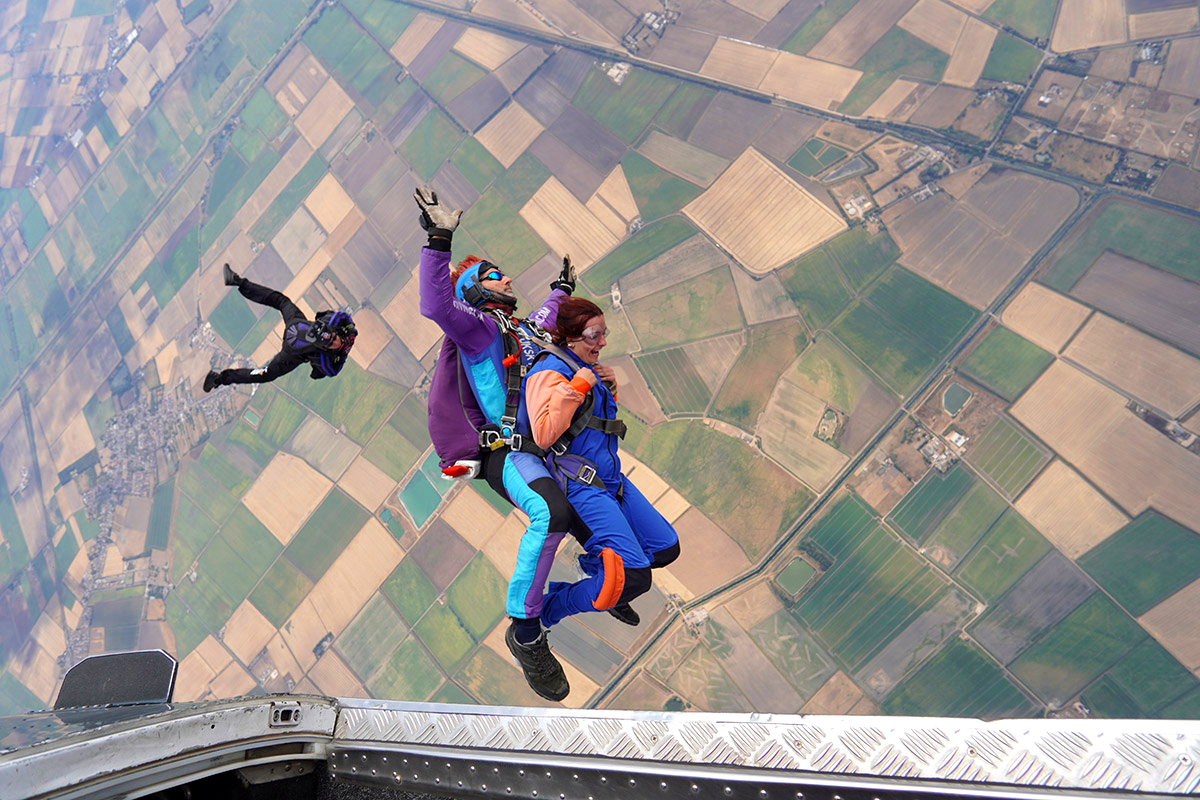
May 5, 2026 10:00 amWhat if I told you that the fastest part of your skydive is actually the moment you stop feeling like you’re falling? It’s completely normal to worry about that “stomach-drop” sensation you get on a roller coaster. Most first-timers expect a terrifying plunge, but the reality of reaching terminal velocity is much more like floating on a powerful cushion of air. If you search for an (inurl:photo) terminal shot of a tandem jump, you will see pure joy on the jumper’s face rather than fear. This is where your extraordinary adventure truly begins.
You’re about to discover the fascinating physics behind how fast you fall and why hitting top speed is the most intoxicating part of the journey. We’ll break down the science of air resistance so you can feel confident about the safety of your jump. You’ll learn exactly what to expect when you exit the aircraft and why 258,958 people took to the skies in the UK during 2023. Prepare to understand the ultimate high and get ready for the adrenaline rush of a lifetime!
Key Takeaways
- Understand how the perfect balance between gravity and air resistance transforms a fall into a controlled and exhilarating flight.
- Learn why the stomach drop sensation is only a momentary blip before you settle into a comfortable and stable freefall speed.
- Discover how simple changes in your body position allow you to control your velocity as you aim for that perfect (inurl:photo) terminal moment.
- Explore the different speeds of skydiving disciplines and find out why tandem pairs fall at such a predictable and safe rate.
- Get the inside scoop on how our highly skilled staff at UK Parachuting turn this scientific phenomenon into the adrenaline rush of a lifetime.
What is Terminal Velocity? The Point Where Falling Becomes Flying
Stepping out of an aircraft at 15,000 feet is the start of an extraordinary journey. For those first few seconds, you feel a rapid increase in speed as gravity takes hold. However, you don’t just keep getting faster until you hit the ground. You eventually reach a steady, exhilarating state known as terminal velocity. This is the moment where the falling sensation disappears and you begin to feel like you are truly flying. It’s the ultimate high that every skydiver seeks during their adventure.
To understand the science, we can look at the foundational question: What is Terminal Velocity? In simple terms, it is the constant speed an object reaches when the force of gravity pulling it down is perfectly balanced by the air resistance pushing back up. Think of a car accelerating on a motorway. At a certain point, the engine’s power is matched by the wind resistance hitting the front of the vehicle. The car cannot go any faster even with the pedal to the floor. In the sky, your body becomes that vehicle, and the air becomes your supportive cushion.
The Balance of Forces: Gravity vs Drag
Gravity is a constant force that pulls you toward the earth at a steady rate. As you fall, you collide with millions of air molecules every second. This creates drag or air resistance. The faster you go, the more air molecules you hit, and the stronger that upward push becomes. When you are in a standard belly-to-earth position, these two forces cancel each other out at roughly 120mph. If you look at an (inurl:photo) terminal image of a professional skydiver, you can see how they use their limbs to catch this air. They stay stable and in total control of their flight while plunging toward the earth at incredible speeds.
Why You Do Not Keep Accelerating Forever
Many first-time jumpers worry they will feel a terrifying, never-ending acceleration. You can breathe a sigh of relief because that phase is incredibly short. It only takes about ten seconds to reach your top speed. Once you hit that 120mph mark, the acceleration stops completely. Your body stabilizes, and the wind feels like a solid, supportive bed. This is why the experience is so intoxicating. You aren’t just plunging. You are suspended in a breathtaking environment where you have the freedom to move and turn.
In 2023, zero fatalities involved first-time tandem students in the UK, which proves how controlled and safe this stabilized freefall really is. Our highly skilled staff guarantee you will feel this incredible transition from the initial exit to the smooth, steady rush of terminal velocity. When you see an (inurl:photo) terminal shot of a happy jumper, you’re seeing the result of these physics working in perfect harmony.
The Science of the Fall: Factors That Influence Your Speed
You might think your speed is set in stone once you leave the aircraft. It isn’t. Every movement you make changes the physics of your flight. Not everyone falls at the same rate because terminal velocity is a result of a complex dance between your body shape, your gear, and the very air around you. While 120mph is the average for a belly-to-earth skydiver, you can actually speed up or slow down just by shifting your limbs. This level of control is what makes skydiving an active sport rather than just a passive drop. It’s an intoxicating experience that puts you in the pilot’s seat of your own body.
Surface Area: Your Personal Brake System
Think of your body as a human wing. When you spread your arms and legs into the classic “arch” position, you maximize your surface area. This creates the maximum amount of drag. This drag is essential because it provides the stability needed for a smooth, breathtaking experience. You might wonder, is skydiving safe when you’re moving at such high speeds? The answer lies in this stability. High drag keeps you from tumbling and ensures your parachute can deploy perfectly every time. If you look at an (inurl:photo) terminal image of a student, you’ll notice their jumpsuit is often a bit baggy. These suits are designed to catch more air and give you even more control over your descent.
Altitude and Air Density
The air isn’t the same everywhere. Up at 15,000 feet, the atmosphere is significantly thinner than it is at ground level. Because there are fewer air molecules to bump into, your initial terminal velocity is actually higher. As you plunge toward the earth and the air becomes denser, you naturally slow down. It’s a built-in braking system provided by nature. This is why the first half of your freefall often feels like the most intense adrenaline rush. When you browse an (inurl:photo) terminal gallery on our site, you can see the sheer excitement on the faces of jumpers as they hit these different layers of atmosphere.
Your weight and “slippery” factor also play a role. A heavier person has more gravitational pull, which means they need more air resistance to reach a balance. To keep a tandem pair falling at a comfortable speed, instructors use a small “drogue” parachute to add extra drag. This ensures that even with two people, the speed stays around that magical 120mph mark. Professionals also talk about the “coefficient of drag,” which is just a fancy way of describing how aerodynamic you are. By tucking into a ball or diving head-first, you become “slippery” and can reach speeds of over 200mph. It’s an extraordinary way to play with the laws of nature. If you want to feel this incredible science for yourself, book a tandem skydive with our expert team and feel the air support you.

How Fast Can You Go? Comparing Different Skydiving Speeds
While we’ve established that 120mph is the average, the sky is far from a one-speed environment. Depending on your body position and discipline, you can experience a massive range of velocities. For most people, the 120mph mark is the sweet spot. It’s fast enough to feel the ultimate high but stable enough to enjoy the view. If you look for an (inurl:photo) terminal shot of a professional speed skydiver, you’ll see a very different body position compared to a first-timer. They aren’t just falling. They are transforming themselves into human missiles.
Belly Flying vs Vertical Flying
Most beginners start with belly flying. This is the classic “X” shape that provides the most surface area and keeps you at that manageable 120mph speed. It’s the perfect way to start your journey. More experienced jumpers often move into “Freeflying” or vertical disciplines. By flying head-down or in a seated position, they reduce their surface area and can easily reach speeds of 180mph or more. Maintaining stability at these speeds requires incredible skill and hundreds of hours of training. For your first tandem skydiving experience, we stick to the stable belly-to-earth position to ensure you have a breathtaking and safe adventure.
Tandem Speed Control
You might wonder how two people strapped together don’t fall twice as fast. After all, you have double the weight! This is where our expert instructors use a clever piece of kit called a drogue parachute. Shortly after exiting the plane, the instructor deploys this small, round parachute. Its job isn’t to stop you, but to create just enough extra drag to keep the pair at a steady 120mph. This ensures that your freefall lasts for the full 60 seconds from 15,000 feet. It also allows our camera flyers to stay perfectly level with you. This is how they capture that incredible (inurl:photo) terminal moment for your video and photo package.
For those who want to see the absolute limits of human speed, the world of Speed Skydiving is truly mind-blowing. In 2022, Marco Hepp set a world record by reaching a staggering 529.77 km/h, which is about 329mph. While we won’t be hitting those numbers on your first jump, knowing the range of possibilities makes the sport even more fascinating. Whether you’re cruising at 120mph or pushing the limits, every second in the air is a significant personal accomplishment. Our highly skilled staff guarantee that your jump will be handled with the utmost professionalism, no matter the speed.
The Sensation of Terminal Velocity: What Does it Feel Like?
One of the biggest myths about skydiving is that it feels like falling. Most people expect a terrifying, never-ending plunge that leaves their stomach in their throat. You’ve probably felt that queasy “stomach-drop” on a roller coaster or a sudden drop in an elevator. In a skydive, that sensation only lasts for the first second as you leave the aircraft. Once you accelerate to terminal velocity, that feeling disappears completely. It is replaced by something far more extraordinary and intoxicating. You stop feeling like you are falling and start feeling like you are being held up by the world’s most powerful cushion.
When you reach 120mph, the air around you isn’t just empty space anymore. It becomes a solid, supportive platform. If you look at an (inurl:photo) terminal shot from our gallery, you will see jumpers who look remarkably relaxed and stable. They aren’t clutching at the air in panic. They are resting on it. This transition from the initial exit to the steady state of freefall is the ultimate high. It turns a moment of intense adrenaline into a breathtaking and controlled flight through the sky.
Floating Not Falling
The best way to describe the sensation is to imagine leaning against a very strong wind or resting on a high-powered fan. The air resistance creates a solid-feeling platform that supports your entire body. This pressure is so consistent that you can actually rest your weight on it. You aren’t just a passenger in the wind. You can use your hands and feet like rudders to turn or move across the sky. It is very similar to the way a swimmer moves through water, but the medium is air and the speed is much more exhilarating. For a deeper dive into these physical sensations, you can read our full guide on what does skydiving feel like.
Can You Breathe at 120mph?
Many first-timers worry that the rushing wind will make it impossible to catch their breath. This is a complete misconception that we hear all the time. Breathing at terminal velocity is perfectly natural and easy. Your body knows exactly what to do, and the air is all around you. A great pro tip from our highly experienced instructors is to give a big, loud scream as you exit the plane. This forces you to exhale and naturally triggers your next breath. Once you settle into your (inurl:photo) terminal pose, you’ll find the air is refreshing and invigorating. The rush of the wind against your skin is a significant personal accomplishment that you will remember for the rest of your life.
Ready to trade your fears for the adrenaline rush of a lifetime? Book your tandem skydive adventure today and feel the incredible support of the air for yourself. Our highly skilled staff guarantee a safe and memorable journey from the moment you leave the plane to the moment you touch back down on earth.
Experience Terminal Velocity at UK Skydiving
Now that you understand the fascinating science behind the speed, it is time to move from theory to practice. Reading about the physics of air resistance is one thing, but plunging through the East Anglian skies at 120mph is an entirely different world. At our Cambridgeshire base, we specialize in turning these complex laws of nature into the adrenaline rush of a lifetime. You don’t need a degree in physics to enjoy the ultimate high. You just need the courage to step out of the aircraft and into the extraordinary. Our team is ready to show you why reaching terminal velocity is the most intoxicating part of any skydive.
Safety and Expertise in the Air
Our highly experienced instructors are masters of managing terminal velocity. They handle every technical detail of the jump, from the precise exit to the deployment of the drogue parachute that keeps your speed perfectly stable. This level of expertise allows you to focus entirely on the breathtaking views and the incredible sensation of flight. While you are suspended on that solid cushion of air, you will see the world from a perspective very few people ever experience. We use state-of-the-art equipment and follow rigorous safety standards set by British Skydiving to ensure your adventure is as safe as it is thrilling. When you look back at an (inurl:photo) terminal shot of your jump, you’ll see the pure joy that comes from being in the hands of highly skilled staff.
Book Your Ultimate Adrenaline Rush
Skydiving is a significant personal accomplishment that will stay with you for the rest of your life. It is a life-altering memory that transforms the way you look at the world. Many of our guests find that one tandem jump is just the beginning of their journey. If you find yourself craving more control over your flight, you can learn to skydive through our Accelerated Freefall (AFF) course. This intensive program is the fastest way to become a licensed skydiver and master the art of terminal velocity on your own.
Don’t let another year pass by without discovering what it feels like to truly fly. Prepare to join us in 2026 for an adventure that defies gravity and exceeds every expectation. You can browse our (inurl:photo) terminal gallery to see the faces of those who have already conquered their fears. The sky is waiting for you. Book your tandem skydive experience today and prepare to fly with the best in the business!
Your Journey to the Ultimate High Starts Here
You now know that terminal velocity isn’t a scary plunge. It’s a stable and breathtaking flight on a powerful cushion of air. We’ve explored how 120mph becomes a comfortable platform for your adventure. You’ve also seen how the physics of drag and surface area keep you safe and in total control. When you eventually look at an (inurl:photo) terminal capture of your own jump, you’ll see a person achieving a significant life milestone with a massive smile.
UK Parachuting brings over 30 years of safe skydiving excellence to every flight. Our highly experienced British Skydiving instructors are ready to guide you through every second of your 15,000ft journey. You’ll enjoy stunning Cambridgeshire dropzone views as you settle into that incredible freefall. Stop wondering what it feels like and start your adventure. Book your tandem skydive and experience terminal velocity today! The sky is calling, so prepare to fly and create a memory you’ll cherish forever.
Frequently Asked Questions
How long does it take to reach terminal velocity?
It takes approximately 10 seconds to reach terminal velocity after you exit the aircraft. During this short window, you cover about 1,500 feet of altitude as your body accelerates to its top speed. Once you hit that 120mph mark, the acceleration stops and you settle into a stable, intoxicating flight. This transition is quick, so you’ll spend the majority of your 60-second freefall at a steady, exhilarating pace.
Do heavier people fall faster when skydiving?
Heavier individuals do naturally have a higher terminal velocity because they have more gravitational pull acting on them. However, our highly skilled instructors use specialized gear like drogue parachutes to manage this speed during tandem jumps. This ensures that every pair, regardless of weight, enjoys a safe and predictable descent. It also makes it easier for our camera flyers to capture that perfect (inurl:photo) terminal shot of your experience.
Is terminal velocity the same for everyone?
Terminal velocity varies based on your body shape, weight, and the clothing you wear. While 120mph is the standard for a belly-to-earth position, a smaller person might fall slightly slower than someone with a larger frame. Professional skydivers also use different jumpsuits to catch more or less air. This variability is why skydiving is such a dynamic sport where you can actually learn to match speeds with your friends in the air.
Can you go faster than terminal velocity?
You can definitely exceed the standard 120mph by changing your body position to be more aerodynamic. By tucking into a ball or diving head-first, you reduce your surface area and can reach speeds over 200mph. This is a specialized discipline that requires advanced training from our highly experienced instructors. For your first jump, we stick to the traditional arch to give you the most stable and breathtaking experience possible.
What happens to terminal velocity when the parachute opens?
Your terminal velocity changes instantly when the parachute deploys because the surface area increases dramatically. You slow down from 120mph to about 15mph in just a few seconds. This transition is designed to be smooth and comfortable, and it marks the beginning of your peaceful canopy flight. It’s the moment where the high-energy adrenaline rush shifts into a calm journey with stunning views of the Cambridgeshire countryside.
Does the weather affect how fast I will fall?
Weather conditions like temperature and humidity can slightly influence your fall speed by changing the air density. Cold air is denser than warm air, which creates more resistance and can slow your terminal velocity down by a small margin. While these changes are usually too subtle for a first-timer to notice, our team monitors all conditions to ensure every jump is conducted within strict safety limits. Your safety is always our ultimate priority.
Will I feel like I am falling the whole time?
You won’t feel like you are falling once you reach terminal velocity. That “stomach-drop” sensation usually associated with heights only lasts for the first second of your exit. After that, the air pressure builds up and feels like a solid platform supporting your body. It’s more like floating on a powerful cushion of air than plunging toward the earth. If you look at an (inurl:photo) terminal image, you’ll see how relaxed jumpers feel in this state.
How do skydivers slow down their terminal velocity?
Skydivers slow down by increasing their surface area to catch more air. By spreading your arms and legs wider or “de-arching” your body, you create more drag and reduce your speed. It’s just like putting your hand out of a car window and feeling the wind push it back. This ability to control your velocity is a key skill you’ll learn if you decide to take our Accelerated Freefall (AFF) course.
Categorised in: Blog