Latest News
-
 Skydiving as a Confidence Booster: How One Jump Can Change Your Life September 20, 2026
 -
 How to Convince Your Parents to Let You Skydive September 19, 2026
 -
 How to Land a Parachute Safely: A Beginner’s Guide September 18, 2026
 -
 Static Line vs AFF: Choosing Your Path to Solo Skydiving in 2026 September 17, 2026
 -
 Skydiving A License: Your Passport to the Skies September 16, 2026
Progression After AFF Course: Your Journey to Becoming a Pro Skydiver
April 17, 2026 10:00 amWhat if the most extraordinary part of your skydiving journey hasn’t even started yet? You’ve felt the ultimate high of your first solo jumps, but now you’re staring at an empty sky without your instructors. It’s completely normal to feel a bit lost during your consolidation jumps. You’ve conquered the initial fear, and now you want to join the ranks of the pros. Understanding your progression after AFF course is the key to turning that solo adrenaline rush into a lifelong adventure with friends.
We know you’re eager to ditch the student label and start formation skydiving. You might be worried about the written exams or how much the next 50 jumps will actually cost at a UK dropzone. Don’t worry, because we’ve got your back. This article promises to reveal the exact steps to earning your A-Licence and becoming a confident member of the skydiving community. We’ll explore the path from your ten consolidation jumps to becoming a fully qualified skydiver, including a clear breakdown of the skills you’ll master and the investment required to reach your goals.
Key Takeaways
- Master the ultimate test of your new solo skills by conquering the 10 consolidation jumps required to prove your independence in the sky.
- Understand the clear path for progression after AFF course completion, including the specific British Skydiving requirements needed to secure your A-Licence.
- Level up your adventure by working towards the 50-jump milestone and earning your Jump Master grade for maximum safety and skill.
- Unlock the incredible world of social jumping with Formation Skydiving coaching where you will learn to fly with others and join the ultimate skydiving tribe.
- Experience world-class support at our March base where expert instructors help you transition from a nervous student to a seasoned pro.
The Immediate Aftermath: Conquering Your Consolidation Jumps
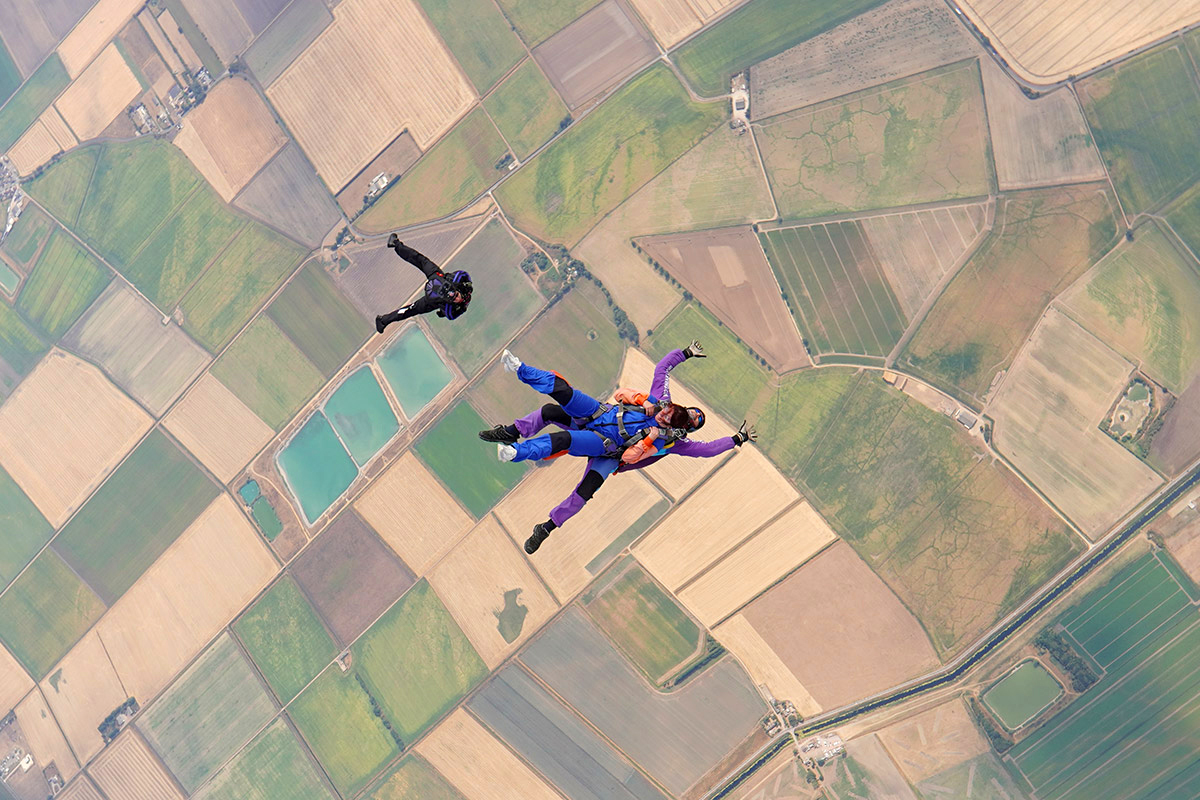
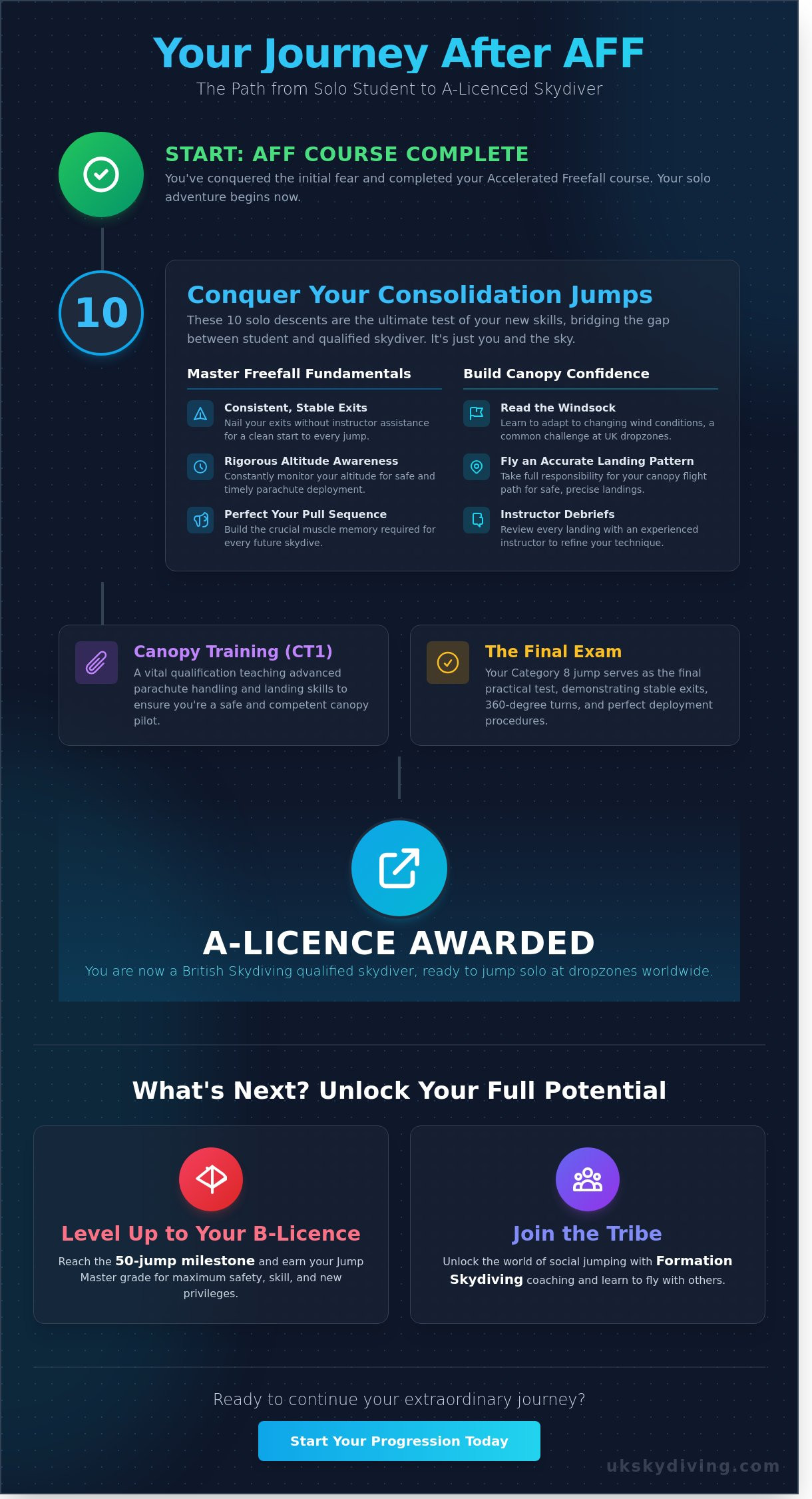
You’ve just completed your Accelerated Freefall (AFF) course and the feeling is intoxicating. You’ve felt the ultimate high. Now, you stand at the edge of a new challenge. This phase of your progression after AFF course is known as ‘Consolidation Jumps’ or ‘Consols’. These are the 10 solo descents required by British Skydiving regulations after you finish Level 8. They are the ultimate test of your new skills. You’re no longer being held or followed by instructors in the air. It’s just you and the sky.
This shift to self-supervision is a massive milestone. It’s an extraordinary leap in your journey. While you’re flying solo, you’re never truly alone. Our highly skilled staff watch every move from the ground. We guarantee that you have the support needed to stay safe while you chase that adrenaline rush. These 10 jumps allow you to prove you can handle the intensity of freefall without a safety net. It’s a breathtaking and intoxicating experience that builds the foundation for your entire skydiving career.
What to Focus on During Your Consols
Your main goal is to become a master of the basics. You need to nail your exits every single time. There’s no one there to steady you as you leave the aircraft at 12,000 feet. You must maintain altitude awareness and perfect your pull sequence. Consolidation jumps act as the essential bridge between your status as a student and earning your full A-Licence.
- Mastering consistent stable exits without any instructor assistance to ensure a clean start to every dive.
- Practising rigorous altitude awareness to ensure a safe and timely deployment.
- Perfecting your pull sequence to build the muscle memory required for every future jump.
Building Confidence in the Landing Pattern
The thrill of the freefall is only half the battle. Now you take full responsibility for your own canopy flight path. You’ll learn to read the windsock like a seasoned pro. Conditions can change fast at a UK dropzone. You might start your jump with a 5-knot breeze and land in 15-knot gusts. This is where you build the grit and expertise of a real skydiver. It’s an extreme challenge that rewards you with total confidence in your equipment.
Every single landing must be debriefed. You’ll sit down with a highly experienced instructor to review your pattern and your flare technique. This feedback is vital for your progression after AFF course. It turns a challenging landing into a valuable learning experience. You’ll gain the skills to land accurately and safely, preparing you for the next 200 jumps and beyond. Get ready for the adventure of a lifetime. Prepare to fly!
Claiming Your Freedom: The Path to Your A-Licence
You have felt the breathtaking rush of freefall and conquered the initial levels of your training. Now, the real adventure begins as you transition from a student to a qualified skydiver. The progression after AFF course is a period of intense growth where you build the confidence to fly solo. This phase is about more than just jumping. It is about mastering the sky and proving you have the skills to handle the ultimate high safely and independently.
Meeting the British Skydiving Standards
To earn your A-Licence, you must complete a minimum of 10 consolidation jumps. These are solo flights where you practice the skills learned during your AFF levels without an instructor by your side. Your instructors will monitor your progress from the ground, but the weight of responsibility is now on your shoulders. Every single jump must be recorded in your logbook and signed off by a qualified instructor to count toward your qualification. This is the time to truly internalise the mechanics of flight. You might still be asking yourself, is skydiving safe? The answer is a resounding yes, provided you follow the strict safety protocols and training standards set by the industry.
A vital part of the UK skydiving progression path that often catches students by surprise is Canopy Training. You must complete the CT1 grade, which teaches you advanced parachute handling and landing patterns. This ensures you aren’t just a great freefaller, but a safe pilot as well. You will learn how to navigate the landing area and handle various wind conditions with total precision.
The Final Exam and Your New Status
The Category 8 jump serves as your final practical test. You will demonstrate a stable exit, 360-degree turns, and a clear understanding of altitude awareness. It is the “driving test” of the sky. Once the physical work is done, you face the written exam. This test covers essential topics like equipment knowledge, weather patterns, and the rules of the air. To pass on your first try, spend time reviewing the British Skydiving operations manual and don’t be afraid to ask our highly skilled staff for clarification on complex topics.
Passing your A-Licence is an extraordinary feeling that stays with you forever. You finally get to ditch the student “yellow” kit and start using more advanced equipment that fits your personal style. It is the moment you officially become a member of the global skydiving community. Once your paperwork is processed, you can apply for your official British Skydiving licence card. This is your passport to jump at dropzones all over the world. If you are ready to push your limits and enjoy the ultimate high, book your next block of jumps with our expert team today.
Levelling Up: Working Towards Your B-Licence and Beyond
The adrenaline rush of qualifying is intoxicating, but don’t stop there. Your progression after AFF course hits top gear when you set your sights on the 50-jump milestone. This isn’t just a random number. It’s the gateway to the B-Licence and a whole new world of skydiving freedom. You’ve already proven you can handle the ultimate high. Now it’s time to refine those skills and become a truly independent skydiver.
Reaching the 50-Jump Milestone
The phase between 25 and 50 jumps is often the most exciting time in a jumper’s life. You’ve shed the student status and can now start experimenting with your body position and flight patterns. It’s the perfect period to try basic Formation Skydiving (FS) or focus on your tracking skills to move horizontally across the sky. This is where you truly start to feel like you’re flying rather than just falling.
Staying motivated is easy when every jump feels like a fresh adventure. Keep a detailed logbook and celebrate every small victory. If you’re still at the very start of this journey, you can read our guide on how to Learn to Skydive to see exactly what’s ahead. This middle phase builds the vital muscle memory you need for the extreme thrills that wait in your future.
Mastering New Skills with JM1 and CT2
To earn that B-Licence, you must complete specific technical grades designed by the experts. The Jump Master (JM1) grade is a vital part of your progression after AFF course. It teaches you how to “spot” the plane. You’ll learn to look out of the open door, identify landmarks from 10,000 feet, and decide exactly when it’s safe for the group to exit. This ensures everyone lands back at the dropzone safely and avoids long walks back from the wrong field.
You’ll also tackle the Canopy Training (CT2) requirements. This involves advanced manoeuvres that give you total authority over your parachute. You’ll learn how to handle different flight modes and how to execute precision landings in various conditions. These skills are essential before you even think about moving to smaller, faster wings. Following the official skydiving progression path ensures you meet all national safety standards while you build your confidence.
The final hurdle is the B-Licence exam. This covers technical equipment knowledge and aviation law. Once you pass, you’ll enjoy new privileges. You can jump in slightly higher wind speeds, typically up to 15 knots. This means fewer days waiting on the ground and more time plunging through the clouds at 120 mph. It’s an extraordinary feeling of accomplishment that you’ll remember for the rest of your life.
Joining the Tribe: Formation Skydiving and Social Jumps
Many new jumpers worry that the sky might become a lonely place once they leave the structured environment of their AFF levels. They fear that skydiving alone won’t hold the same magic. This couldn’t be further from the truth. While solo flight is a massive personal victory, jumping with others is an intoxicating experience that transforms the sport into a lifelong passion. Your progression after AFF course shifts from individual survival to social mastery, and that is where the real adventure begins.
The adrenaline rush of a solo jump is incredible, but sharing that speed with a group is the ultimate high. You aren’t just falling through the air anymore. You’re part of a team. This transition is the most exciting phase of your skydiving journey. It turns a hobby into a lifestyle and introduces you to a global family of adrenaline junkies who share your hunger for the extreme.
Introduction to Formation Skydiving Coaching
Formation Skydiving (FS) is your golden ticket to group jumps. It’s the most popular discipline for new A-Licence holders because it builds the essential foundation for almost every other type of flying. To get started, you simply need to find an FS coach at the dropzone. Our highly skilled staff are always ready to guide you through your FS1 qualification. This rating is a mandatory requirement in the UK before you can jump with anyone else. It usually takes between 10 and 15 coached jumps to master the skills needed for this badge of honour.
During your FS1 journey, you’ll learn the art of “docking,” which involves flying your body with precision to take grips on other jumpers. You’ll also master the critical safety skill of “breaking off.” This involves tracking away from the group at a specific altitude to ensure everyone has clear air to deploy their parachutes. The feeling of flying just inches away from your coach, matching their fall rate and moving with total control, is breathtaking and extraordinary.
The Social Side of the Cambridgeshire Dropzone
The sky is only half the story. At our Cambridgeshire dropzone, the community is the heartbeat of everything we do. Once you’ve earned your A-Licence, you join the ranks of the “fun jumpers.” This is a vibrant group that lives for weekend events, organised “scrambles” competitions, and legendary BBQ nights. Finding a skydiving family is the best way to keep your passion alive and your skills sharp. You’ll find yourself surrounded by people who understand exactly why you want to jump out of a perfectly good aeroplane.
“The true adrenaline rush comes when you share the sky with friends for the first time.”
This social bond is what keeps people in the sport for decades. Whether you’re sharing a beer after the final load or planning a massive group formation, the connections you make on the ground are just as strong as the ones you make at 13,000 feet. Your progression after AFF course is about more than just height and speed. It’s about finding where you belong in the air.
Ready to start flying with the tribe? Book your next coached jump session and take the first step toward your FS1 qualification today.
Your Future in the Skies: Why UK Skydiving is Your Home Base
You’ve tasted the ultimate high and felt the adrenaline rush of a lifetime. Now, the real adventure begins. Our world-class facilities at March, Cambridgeshire, aren’t just a training ground. They are your new home base. We’ve seen thousands of students transform from nervous beginners into elite athletes right here on our dropzone. Your progression after AFF course is a lifelong journey. We guarantee you’ll find the support and community you need to reach the next level of this intoxicating sport. Our March base is equipped with everything a developing skydiver needs, from comfortable packing areas to a vibrant atmosphere where stories are shared after every sunset load.
Expert Coaching at Our March Dropzone
Experience is everything when you’re hurtling toward the earth at 120 mph. Our March base gives you direct access to some of the UK’s most experienced Formation Skydiving (FS) and freefly coaches. These experts don’t just disappear once you graduate. They stay by your side to ensure your safety and rapid progression after AFF course remains a top priority. Whether you want to master the art of belly-flying or start your journey into the vertical world of freefly, we have the talent to get you there. If your friends are inspired by your progress, show them our Tandem Skydiving Guide so they can experience the thrill for themselves.
Gear Rental and Your First Equipment Purchase
Buying a parachute is a massive milestone. It’s also a significant investment that requires professional guidance. For A and B licence holders, our kit hire system provides a seamless way to keep jumping without the immediate cost of ownership. You can rent high-quality, modern equipment while you refine your canopy skills and learn what suits your flying style. Our instructors offer expert advice before you spend thousands of pounds on your first rig. We’ll help you understand technical details like wing loading and container sizing so you don’t make an expensive mistake. Nothing beats the breathtaking thrill of jumping your own custom-coloured gear for the first time. It is a badge of honour that marks your transition into the ranks of seasoned skydivers.
Don’t let your momentum fade. The sky is calling and your skills are ready to grow. The best way to stay sharp and safe is to keep your jump numbers climbing. Book your next block of jumps today to keep your eyes on the horizon. Prepare to fly and continue your extraordinary journey with the most passionate team in the UK!
Take Your Skydiving Career to the Ultimate High
Your journey doesn’t end with the final level of your course. The real adventure starts now. The progression after AFF course is a thrilling path that takes you from those first solo consolidation jumps to earning your A-Licence and joining the tribe for social formation jumps. At UK Skydiving, we’re a fully British Skydiving affiliated dropzone. This means you’re always training under the highest safety standards in the country while chasing that intoxicating rush.
Our highly experienced AFF instructors stay by your side as you work toward your 50-jump B-Licence and beyond. We provide everything you need to succeed, including full kit hire and expert coaching available right here on-site. You won’t have to worry about the details, you can just focus on the breathtaking experience of flight. It’s time to turn your passion into a permanent skill and embrace the extreme freedom of the British skies.
Ready to fly solo? Book your next jump block at UK Skydiving today!
We’re ready when you are. Prepare to fly and make memories that stay with you for the rest of your life!
Frequently Asked Questions
How many jumps do I need to get my A-Licence after AFF?
You need to complete a minimum of 18 jumps to qualify for your British Skydiving A-Licence. This total includes the 8 levels of your AFF course and 10 consolidation jumps. You must also successfully finish your Canopy Handling grade one (CH1) and pass a written exam to prove your knowledge of safety and flight theory. It’s a thrilling journey that transforms you from a student into a qualified skydiver.
Can I jump at other dropzones once I finish my AFF course?
You can certainly jump at other locations once you hold your A-Licence and a valid British Skydiving membership. Your A-Licence is an internationally recognised qualification that acts as your passport to the skies. Before you reach this milestone, you’re still considered a student in training. Most dropzones require you to finish your consolidation jumps at your home base where instructors know your progress and skills best.
What is a consolidation jump and why are they required?
A consolidation jump is a solo descent where you practice the skills learned during your AFF levels under the watchful eye of an instructor on the ground. You must complete 10 of these jumps to build the confidence and consistency needed for solo flight. These jumps are vital because they allow you to refine your stability and canopy control in a controlled environment. It’s the ultimate way to solidify your training before you earn your full license.
How much does it cost to get to 50 jumps after the AFF course?
The total cost varies based on equipment hire and jump ticket prices, but you must factor in the British Skydiving full membership fee of £112. You’ll also pay for individual jump tickets and gear rental for each of the 50 descents required for your B-Licence. Your progression after AFF course is more affordable if you look for block jump deals or gear hire packages offered at the dropzone. Budgeting for these 50 jumps ensures you can keep your momentum high without any breaks in training.
What happens if I fail my A-Licence written exam?
Don’t worry if you don’t pass on your first attempt because you can simply study the British Skydiving operations manual and try again. Our highly skilled staff will go over the questions you missed to ensure you fully understand the safety protocols and flight rules. Most students find the exam straightforward after completing their 18 jumps. We guarantee you’ll have all the support you need to master the theory and get back to the extraordinary experience of flying.
When can I start jumping with my friends?
You can start jumping with your friends once you have earned your FS1 (Formation Skydiving) qualification. This happens after you get your A-Licence and involves completing a series of coached jumps to learn how to move safely in the air with others. It’s an intoxicating experience when you finally link up with your mates at 12,000 feet. Safety is our priority, so we make sure you have the skills to handle the adrenaline rush of group skydiving.
Do I need to buy my own parachute immediately after AFF?
You don’t need to rush into buying a parachute immediately after finishing your course. Most new skydivers rent equipment from the dropzone for their first 50 to 100 jumps while they learn what gear suits their flying style. This allows you to try different canopy sizes as your skills improve and your landings become more precise. Buying gear is a significant investment, so it’s best to wait until you’re ready for a permanent setup that will last for years.
How long does it usually take to get from AFF to B-Licence?
Most dedicated jumpers reach their B-Licence within 3 to 6 months of finishing their initial course. Your progression after AFF course depends on how often you visit the dropzone and the unpredictable British weather. If you jump every weekend and attend organized events, you’ll hit that 50-jump milestone quickly. It is a breathtaking journey that rewards your commitment with new ratings and the freedom to explore more advanced skydiving disciplines.
Categorised in: Blog