
Latest News
-
 Skydiving as a Confidence Booster: How One Jump Can Change Your Life September 20, 2026
 -
 How to Convince Your Parents to Let You Skydive September 19, 2026
 -
 How to Land a Parachute Safely: A Beginner’s Guide September 18, 2026
 -
 Static Line vs AFF: Choosing Your Path to Solo Skydiving in 2026 September 17, 2026
 -
 Skydiving A License: Your Passport to the Skies September 16, 2026
How to Organise a Charity Skydive: The Ultimate 2026 Fundraising Guide
March 23, 2026 10:00 amMost traditional fundraisers will never match the raw, heart-pounding impact of a 13,000ft leap for a cause you love. It is the ultimate way to grab attention and raise serious money for your chosen charity. You have likely felt a pang of anxiety when trying to figure out how to organise a charity skydive without getting lost in the complex paperwork. It is completely normal to worry about how the “free jump” sponsorship model works or whether your group can hit a £400 minimum target before the big day arrives.
We understand those nerves, but we also know the breathtaking reward waiting for you in the clouds. This guide gives you a clear, step-by-step roadmap to plan and execute a 2026 fundraiser that smashes your targets and delivers an intoxicating adrenaline rush. You will gain the confidence to choose the right fundraising model and ensure every member of your team feels safe with our highly skilled instructors. From your first promotional post to the moment you plunge through the air at 120mph, we will show you how to turn a bold idea into an extraordinary success at a professional UK jump centre.
Key Takeaways
- Master the step-by-step process of how to organise a charity skydive to ensure your 2026 event is an exhilarating, record-breaking success.
- Compare the “Jump for Free” sponsorship model against self-funding to decide which path delivers the biggest impact for your chosen cause.
- Learn how to use high-octane video content and a strategic social media calendar to build excitement and smash your fundraising targets.
- Discover exactly what happens on the big day at our Cambridgeshire base, from the expert safety briefing to that ultimate adrenaline rush.
- Pick the perfect cause and set up your digital infrastructure to make donating simple and efficient for all your supporters.
The Thrill of Giving: Why Organise a Charity Skydive in 2026?
Imagine standing at the open door of an aircraft at 13,000 feet. The wind is roaring, your heart is pounding, and the UK landscape stretches out like a patchwork quilt far below. This is the ultimate high. In 2026, skydiving continues to hold its crown as the most popular high-challenge fundraising event in the country. It’s not just about the adrenaline rush. It’s about the incredible emotional breakthrough that happens when you pair a personal milestone with a selfless cause. When you jump for charity, you aren’t just falling. You’re rising to a challenge that changes lives forever.
The year 2026 is the perfect time to bring people together for a shared outdoor adventure. After years of digital fatigue, donors and participants are craving real, visceral experiences that push their limits. They want to feel the rush of the air and the bond of a collective mission. If you’re looking for how to organise a charity skydive, you’re starting a journey that will provide vital funds for national giants like the British Heart Foundation or small, local community projects that rely on every pound to survive. Mastering how to organise a charity skydive allows you to turn a simple weekend into a massive financial win for your chosen cause.
The Impact of Challenge Events
Donors are far more likely to give larger amounts for “extreme” challenges. Data from UK fundraising platforms in 2024 suggests that supporters donate nearly double the amount for a skydive compared to a standard 5k walk. The sheer bravery involved creates a compelling story that people want to support. This visibility is a lifeline for smaller charities. A single group jump can generate thousands of social media shares, putting a local cause in the spotlight. As the organiser, you’re the engine. You’re the one building the momentum and turning nerves into a fundraising powerhouse.
Organising a challenge event provides several unique benefits for the charity:
- High ROI: Extreme challenges often have a higher return on investment than traditional galas.
- New Audiences: You’ll attract younger, adventurous donors who might not engage with traditional bake sales.
- Lasting Loyalty: Participants who overcome a fear for a charity often become lifelong advocates for that cause.
Tandem Skydiving: The Perfect Charity Format
Tandem jumps are the gold standard for group events because they’re incredibly inclusive. Almost anyone over the age of 16 can take part. There’s no need for weeks of intense training or complex technical knowledge. You’ll be securely harnessed to a highly skilled instructor who manages every technical detail from the moment you leave the plane until your feet touch the grass. This allows you to focus entirely on the breathtaking and intoxicating experience of freefall. Our instructors are experts in the sport of skydiving, and they guarantee a safe, professional, and life-changing journey.
The beauty of the tandem format lies in its accessibility. We’ve seen 80-year-olds leaping for cancer research and groups of office workers jumping to support local mental health services. It’s a unifying force. When you organise a group jump, you’re creating a permanent, life-altering memory for every participant. You’re giving them something to remember for the rest of their lives while securing the future of a cause that matters. Prepare to fly, because the impact you’ll make is as massive as the view from the jump ship. This is your chance to lead an extraordinary adventure that leaves a legacy long after the parachute is packed away.
Choosing Your Fundraising Model: Self-Funded vs Sponsorship-Assisted
Deciding how to fund your adventure is the most critical step when you learn how to organise a charity skydive. This choice dictates how you will promote your event and how much money ultimately reaches the cause. You are about to embark on an intoxicating experience, plunging from 13,000 feet at 120 mph. To make this ultimate high even more rewarding, you must pick a financial structure that aligns with your supporters’ expectations and your personal goals.
The “Jump for Free” Mechanics
The “Jump for Free” model is an exhilarating way to involve the community in your journey. In this scenario, you don’t pay for the skydive out of your own pocket. Instead, you set a minimum sponsorship target, typically ranging from £395 to £450 depending on the specific charity’s requirements. A portion of this money, usually around £200 to £230, covers the cost of the jump at the parachute centre, while the remaining balance goes directly to the charity.
You will usually pay a personal deposit of approximately £50 to secure your date. This commitment shows your donors that you are serious about the challenge. Transparency is vital here. You must clearly state on your fundraising page that a portion of the donations covers the cost of the leap. Most donors are happy to support this because they want to see you conquer your fears, but honesty ensures you maintain their trust throughout the process.
The Benefits of Self-Funding
If you want to ensure the maximum possible impact, self-funding is a powerful choice. In this model, you pay the full cost of the skydive yourself. This means every single penny you raise from friends, family, and colleagues goes straight to the charity. Supporters often feel more motivated to give when they know their hard-earned money isn’t subsidising your adrenaline rush. Data from UK fundraising platforms suggests that self-funded jumpers often see a 25% increase in average donation size compared to those using sponsorship to pay for the flight.
The Self-Funded model is the most direct way to support a cause by covering all costs personally. By choosing a centre affiliated with British Skydiving, you guarantee that your adventure meets the highest national safety standards while you focus on your fundraising goals. This approach removes any ethical grey areas and allows you to shout from the rooftops that 100% of donations are making a difference.
When you sit down to plan your fundraising adventure today, consider your audience. If you are a student or on a tight budget, the sponsorship-assisted model makes this life-changing event accessible. If you have the means to pay the £230 jump fee upfront, the self-funded route often results in a higher net total for the charity. Set a realistic target by looking at your contact list. A good rule of thumb is to aim for at least £500 if self-funding, or £700 if you are using the “Jump for Free” model. This ensures that even after the costs are settled, the charity receives a significant and meaningful contribution from your breathtaking achievement.
Highly skilled staff at the jump centre will handle the technicalities of your 120 mph descent, so your only job is to pick the model that works for you. Whether you choose to fund the jump yourself or seek sponsorship, the result is the same: an extraordinary memory and a massive win for a cause you love.
Selecting Your Cause and Setting Up the Digital Infrastructure
Your journey to the ultimate high begins with a choice that fuels your courage. You might feel drawn to a massive national organisation or a local hero like the Magpas Air Ambulance based right here in Cambridgeshire. Local causes often resonate deeply with your immediate community. Regional fundraisers in East Anglia frequently see a 15% higher donation rate from neighbours who recognise the direct impact on their own doorstep. Once you’ve picked your partner, register your event immediately. Most charities provide official fundraising packs filled with t-shirts and posters to make your mission look professional. This official backing is vital because it proves to your donors that every penny is going to the right place.
Timing is everything for your breathtaking adventure. You must set a date at least 90 days in advance. This three-month window gives you the breathing room to build momentum and hit your targets without feeling rushed. If you want to organise your own skydive for a cause, the Alzheimer’s Society offers a brilliant template for how these partnerships should work. They provide the support you need while you focus on the intoxicating experience ahead. Our highly skilled staff at the March jump centre are ready to lock in your slot as soon as you have that charity approval in hand. We guarantee an experience that will stay with you forever.
Don’t overlook the financial boost of Gift Aid. This is a cornerstone of UK fundraising that adds an extra 25p to every £1 donated by UK taxpayers at no cost to you. When you’re learning how to organise a charity skydive, ensuring your digital infrastructure handles this automatically is a top priority. It turns a £1,000 total into £1,250 with the click of a button. This extra funding can be the difference between a good campaign and an extraordinary one. It allows the charity to do even more vital work while you prepare to fly.
Choosing a UK Platform
Use a trusted UK-based platform like JustGiving or Enthuse to manage your collections safely. JustGiving is a household name, but Enthuse is the official partner for major events like the London Marathon. Personalise your page with a bold photo of the airfield and your “why” story. Data shows that pages with personal photos raise 14% more on average. Tell your story with raw emotion and explain why you’re leaping from 13,000 feet.
Organising a Corporate or Group Jump
Turning a skydive into a team-building event is the ultimate way to boost office morale. Our March airfield can accommodate groups of up to 20 jumpers per day with our highly experienced instructors. Ask your employer about corporate matching. Statistics show that 65% of large UK firms match the funds raised by their employees. This doubles your impact instantly. It’s a powerful way to show how to organise a charity skydive that delivers maximum value to your cause.

Maximising Your Impact: How to Reach and Exceed Your Target
You have committed to the ultimate high. Now you need to ensure your fundraising total is just as breathtaking as the view from 13,000 feet. Learning how to organise a charity skydive involves more than just setting up a page. It requires a strategic, high-energy campaign that captures the imagination of your supporters and proves you are ready for an extraordinary challenge.
Video is your most powerful weapon in this journey. Recent social media data shows that video content generates 1,200% more shares than text and image posts combined. Don’t just tell people you are jumping. Show them the adrenaline rush. Share clips of tandem jumpers plunging through the clouds at 120 mph to build the “fear factor.” When your friends see the intensity of the experience, they understand the scale of your bravery. This raw, intoxicating footage makes the “Donate” button much harder to ignore.
A 12-Week Promotion Plan
Week 1-4: The Announcement and the “Why”
Launch your mission with a bang. Focus entirely on the heart of the matter: your chosen charity. Share specific data about their work, such as how a £50 donation provides ten hot meals or three hours of specialist care. This period is about connecting your exhilaration to a real-world impact.
Week 5-8: Behind the Scenes and Training Updates
Keep the momentum alive by sharing the “unpolished” side of your journey. Post a photo of yourself signing the medical forms or a video of you nervously looking at the sky. These updates humanise the experience and keep your audience emotionally invested in your progress as the big day approaches.
Week 9-12: The Final Push and Last Chance Messaging
Urgency is your best friend in the final month. Use countdown timers on your Instagram stories and send direct updates to those who haven’t donated yet. Research indicates that 20% of all donations are made in the final 48 hours before an event, so don’t be afraid to be bold with your reminders.
Engaging Your Local Community
Securing a featured story in your local newspaper or community website can boost your fundraising total by 30% by reaching donors outside your immediate social circle. Physical fundraising remains a vital pillar of success. A well-organised pub quiz or a Saturday morning bake sale can easily add £300 to your total in a single afternoon. These events provide a platform to talk about your upcoming adventure in person, which is often more persuasive than a digital link.
If you have a genuine fear of heights, use it as a narrative tool. Being honest about your terror makes the sacrifice feel more significant to your donors. They aren’t just paying for you to have an amazing time. They are paying to see you conquer a massive personal hurdle for a cause that matters. This vulnerability creates a compelling story that drives clicks and contributions.
Don’t forget to approach local businesses for support. In 2023, a survey of small UK enterprises found that 82% are likely to provide a raffle prize if asked directly by a local resident. A £40 voucher from a local bistro or a free session at a nearby gym can be used to drive ticket sales, turning a small gift into a significant boost for your charity pot. When you understand how to organise a charity skydive with this level of detail, you guarantee an impact that lasts long after you land.
Preparing for the Big Day at UK Skydiving
The big day has finally arrived. You’ve put in the hard work, mastered the steps of how to organise a charity skydive, and rallied your supporters. Now it’s time to face the sky. When you pull into our Cambridgeshire base in March, you’ll feel the electricity in the air immediately. Our base is a hub of high-octane energy where dreams of flight become a reality. You aren’t just here for a jump. You’re here for an intoxicating experience that will stay with you for the rest of your life.
Safety is our absolute priority, but we don’t let it dampen the excitement. You’ll head straight into a 20-minute pre-jump briefing with our highly skilled staff. They’ll walk you through every stage of your tandem journey. You’ll learn the specific body positions for exit, freefall, and the landing. This training is designed to be reassuring and clear. We want you to feel like a pro before you even step onto the aircraft. Our instructors have thousands of jumps under their belts, so you’re in the safest hands in the country.
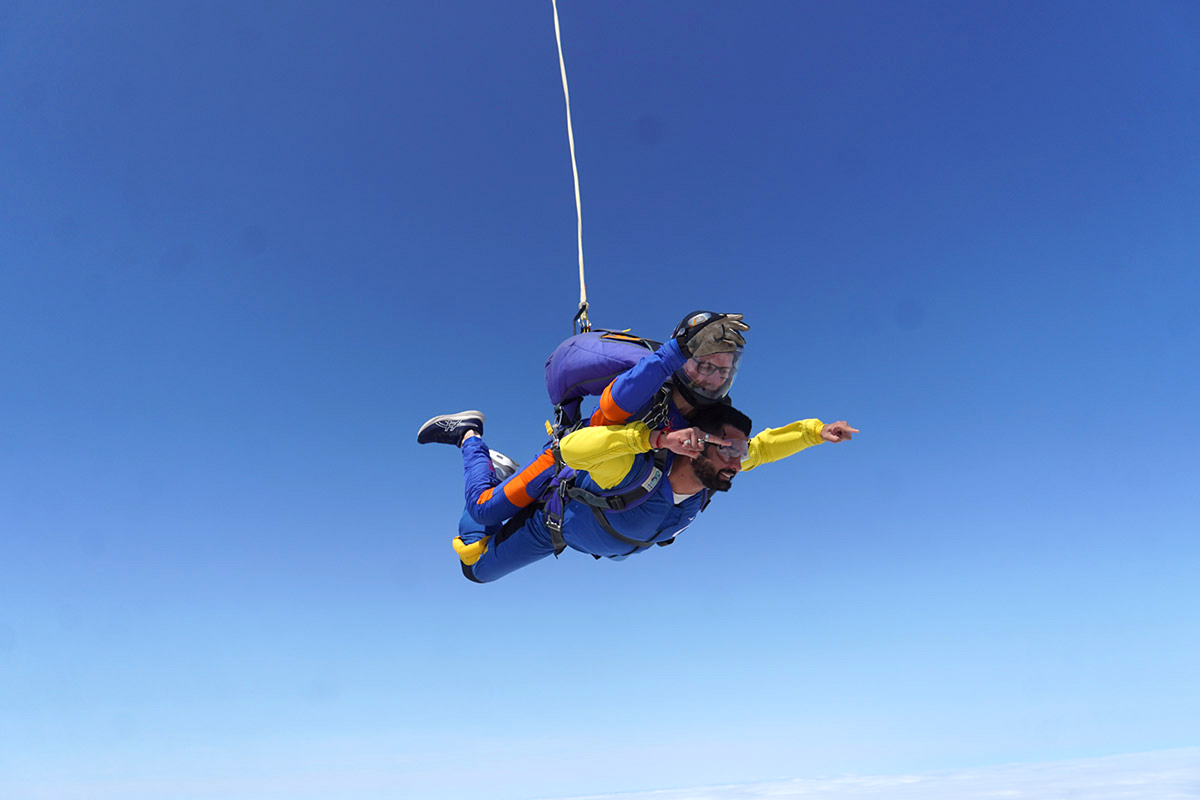
Nothing beats the moment the aircraft door slides open at 13,000 feet. The rush of cold air and the sight of the world below is breathtaking. You’ll plunge into the ultimate high, reaching speeds of 120 mph during a 45-second freefall. It’s an extraordinary adrenaline rush that defies description. Once the parachute opens, the silence is incredible. You’ll spend five minutes soaring over the beautiful Cambridgeshire countryside before coming in for a hero landing right in front of your cheering friends and family.
Logistics and Facilities in March
Our March dropzone is perfectly equipped for large charity groups and their entourages. We have a great on-site cafe and plenty of outdoor space for your supporters to set up camp and watch the action. If you’re travelling from London, we’re just 80 miles away, making us an easy trip for a day of adventure. We always keep a close eye on the British weather. If conditions on your 2024 jump date aren’t safe, we’ll contact you early and move your booking to the next available date at no extra cost. Your safety and the quality of your experience are our only concerns.
Capturing the Adventure
You’ll definitely want to relive this moment forever. We strongly recommend booking a professional video and photo package for your charity jump. Our camera flyers are experts at capturing the pure joy and intensity of your 120 mph descent. These high-definition shots aren’t just for your social media feed. They’re a powerful tool for your post-event update. Sending a video of your jump to your donors is the perfect way to say thank you. It shows them exactly what their generosity inspired you to do. It often leads to a final surge of donations as people see the “extreme” lengths you went to for your cause.
It’s time to turn your fundraising goals into a reality. Don’t wait for another day to pass. Organise your charity skydive with UK Skydiving today and prepare to fly!
Take the Leap for Your Cause in 2026
Organising a fundraiser doesn’t have to be daunting. You’ve now got the blueprint for success. From choosing between a self-funded jump or a sponsorship-assisted model to launching your digital donation page, every step brings you closer to that 13,000ft exit. Remember to set a clear target and use social media to share your journey. When you know how to organise a charity skydive with precision, you don’t just raise money. You create a life-altering memory that stays with you forever.
Don’t leave your 2026 goals to chance. Partner with a team that has over 30 years of safe skydiving history. Our highly experienced British Skydiving instructors have helped thousands of fundraisers smash their targets. We’re perfectly located for London and East of England jumpers, making us the premier choice for your big day. It’s time to turn your ambition into an intoxicating reality.
Start your charity skydiving adventure with UK Skydiving and prepare to fly. The sky is waiting and your chosen charity needs your support. Get ready for the ultimate high and make 2026 the year you truly soar.
Frequently Asked Questions
How much money do I actually have to raise for a charity skydive?
You usually need to raise a minimum of £395 to cover your jump costs and provide a donation. When you’re learning how to organise a charity skydive, keep in mind that about £200 pays for the jump and the remaining £195 goes directly to your chosen cause. Some larger national charities might set their targets higher at £450 or £500 to maximise their impact.
Can I choose any charity I want for my parachute jump?
You can support any of the 160,000 registered charities in the UK for your jump. We already work with hundreds of partners, but if your preferred cause isn’t on the list, you just need to contact them. Most organisations are thrilled to get involved. Just ensure they’re happy to pay for the jump costs from your fundraising total before you start your journey.
What happens if I do not reach my fundraising target in time?
You’ll usually need to pay the remaining balance yourself or reschedule your jump date. Most charities require at least 80% of the funds to be cleared 7 days before your flight. If you’re short by £50, you can often top it up personally to ensure your adventure goes ahead. It’s a great way to guarantee you still get that ultimate high while supporting your cause.
Is there an age limit for taking part in a charity skydive?
You must be at least 16 years old to jump, and there’s no upper age limit at UK Skydiving. If you’re 16 or 17, you’ll need a parent or guardian to sign a British Skydiving consent form. We’ve seen 90 year olds take the plunge and enjoy the breathtaking views, so don’t let age stop you from experiencing this extraordinary personal accomplishment.
How much of my donation goes to the charity if I jump for free?
At least 50% of your total fundraising must go to the charity under UK law. If you raise the minimum £400, approximately £200 pays for the professional instructors and equipment, while £200 goes to the charity. Many of our jumpers raise over £1,000, which means the charity receives a massive 80% of the total funds raised for their vital work.
What should I wear for my charity skydive in the UK?
Wear comfortable, loose-fitting clothes like a tracksuit and flat trainers without hooks. Avoid jeans or boots as they can be restrictive or unsafe during landing. On a typical 15 degree Celsius day in the UK, it’ll be significantly colder at 13,000 feet. We’ll provide a specialised jumpsuit to wear over your clothes to keep you warm and protected during your 120 mph descent.
Can we jump as a large group for a corporate charity event?
We can accommodate groups of up to 50 people in a single day for an intoxicating team experience. Learning how to organise a charity skydive for a corporation is a brilliant way to build morale. We’ve hosted teams from 10 different industries this year alone. It’s an extreme way to bond while raising thousands of pounds for a shared cause.
Does the charity skydive include insurance?
Your jump includes third-party liability insurance up to £5,000,000 as part of your British Skydiving membership. This covers you for any damage to third parties or their property. If you want personal accident insurance to cover yourself for specific injuries, you’ll need to purchase a separate policy for about £20 before you arrive at the airfield. Our highly skilled staff guarantee a safe and memorable adventure.
Categorised in: Uncategorized