Latest News
-
 Skydiving as a Confidence Booster: How One Jump Can Change Your Life September 20, 2026
 -
 How to Convince Your Parents to Let You Skydive September 19, 2026
 -
 How to Land a Parachute Safely: A Beginner’s Guide September 18, 2026
 -
 Static Line vs AFF: Choosing Your Path to Solo Skydiving in 2026 September 17, 2026
 -
 Skydiving A License: Your Passport to the Skies September 16, 2026
GP Declaration Form for Skydiving: Your Simple Guide to Getting Sky-Ready
June 27, 2026 12:00 amYour dream of screaming through the clouds at 120mph shouldn’t be grounded by a stack of confusing paperwork. It’s the ultimate adrenaline-fueled goal, yet many people feel a surge of nerves before they even reach the airfield because of the medical requirements. You might be worried that a past injury will stop your jump or feel unsure about how to get your GP declaration form for skydiving signed without the stress. We completely understand that the process can feel like a hurdle when all you want is to feel the rush of the wind against your face.
These forms are simply a safety gateway designed to ensure your experience is as secure as it is spectacular. This guide is your shortcut to clarity, revealing exactly which medical forms apply to you and how to handle the GP appointment with total confidence. We will walk you through the differences between Form 115A and 115B so you can stop worrying and start focusing on the incredible, life-altering memory waiting for you in the sky.
Key Takeaways
- Identify whether you can sign your own medical certificate or if you need a professional signature to clear you for takeoff.
- Follow our easy guide to getting your GP declaration form for skydiving signed so you can breeze through the registration process on jump day.
- Learn why most common medical conditions are not a barrier to experiencing the incredible rush of a tandem skydive.
- Discover exactly where to download the latest British Skydiving forms and how to ensure they are filled out correctly the first time.
- Gain the confidence to move past the paperwork and focus on the exhilarating freefall that awaits you.
The Paperwork Before the Plunge: Understanding Skydiving Medical Forms
You’re standing at the open door of a plane. The world looks like a vibrant map miles below you. Your heart is hammering against your ribs with pure, unadulterated excitement. This is the moment you’ve been waiting for! But before you can feel that incredible rush of the wind, we need to talk about the paperwork. At UK Skydiving, safety is our absolute priority. We want your jump to be a life-changing highlight that you remember forever. The GP declaration form for skydiving is a vital part of that process. It ensures every adventurer is physically ready for the intense sensations of freefall.
British Skydiving sets the medical standards for every dropzone in the country. This means the rules are consistent, professional, and built on decades of expert data. These forms aren’t a barrier to your dream. Instead, they act as a safety net for both you and your instructor. You must bring your completed form on the day of your jump. It’s the final green light we need before you head to the aircraft to start your adventure.
Why medical fitness matters for tandem jumps
Skydiving is a high-energy sport that involves unique physical sensations and incredible speeds. When you exit the aircraft, you’ll experience a massive surge of adrenaline and significant wind resistance. Our instructors need to be certain you can perform basic physical tasks during the flight. One of the most important requirements is the ability to lift your legs into a seated position. You need to hold them up for the landing to ensure a soft, safe touchdown on the grass. By knowing your health status through the GP declaration form for skydiving, we can provide the best possible experience. It allows us to focus on the thrill while knowing you are physically prepared for every stage of the jump.
The governing body: British Skydiving
We operate under the strict guidance of British Skydiving. This is the national governing body that oversees the sport in the UK. Their rules are designed to make skydiving one of the most regulated and safe adventure activities available today. Understanding Skydiving Safety involves recognizing the rigorous training and medical checks required for every single person who takes to the skies. You can find more facts about the risks and rewards in our detailed article on is skydiving safe. Following these standards means we can offer the most exhilarating experience possible without compromising on your well-being. These protocols ensure that your jump is as secure as it is spectacular.
Self-Declaration vs. Doctor Signature: Which Form Do You Need?
Ready to trade your desk for a bird’s-eye view of the world? The path to the plane is much smoother than you might think. Many first-time jumpers worry that they’ll spend weeks chasing doctors for signatures, but here is the incredible news. Most healthy thrill-seekers can sign their own forms! This isn’t just about convenience. It’s about making this life-altering experience accessible to as many people as possible. If you are in good health, you are the master of your own destiny. You can clear yourself for takeoff in just a few minutes.
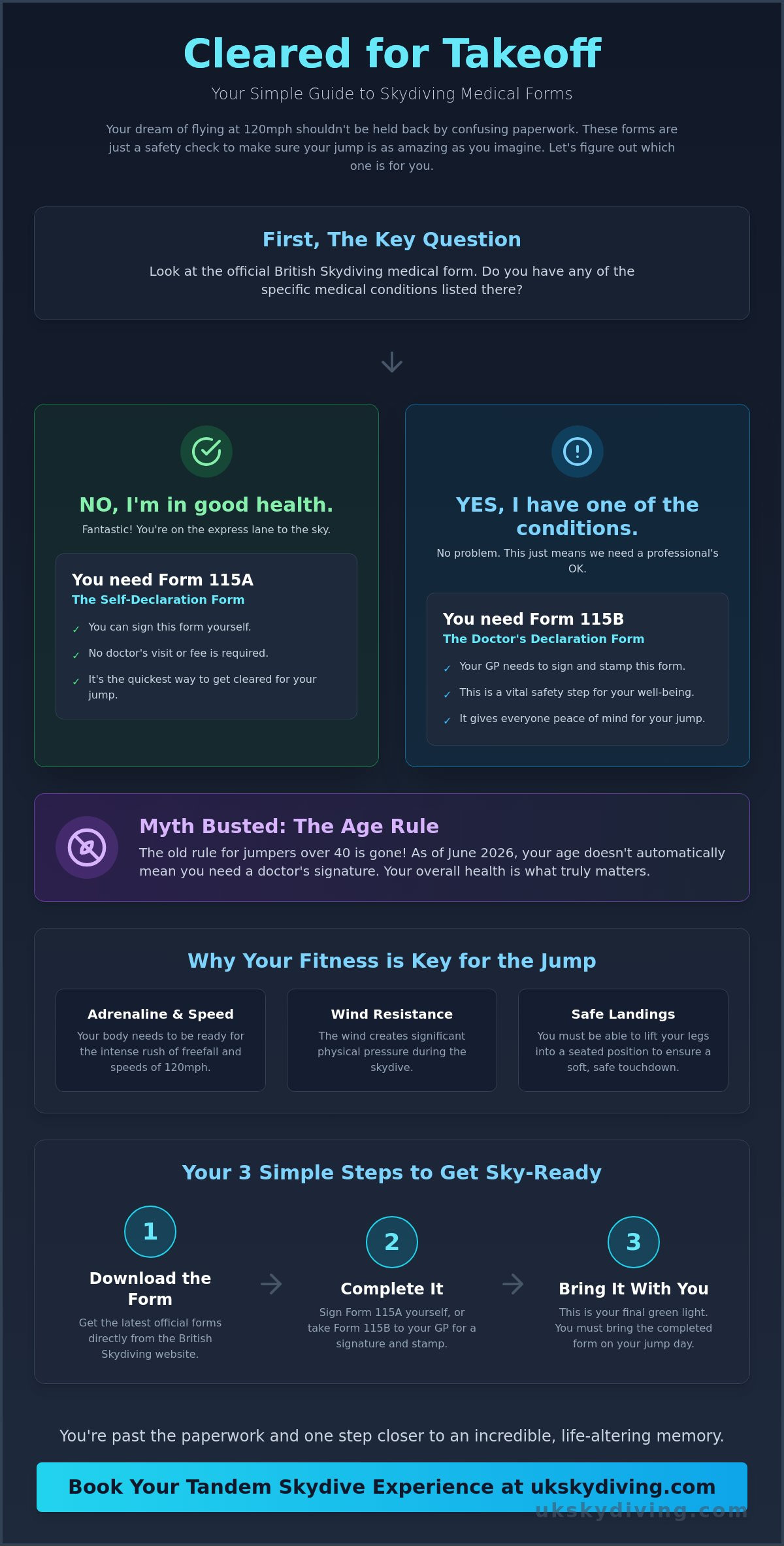
One of the biggest myths in the skydiving world is that age automatically triggers a trip to the GP. That is simply no longer true! The old rules that forced every jumper over 40 to visit a doctor are a thing of the past. As of June 2026, tandem students of any age can self-declare their fitness as long as they don’t have the specific medical conditions listed by the governing body. This change has opened the skies to thousands of adventurous souls who can now focus entirely on the adrenaline rush. You can find the official British Skydiving medical forms online to see exactly where you stand. If you’re feeling fit and ready, you can book your Tandem Skydive Experience today and start the countdown!
Form 115A: The Self-Declaration
Form 115A is your golden ticket to the clouds. This is the Student Tandem Medical Self-Declaration. Use this form if you are in good physical shape and have no history of the medical issues listed on the document. It is the quickest and most efficient way to get sky-ready. You just need to read the list of conditions carefully, be honest with yourself, and sign the bottom. Once that is done, you are ready to head to the airfield. No appointments, no fees, and no delays. Just pure, unbridled excitement.
Form 115B: The GP Declaration Form
Sometimes, your journey requires a little extra professional oversight. If you look at Form 115A and realize you have, or have ever had, one of the listed conditions, don’t panic! This does not mean your dream is over. It simply means you need the GP declaration form for skydiving, which is officially known as Form 115B. This form must be signed and stamped by your doctor to confirm they believe you are fit to jump. It is a reassuring layer of safety that ensures you can enjoy the intense sensations of freefall with total peace of mind. Your GP is there to support your adventure, and once they give the thumbs up, nothing can hold you back from that spectacular horizon.
Getting Your GP Declaration Form Signed: A Step-by-Step Guide
The paperwork is the final bridge between you and the open sky. Once you realize you need a professional sign-off, it’s time to take action. This process is straightforward, but doing it right ensures no last-minute hitches at the airfield. Your first move is to head over to the official British Skydiving medical forms page and download Form 115B. This is the specific GP declaration form for skydiving required for tandem students with pre-existing conditions. Print a fresh copy and keep it crease-free. A crisp, professional-looking document sets the right tone for your appointment.
Next, book a routine appointment with your local General Practitioner. Don’t leave this until the week of your jump! We recommend sorting this at least three weeks in advance. When you arrive at the surgery, you need to be clear and concise. Many doctors don’t see these forms often, so they might be curious or even a little cautious. You can use this simple script to keep the conversation on track: “I am planning a tandem skydive where I will be securely attached to a professional instructor. I have a pre-existing condition, and I need you to review this specific medical form to confirm I am fit for the experience.” This tells the doctor exactly what is happening and reassures them that you aren’t jumping solo.
Before you leave the consultation room, double-check the document. Your GP must sign the form and add their official practice stamp. This stamp is absolutely vital. Without it, the form cannot be accepted at the dropzone, and your jump could be delayed. It’s a small detail that makes a massive difference to your skydiving journey.
What to do if your GP refuses to sign
Sometimes, a doctor might decline to sign the form. This usually isn’t because you are unfit to jump. It’s often because they aren’t familiar with the physical demands of skydiving and worry about liability. If this happens, don’t let it dampen your spirit! You can ask for a referral to a private aviation examiner or a sports medical specialist. These professionals understand the nuances of high-altitude activities. We can often suggest specialists who are familiar with the sport and can give you a fair, expert assessment of your fitness.
Handling GP fees for medical signatures
It is important to remember that getting a medical form signed is not an NHS service. Your doctor is providing a private professional opinion, and they will almost always charge a fee for this. This is completely normal. Fees can vary significantly between different practices, so it is a great idea to ask about the cost when you book your appointment. Being prepared for this small investment means one less thing to think about as you get closer to your big day.
Jumping with Medical Conditions: What You Need to Know
Do you have a pre-existing medical condition that makes you think the sky is off-limits? Think again! Every single day, people with various health challenges experience the breathtaking triumph of a tandem skydive. Whether you manage asthma or live with diabetes, these conditions do not necessarily stand between you and the horizon. The secret to a safe and spectacular jump lies in stability. If your condition is well-managed and you have the green light from a medical professional, you are ready to fly. We believe that the thrill of the air should be accessible to everyone who meets the safety standards.
Our instructors are seasoned experts at accommodating different needs. They have helped thousands of people overcome their fears and physical limitations to taste the absolute freedom of freefall. The GP declaration form for skydiving is simply the tool that ensures we have the right information to keep you safe. It allows your doctor to confirm that your body is ready for the intense physical sensations of the jump. By being honest about your health, you allow us to tailor the experience to you. This ensures every second of your journey is pure, unadulterated joy.
Common conditions that require a GP signature
Certain health histories require an extra layer of professional reassurance. Heart conditions or high blood pressure are common examples. Because skydiving involves a significant spike in adrenaline, your doctor needs to ensure your cardiovascular system is up to the task. Similarly, previous back or neck injuries must be disclosed. We need to know that your spine is strong enough to handle the parachute opening and the landing. Neurological conditions like epilepsy also require a signature to ensure you won’t experience a medical event during the flight. If you fall into any of these categories, getting your GP declaration form for skydiving signed is your first step toward the clouds.
Physical requirements for the jump
While we work hard to be inclusive, there are two key physical movements you must be able to perform for a safe experience. First, you need to hold a “banana” shape during freefall. This involves arching your back and looking toward the horizon to maintain a stable, belly-to-earth position in the rushing wind. Second, you must be able to lift your legs into a seated position for the landing. This ensures you and your instructor touch down smoothly on the grass. To get a better sense of these movements and the incredible rush of the experience, read about what does skydiving feel like. Once you’re ready to make it happen, book your Tandem Skydive Experience and prepare for the thrill of a lifetime!
From Paperwork to Plane: Your Next Steps with UK Skydiving
You’ve successfully navigated the medical checks. You’ve secured that vital signature. The hard part is officially over! Now, the real adventure begins. Take a deep breath and look at your completed GP declaration form for skydiving. It is the final piece of the puzzle. Double-check that the date is clear and that your doctor’s official practice stamp is firmly pressed onto the page. This piece of paper is much more than just a document. It is your boarding pass to an entirely new, breathtaking perspective on the world. Keep the original document safe and bring it with you to our stunning Cambridgeshire base. We cannot accept photocopies or digital versions. Tuck that original form into your bag right now so it’s ready for your journey to the airfield. You are just moments away from the most exhilarating experience of your life.
Booking your tandem skydive
The sky is calling, and it’s time to answer! Head to our booking page and select the date that will change your life forever. Whether you want to celebrate a massive birthday or simply tick a legendary goal off your bucket list, we have the perfect slot waiting for you. For more expert advice on what to wear and how to prepare your mind for the leap, check out our tandem skydiving guide. Don’t forget to invite your favorite people to witness your triumph! There is nothing quite like the sound of your friends and family cheering from the ground as you glide back to earth under a vibrant canopy. It makes the victory even sweeter.
The big day in Cambridgeshire
Our airfield is perfectly located to serve North London and the surrounding regions. It is the premier destination for high-stakes thrills and life-altering memories. From the moment you step onto our base, our enthusiastic team will guide you through every single second of the adventure. We will help you gear up in your jumpsuit, talk you through the aircraft exit, and ensure you feel totally secure in the hands of a seasoned expert. Prepare yourself for a complete sensory explosion at 13,000 feet! You will experience the ultimate, high-speed rush of freefall followed by the serene, majestic beauty of a parachute ride over the rolling English countryside. This isn’t just a jump. It is a transformative personal milestone that will stay with you forever. Stop dreaming about the clouds and start living the experience. Book your adventure now at ukskydiving.com and take that final step toward the sky!
Claim Your Place in the Clouds
You are now armed with everything you need to transition from the doctor’s office to the open aircraft door. Most healthy adventurers can sign their own certificate and head straight to the airfield. If your health history requires a little extra oversight, the GP declaration form for skydiving is your simple and effective path to the plane. By securing that official stamp, you are confirming your fitness while clearing the way for a sensory explosion at 13,000 feet. It is a small step that leads to a massive, life-altering reward.
As a British Skydiving Affiliated Dropzone, we combine absolute safety with the ultimate rush of freefall. Our highly experienced instructors have guided thousands of thrill-seekers through this life-altering journey with total professionalism. You will be treated to stunning Cambridgeshire views that will take your breath away long before you even leave the aircraft. This is your moment to join the ranks of those who have tasted true freedom in the air. Don’t let the paperwork hold you back from a permanent and powerful personal milestone. Book Your Thrilling Tandem Skydive Experience Today! The horizon is calling your name. Take the leap and discover what it truly feels like to fly.
Frequently Asked Questions
Do I need a medical form for a tandem skydive if I am healthy?
Yes, every jumper must provide a completed medical form before they can take to the skies. If you are in good health and have no history of the conditions listed by British Skydiving, you can simply sign Form 115A yourself. This self-declaration is the quickest way to get ready for your 13,000-foot adventure. It ensures you understand the physical requirements of the jump while keeping the process incredibly simple.
What is the difference between Form 115A and Form 115B?
Form 115A is a self-certification for those with no medical issues, while Form 115B is the official GP declaration form for skydiving required if you have any listed conditions. You can sign Form 115A at home without seeing a doctor. However, if you have a history of heart issues, epilepsy, or certain injuries, you must have a GP sign and stamp Form 115B to confirm you are fit for the rush.
Can I still skydive if my GP refuses to sign the form?
Yes, a refusal from your local doctor doesn’t necessarily mean your dream is over. Some GPs decline to sign for liability reasons rather than medical ones. In these cases, you can seek a second opinion from a private aviation medical examiner or a sports specialist who understands the physical demands of a tandem jump. We can often recommend professionals who are familiar with the safety standards of the sport.
Does the skydiving medical form expire?
A signed Form 115B is generally valid for 12 months from the date your doctor signs and stamps it. If your jump date is more than a year away, you will need to revisit your GP for a fresh assessment. For self-declarations on Form 115A, we recommend signing a new version if your health status changes or if a significant amount of time has passed since your last jump.
How much does a GP usually charge to sign a skydiving declaration?
GP fees for signing a private medical certificate typically range from £25 to over £100. This is a private service and is not covered by the NHS. For example, some specialized private clinics offer this service for a flat fee of around £59. It is always a smart move to ask your surgery about their specific charges when you book your appointment to avoid any surprises on your way to the airfield.
Are there weight or age limits for skydiving in the UK?
You must be at least 16 years old to skydive, and most centers have a maximum weight limit of around 95kg to 100kg. While there is no upper age limit for tandem jumps, those over 70 may require a brief assessment. If you are aged 16 or 17, you will need written parental consent. These rules ensure that every thrill-seeker can handle the physical sensations of freefall safely and comfortably.
What happens if I forget my medical form on the day of the jump?
You cannot board the aircraft without a correctly completed and original medical form. Safety is our absolute priority, and these documents are a legal requirement set by British Skydiving. If you forget your GP declaration form for skydiving, we may have to reschedule your jump. Always double-check your bag for the original, stamped document before you set off for our Cambridgeshire base to ensure a smooth and exciting takeoff.
Do I need a GP form if I am jumping for a charity?
Yes, the medical requirements are exactly the same whether you are jumping for fun or for a fantastic cause. Charity Jumps are a brilliant way to support others while experiencing a life-changing event. You will still need to review Form 115A and determine if you need a GP signature on Form 115B. Following these safety protocols ensures your fundraising jump is a spectacular success for everyone involved in the adventure.
Categorised in: Blog