Latest News
-
 4 ways to make your first skydive feel more manageable November 10, 2026
-
 What’s the Scariest Part of Skydiving? How Freefall Feels November 9, 2026
-
 Parental Consent for Skydiving and Young Jumpers November 8, 2026
-
 How to Position Your Body and Breathe During Freefall November 7, 2026
-
 Pressure Changes During Skydiving: Why Your Ears Hurt November 6, 2026
What Happens When a Tandem Parachute Opens, and Can You Steer It?
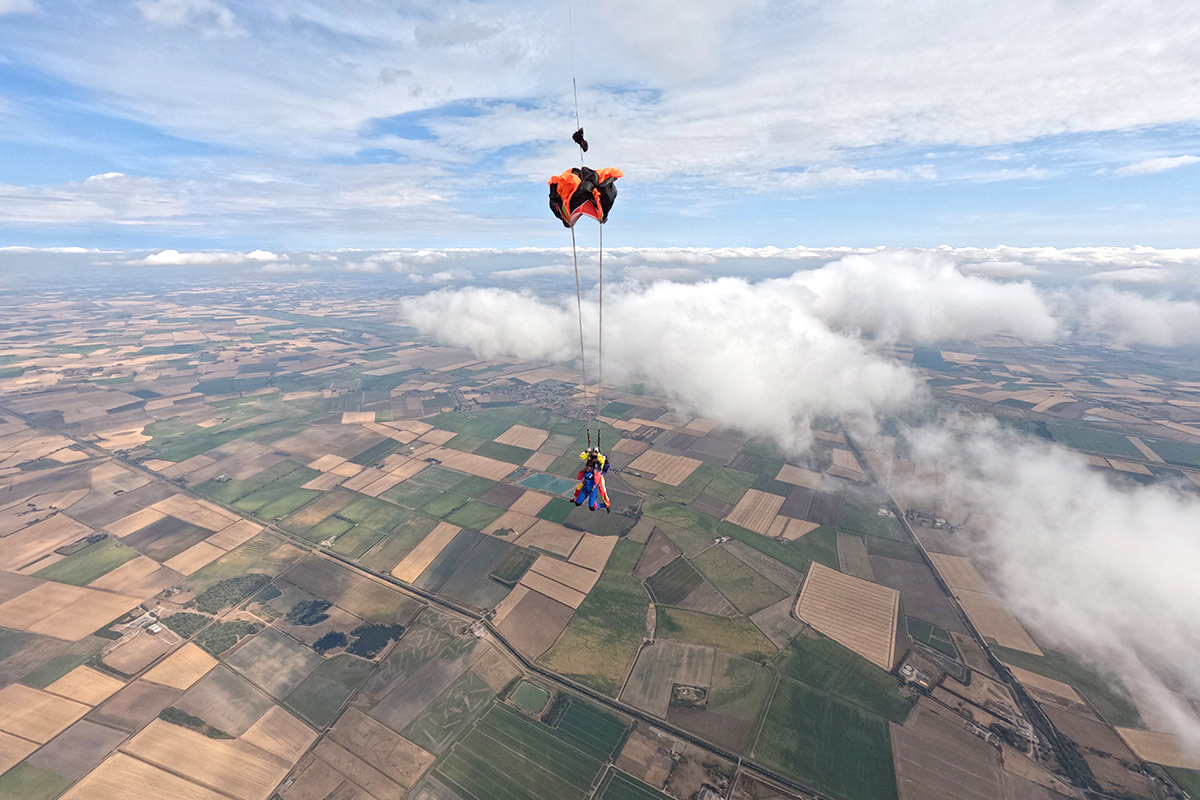
October 28, 2026 12:00 amYou can steer the parachute on a tandem skydive if your instructor invites you to help, but they remain in control of the landing approach. Once the canopy opens, the rush of freefall gives way to a calmer glide as your instructor guides you towards the landing area.
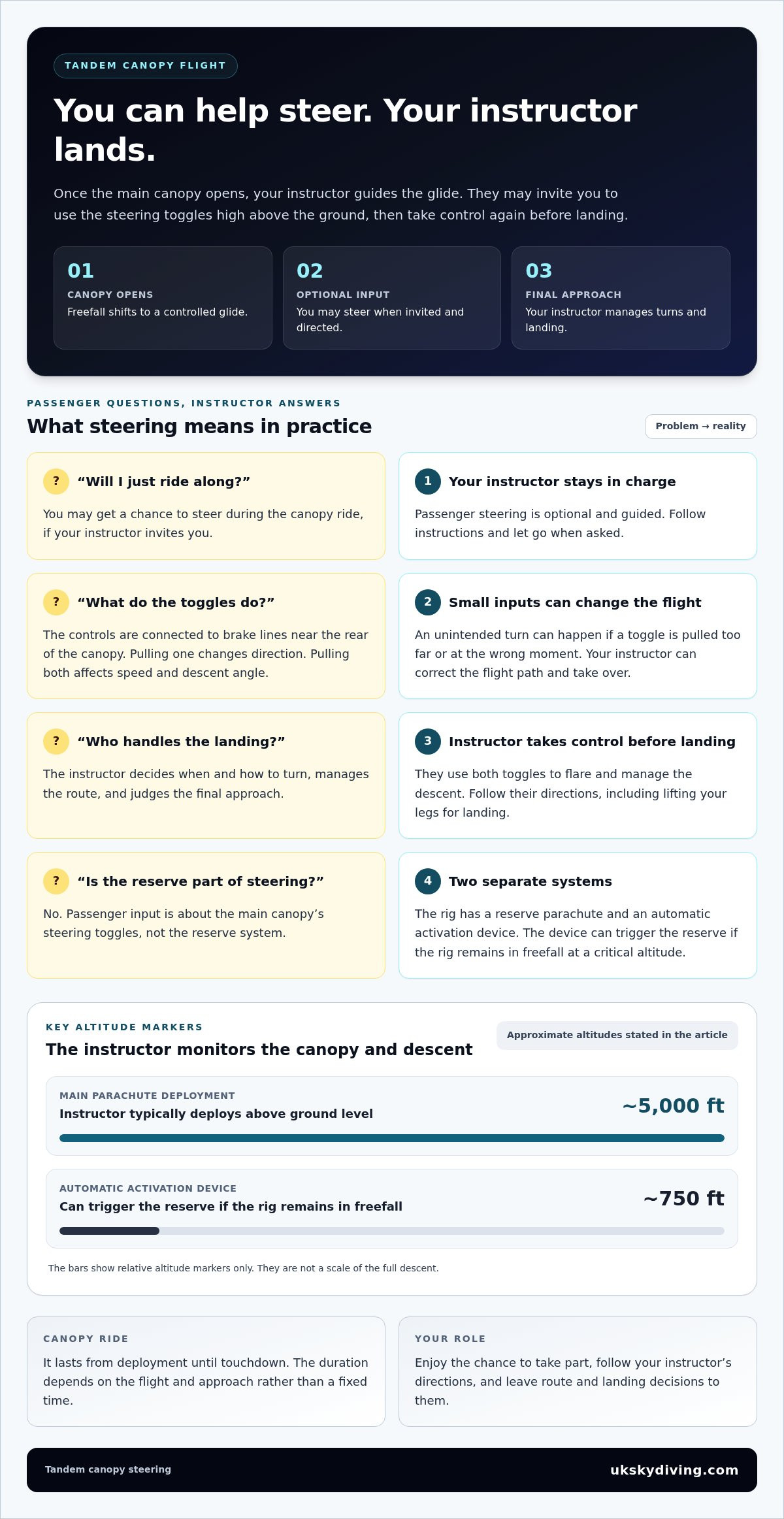
It’s natural to wonder whether you’ll simply ride along or get a chance to take part. Depending on the jump, your instructor may show you how the steering toggles work and invite you to use them high above the ground. They take full control again before landing, so you can focus on following their directions.
This guide explains what happens after the canopy opens, how steering changes its direction, and what it might feel like to take part as a passenger. You’ll also learn why the instructor manages the landing and what to expect from the canopy ride through the final approach.
Key Takeaways
- Your instructor manages the canopy’s route and landing approach, keeping you guided through the glide.
- After the main parachute opens, the sudden rush of freefall shifts to a steadier canopy flight towards the landing area.
- You may get the chance to use the steering toggles while high above the ground, with your instructor taking control again before landing.
- Knowing what to expect from the canopy and your instructor’s directions can help you enjoy the experience with greater confidence.
How do you steer a parachute?
On a tandem jump, the instructor controls the canopy, descent and landing approach. They monitor altitude and decide when and how to turn.
Instructor Control of Turns and Landing
The instructor steers the canopy with toggles connected to brake lines near its rear. Pulling one toggle changes direction, while using both affects descent and speed. These controls help guide the jump towards the landing area and manage the final approach. You follow the instructor’s directions rather than making landing decisions.
Before solo qualification, a UK tandem instructor completes 50 supervised tandem jumps. The training minimum is 800 solo skydives and an AFF Instructor rating. These stages build experience in controlling turns and landings with a passenger attached.
Altitude is another part of the instructor’s job. UK tandem instructors typically deploy the main parachute at around 5,000 feet above ground level. An automatic activation device, or AAD, automatically fires the reserve if the rig remains in freefall at around 750 feet above ground level.
Conditions and Restrictions for Steering
Age, weight and health requirements affect whether someone can take part, not who steers the canopy. A medical certificate is mandatory for tandem students over 65 years old. Steering remains under the instructor’s control, so a passenger’s age or experience doesn’t make them responsible for the landing.
Can you steer a tandem parachute in strong wind or bad weather? UK tandem operations require ground-level wind speed to be below around 22 miles per hour. Weather conditions also affect whether a jump can proceed, because the instructor needs to control the canopy and landing approach. These limits help keep the planned flight manageable.
Tandem parachute deployment and canopy flight
After the instructor deploys the main canopy, the tandem moves from freefall into a controlled glide. The canopy’s design and steering lines shape the ride that follows.
Steering Toggles and Canopy Control
Steering toggles control a ram-air canopy by changing tension on its brake lines. Pulling one toggle turns the parachute, while pulling both changes its speed and descent angle. The instructor uses these controls to guide the flight towards the landing area.
A modern ram-air parachute has two layers of material divided into elongated cells. Steering lines run along each side and end at a toggle, allowing the instructor to adjust direction during the canopy ride. They may invite you to help, while remaining in control of the flight.
During a UK tandem skydive, the instructor typically deploys the main parachute at around 5,000 feet above ground level. The canopy opens above the jumpers, and the instructor checks its response before steering towards the landing area. The rig also has a reserve parachute and an automatic activation device. The device can trigger the reserve if the rig remains in freefall at a critical altitude.
Canopy Flare and Landing
A flare is when the instructor uses both toggles to reduce the canopy’s descent rate during the final landing stage. Pulling both toggles converts some forward speed into lift, helping manage the approach to the ground.
The timing and smoothness of the flare matter. Pull too early, and the canopy may lose useful forward movement before reaching the landing area. The instructor judges the approach and performs the flare. You follow their directions, including lifting your legs for landing.
The canopy ride lasts from deployment until touchdown, so its duration depends on the flight and approach rather than a fixed time. If you’re curious about the experience, explore this tandem skydive experience to see how canopy flight fits into the jump.
Whether a tandem passenger can help steer the parachute
Yes, a tandem instructor may invite you to steer while the canopy is high above the ground. They remain responsible for the flight and take control before landing.
Passenger Input and Instructor Permission
Passenger steering is an optional chance to use the canopy toggles under the tandem instructor’s direction. In the UK, the instructor may offer this during the canopy ride, after the aircraft exit and freefall.
A tandem harness connects you to the instructor’s system at four attachment points. This secure connection lets you experience the controls while remaining attached to the instructor. Follow their directions and let go when asked, so they can manage the route and landing approach.
Risks of Passenger Steering
The main risk is an unintended turn or change of direction if a toggle is pulled too far or at the wrong moment. The tandem instructor must keep control of the canopy’s route, especially as the landing area gets closer.
Steering also differs from handling the reserve parachute. The tandem rig has two separate parachutes, and an electronic automatic activation device can deploy the reserve if the rig remains in freefall at around 750 feet above ground level. Passenger input concerns the main canopy’s steering toggles, not the reserve system.
For example, pulling one toggle changes the canopy’s direction, while pulling both affects speed and descent angle. The instructor can correct the flight path and take over whenever needed. Your role is to follow instructions, not make the final decisions about turns or touchdown.
So, can a tandem instructor let the passenger steer in the UK? Yes, they may invite you to help steer, while retaining responsibility for the canopy and landing. The chance to take part doesn’t change who manages the approach.
Steering a tandem parachute
In a tandem skydive, the instructor remains responsible for controlling the canopy and landing approach. Unlike a solo skydiver, you don’t manage the flight independently, even if the instructor invites you to use the controls.
Tandem Steering Basics
Tandem steering means adjusting the canopy’s direction and descent while keeping the instructor and passenger on course together. The instructor’s decisions guide every turn and the final landing approach.
A modern square ram-air canopy responds to steering inputs, allowing the instructor to guide its route across the sky. Sport canopies can reach air speeds of about 25 – 30 mph, so steering changes affect the direction of forward travel as well as the approach to the ground.
Treat any opportunity to steer as a supervised part of the ride, not a handover of responsibility. The instructor chooses the route and manages the landing while you follow their directions.
Tandem and Solo Steering Compared
Solo skydivers steer their own canopy and make decisions about their flight. On a tandem jump, the instructor controls the canopy and landing, while you may help only when invited.
The difference matters most near the landing area. A solo jumper makes the steering inputs for their own approach, but a tandem instructor must account for both people throughout the flight, choosing turns and managing the final descent.
So, can you steer the parachute on a tandem? You may be invited to help while high above the ground, but the instructor retains control of the flight and landing. You can take part without having to manage the whole canopy ride.
Want to experience the transition from aircraft exit to canopy flight? Explore a tandem skydive experience and see how the full jump comes together.
UK Skydiving: Tandem Skydive Experience
UK Skydiving’s Tandem Skydive Experience gives beginners the chance to experience the full jump securely harnessed to a professional instructor. You’ll feel the aircraft exit, freefall and canopy flight, while your instructor manages the parachute and landing. The jump is from up to 13,000 feet.
If steering has sparked a bigger interest in skydiving, the Accelerated Freefall (AFF) Course offers a separate route to learning to skydive solo. Video and Photo Packages can also help you keep a record of the experience.
Whether you’re ready for your first tandem jump or exploring what comes next, contact UK Skydiving to discuss your options.
Choose how you want to take the next step
The canopy ride can be the start of a bigger interest in skydiving. If you’re still wondering whether you can steer the parachute on a tandem, consider what appeals most: experiencing a jump with an instructor, progressing towards solo skydiving, or taking part for a cause you care about.
UK Skydiving offers a Tandem Skydive Experience, an Accelerated Freefall (AFF) Course and Charity Jumps. Each provides a different way to engage with the sport, whether you want a first taste of the sky or a more active learning path.
You don’t need to have every detail decided before taking the next step. A conversation can help you work out which experience matches your aims and what you’d like to know before jumping. Speak with UK Skydiving and ask your question, then start planning an experience that feels right for you.
Frequently Asked Questions
From Rush to Serenity: What Happens When the Parachute Opens?
The opening marks the transition from freefall to the canopy portion of the jump. Tandem freefall lasts between 30 and 50 seconds, depending on the exit altitude. Once the canopy is open, the pace changes and the view becomes easier to take in. The exact sequence depends on the jump, but deployment is the point when the descent continues under canopy.
What is Tandem Skydiving?
Tandem skydiving lets you experience a skydive while attached to an instructor, rather than jumping alone. The instructor handles the technical demands of the jump while you take part as the passenger. It’s designed for beginners who want to experience skydiving without first completing solo training. The focus is on the jump, not qualifying to skydive independently.
Can a tandem passenger steer the parachute during a skydive?
Yes, you can steer the parachute on a tandem jump if the instructor invites you to take part. It isn’t required, so you can simply enjoy the canopy ride instead. If you’re offered the controls, wait for clear direction before touching them and follow your instructor’s cues throughout.
How does steering a tandem parachute work?
The steering controls let the instructor make adjustments to the canopy’s flight path. A one-sided input guides a turn, while an even input on both sides changes the canopy’s descent and forward movement. For a passenger, the useful point is that control comes from deliberate inputs, not from shifting your body or leaning towards the direction you want to travel.
When does a tandem passenger get to steer the parachute?
An instructor may offer you the controls during the canopy ride when they’re ready for you to participate. There’s no fixed moment that applies to every flight. Stay attentive to your instructor rather than reaching for the controls yourself. Their directions tell you whether you can try steering.
How much control does a tandem passenger have over the parachute?
Your input is limited to the controls the instructor invites you to use. You don’t plan the route, choose manoeuvres or take over the jump. Think of it as a chance to experience one part of canopy handling while the instructor directs the flight. Their instructions determine when your input begins and ends.
Categorised in: Blog