Latest News
-
 4 ways to make your first skydive feel more manageable November 10, 2026
-
 What’s the Scariest Part of Skydiving? How Freefall Feels November 9, 2026
-
 Parental Consent for Skydiving and Young Jumpers November 8, 2026
-
 How to Position Your Body and Breathe During Freefall November 7, 2026
-
 Pressure Changes During Skydiving: Why Your Ears Hurt November 6, 2026
Skydive in England: Tandem Prices, Safety and Locations
November 2, 2026 10:00 amWhen planning a skydive in England, specifically looking at options around Cambridgeshire and March, the price of a tandem jump depends on the location, group size and package, and is typically given after a quote request. A jump with UK Skydiving can take you up to 13,000 feet, so it’s worth weighing the full experience alongside the cost.
It’s natural to want reassurance before taking the leap. Knowing what to expect in the local area can help you feel ready: check the safety information, instructor support, drop-zone location and first-hand customer reviews. This guide explains what can affect the price, how to compare preparation and staff support, and what to consider when choosing our Cambridgeshire location. Get the practical details first, then decide whether freefall is right for you.
Key Takeaways
- Compare tandem skydive prices by location, group size and what the experience includes to understand what shapes the overall cost.
- Use information about facilities, training and instructor experience to make a more informed choice about safety.
- Consider how location affects your trip, then explore customer reviews for firsthand perspectives on the experience.
- Decide whether a tandem jump, a route towards solo skydiving or a charity jump best suits what you want from the day.
Tandem skydive prices
A tandem skydive price depends on the drop zone, booking format and optional extras. Compare what each quote includes before choosing where to jump.
For a skydive in England, Maidstone, Salisbury and Grange-over-Sands are examples of locations to compare. Prices vary with location and booking details, so compare quotes on the same basis.
Self-Funded Tandem Prices
A self-funded jump means paying for your own place rather than raising money through a charity. Compare the quoted total, drop zone and what the booking includes. Maidstone, Salisbury and Grange-over-Sands offer named locations to consider. Remember to factor in practical differences, such as how far you’ll need to travel.
Jump Options and Pricing
Group bookings can use different per-person terms depending on the number of participants. For example, compare the terms for a group of 5-9 with those for 10 or more. Ask for the full group quote, then divide the total by the number of jumpers to compare the per-person cost. The right option depends on your group size and plans.
Before booking, compare each quote using the same checklist: drop zone, booking format, included options and separate extras. Video or photo packages can be memorable additions, but treat them as optional when comparing costs. This helps you distinguish the jump price from add-ons.
Also compare the experience itself. At Skydive Langar, the parachute flight after a tandem jump lasts approximately 5 minutes. That gives you a concrete detail to consider alongside location and booking terms, without treating duration as a price measure. A clear comparison makes it easier to choose a jump that suits your budget and plans.
Skydiving safety and staff experience
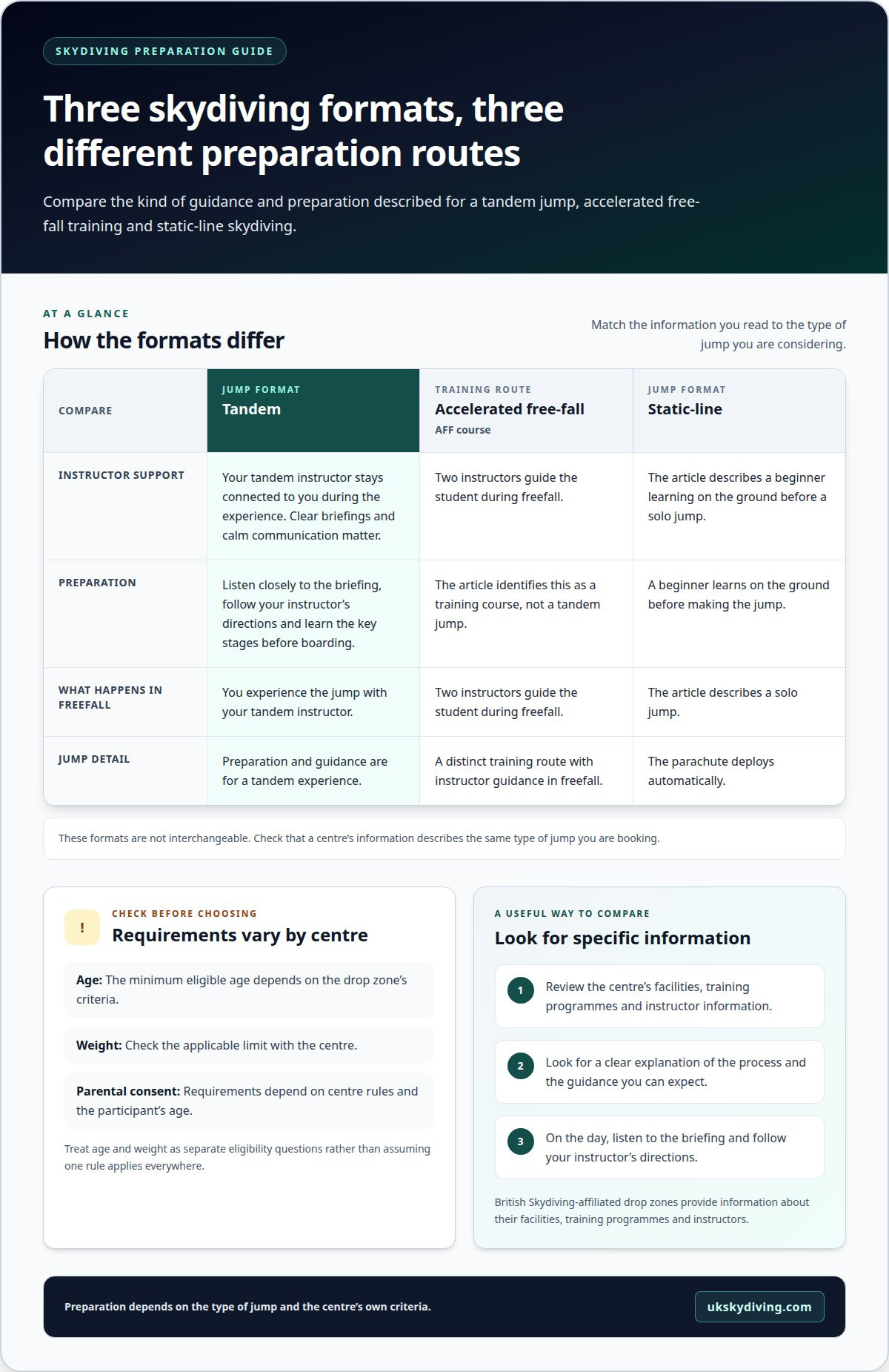
For a tandem jump, focus on the instructor’s role, the preparation and the drop zone’s safety information. Each centre sets its own age and weight criteria, so don’t assume one limit applies everywhere. Parental consent requirements also depend on the centre’s rules and the participant’s age.
Instructor Experience and Support
British Skydiving-affiliated drop zones provide information about their facilities, training programmes and instructors. Read those details to understand who supports your jump and what guidance to expect. A tandem instructor stays connected to you during the experience, so clear briefings and calm communication matter. Look for specific explanations of the process, not just general claims about expertise.
The training route matters, too. In accelerated free-fall training, two instructors guide the student during freefall. This describes an AFF course, not a tandem jump, so compare like with like when assessing instructor support.
Skydiving Preparation
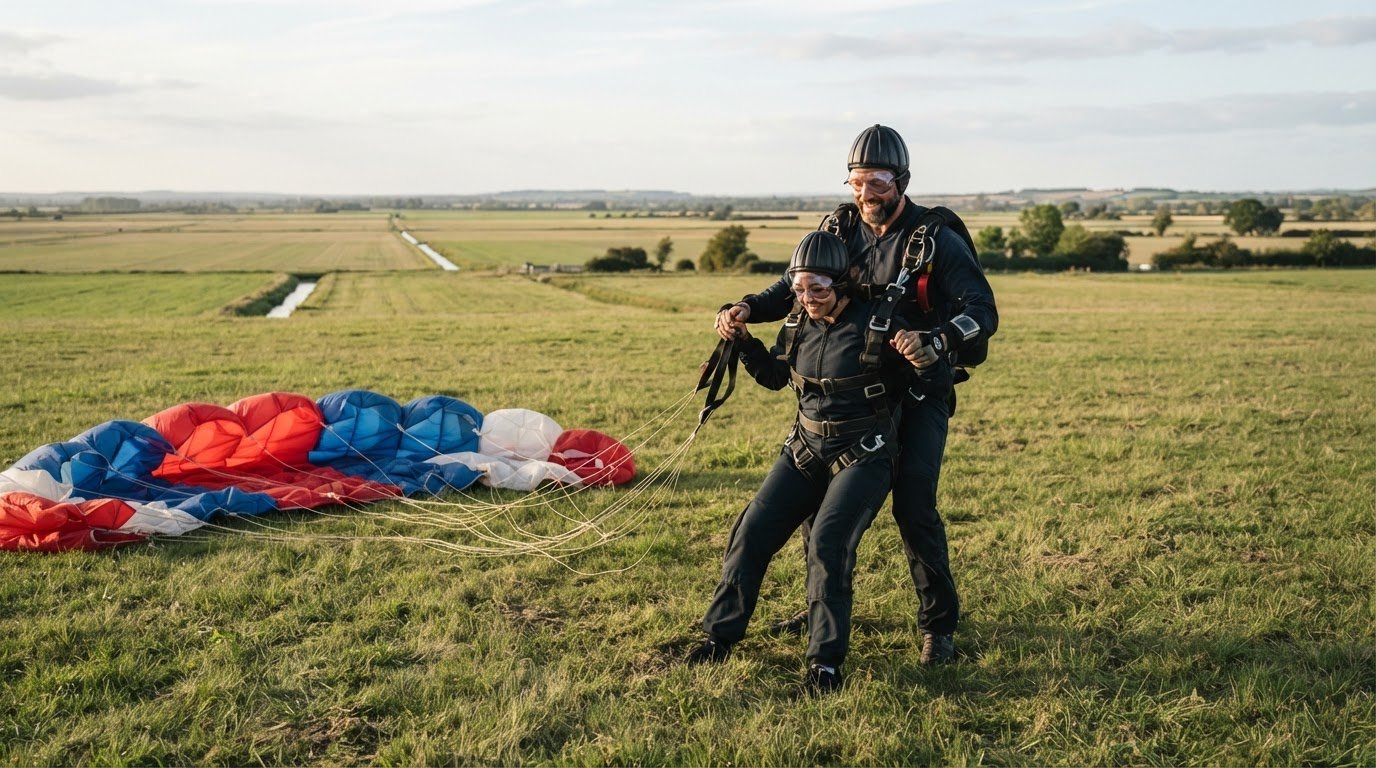
Preparation begins on the ground. Listen closely to the briefing, follow your instructor’s directions and learn the key stages before boarding. Knowing what comes next can help you focus on the view and the feeling of freefall, rather than trying to recall instructions in the moment.
Training varies by jump type. In static-line skydiving, a beginner learns on the ground before making a solo jump with an automatically deploying parachute. Tandem preparation is different, so make sure the information you read matches the jump you’re booking. This helps you arrive ready for the right kind of experience.
Age and Weight Limits
The minimum eligible age and parental consent arrangements depend on the drop zone’s participation criteria. The applicable weight limit also comes from the centre’s criteria. Treat age and weight as separate eligibility questions, rather than assuming one rule applies everywhere.
Before choosing a date, identify the centre and review its participant requirements. If you’re arranging a jump for a younger person, include their parent or guardian in the booking steps. Understanding the criteria in advance helps avoid surprises and keeps the focus on the experience.
Skydiving centres in England
Don’t assume every centre operates throughout the year. Weather can affect whether a jump goes ahead and may lead to delays or rescheduling. The centre’s operating schedule also determines which dates are available.
Location can make a big difference to your day. Langar Airfield opened in 1942 as a base for RAF 207 Squadron during the Second World War. A tandem jump at Skydive Langar takes place from 2 miles above the earth. Those details help you compare the setting and jump experience, as well as the journey involved.
For another location reference, Beccles Airfield is 15 miles south west of Norwich. Use that distance to judge whether the journey works for you and anyone travelling with you. If you’re comparing centres around England, start with the towns or cities you can reach, then look at the location and jump details for each one.
- Langar: consider the historic airfield setting and the stated jump height.
- Beccles: use its distance from Norwich when planning travel.
- Peterborough: include it as another named location when comparing options.
A page lists 20 skydiving centres across the UK, giving you a wider view of possible locations. As that total covers the UK, use it as a broad starting point rather than a count for England alone. Narrow your choice by travel time, the centre’s setting and the type of jump you want.
For a charity jump, travel matters for your group as well as for you. Choose a location participants can reach, then plan around the centre’s schedule and weather-dependent jump conditions. For participants travelling from further afield or coordinating flights around their event, checking comparecheapairportparking.co.uk can simplify parking arrangements at major UK departure points. Comparing these practical details can help you find a suitable place for a memorable parachute experience.
Customer reviews
Reviews can show what a jump felt like from a first-timer’s perspective. Read several accounts and compare details such as the briefing, instructor support, freefall and time at the airfield. Specific experiences are more useful than general praise.
Examples include one reviewer who postponed a tandem skydive for 1.5 years before taking the leap. Another review describes a first jump at age 55, from 10,000 foot. These stories can help you understand how people approach the adventure at different stages of life, without suggesting everyone’s experience will be identical.
Charity jumps feature in customer stories, too. One review says a skydive for the NSPCC raised £4k. If fundraising matters to you, look for reviews that describe the charity, the fundraising experience and what the participant found memorable. That gives you a more useful picture than a short comment focused only on excitement.
- Look for detail: note whether the reviewer describes the briefing, staff support or freefall.
- Compare experiences: a 55-year-old first-time jumper’s account may answer different concerns than a charity jumper’s story.
- Read the context: a 1.5-year postponement may explain the reviewer’s journey, not the usual booking experience.
Use reviews to shape your questions, not to assume you’ll have the same experience. Note what a reviewer says helped them feel prepared, then compare it with the information for your planned jump. An account of the airfield can help you picture the setting, while a freefall review may convey the thrill of the moment.
Ready to turn inspiration into a plan? Explore your next skydiving step and consider which experience matches your goal.
UK Skydiving: Tandem Skydive Experience
UK Skydiving offers a Tandem Skydive Experience for beginners who want to take the leap with an instructor. You’ll be securely harnessed to a professional instructor for a jump from up to 13,000 feet, bringing the thrill of freefall within reach without training to jump solo.
If you want to progress towards solo skydiving, the Accelerated Freefall (AFF) Course offers a structured training route. Charity Jumps are for people who want to fundraise through their jump, while Video and Photo Packages help capture the day. Choose the experience that fits your reason for jumping, whether it’s a first taste of skydiving, a personal challenge or a cause close to you.
To discuss your next step, contact UK Skydiving or visit ukskydiving.com.
Make your next step a personal one
Choosing to skydive in England can mark the start of a new challenge, a shared adventure or a way to support a cause. Think about what you want the experience to mean to you. That purpose can help you choose the right route and feel prepared to take the leap.
UK Skydiving offers a Tandem Skydive Experience for beginners, an Accelerated Freefall (AFF) Course for those aiming to progress towards solo skydiving, and Charity Jumps for fundraising. Each offers a different way to make your jump meaningful, whether you’re seeking a thrill, working towards a new skill or doing something for others.
Ready to explore the option that fits your plans? Contact UK Skydiving to plan your jump. Take the next step at your own pace, and get ready for an experience you’ll remember.
Frequently Asked Questions
How much does it cost?
The cost depends on the drop zone, booking format and optional extras. UK Skydiving provides a quote based on your booking details. Compare quotes on the same basis, including the jump location, whether you’re booking alone or as a group, and any video or photo options. This makes it easier to see what each total covers before choosing.
Want to try skydiving?
Start by deciding what you want from the experience. A tandem jump suits beginners who want to skydive alongside an instructor. If you want to learn to jump solo, an Accelerated Freefall (AFF) Course is a different route. A charity jump combines the adventure with fundraising. Decide which goal matters most, then explore the option that fits.
Where can you skydive in England?
English drop zones include Langar, Beccles and Peterborough. To narrow down your choice, map the journey from home and consider how your group will travel to the airfield. For instance, if you’re organising group travel or setting off from parts of Surrey, local private hire services like GATE.taxi can help streamline travel to regional stations and meeting points. If you’re planning a jump with friends or family, choose a location that works for everyone, then compare the jump experience and booking arrangements.
How much does a tandem skydive cost in England?
There isn’t one price for every tandem jump in England. Location and booking format affect the cost, as can optional extras such as photos or video. For a useful comparison, note the drop zone, group arrangement and add-ons included in each quote. Then compare like with like instead of choosing by the headline price alone.
Do you need a licence or experience to skydive in England?
You don’t need previous skydiving experience to try a beginner tandem jump. You’re securely harnessed to a professional instructor, making it different from learning to jump solo. Solo skydiving requires training, and an Accelerated Freefall (AFF) Course provides a structured route. Choose the format that matches your experience and ambition, and read the relevant jump information before booking.
How do you book and prepare for a skydive in England?
First, choose a drop zone and decide whether you want a tandem jump, a solo-training route or a charity jump. Next, review the booking details and preparation guidance. Keep travel plans flexible because weather can affect whether a jump goes ahead as scheduled. Before setting off, make sure everyone in your group knows the location and arrival arrangements.
Categorised in: Blog