
Latest News
-
 4 ways to make your first skydive feel more manageable November 10, 2026
-
 What’s the Scariest Part of Skydiving? How Freefall Feels November 9, 2026
-
 Parental Consent for Skydiving and Young Jumpers November 8, 2026
-
 How to Position Your Body and Breathe During Freefall November 7, 2026
-
 Pressure Changes During Skydiving: Why Your Ears Hurt November 6, 2026
Morning or afternoon skydiving: how wind, queues and delays affect your jump
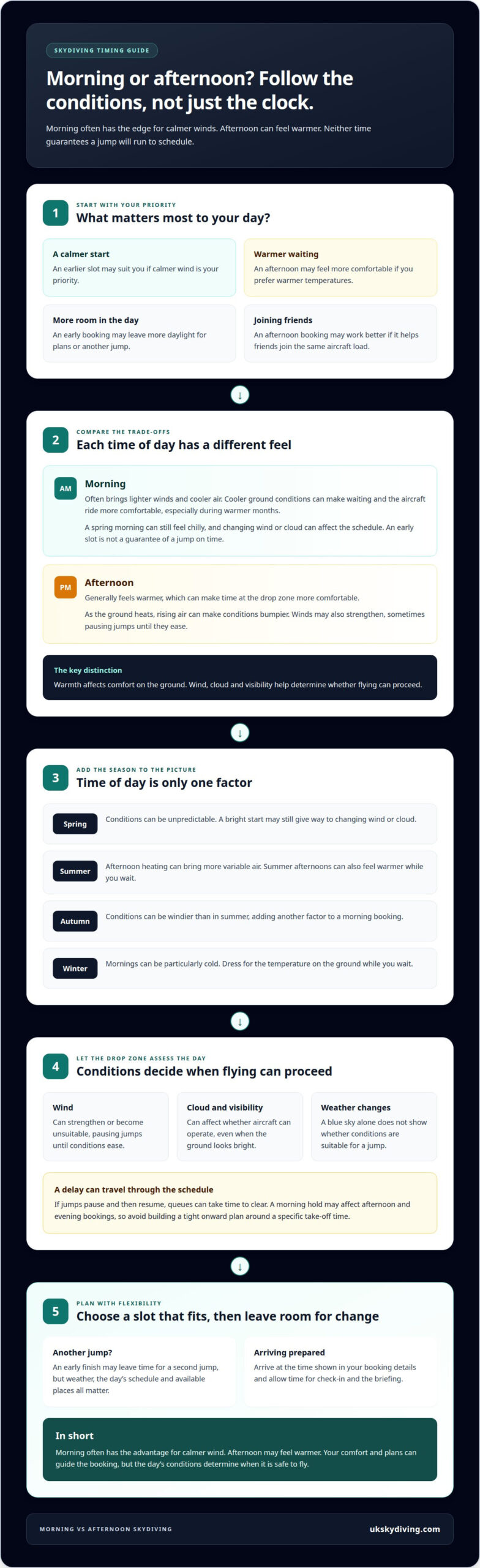
November 5, 2026 12:00 amIf you’re wondering whether it is better to skydive in the morning or afternoon, morning often has the edge for calmer winds and fewer weather delays. Afternoon jumps can feel warmer, but changing winds and waits may affect your take-off time. Booking earlier can also leave more of the day open if you hope to jump again.
It’s natural to hope for a smooth arrival at the drop zone and clear views from the aircraft. The weather has the final say, though, and an early slot does not guarantee everything will run to schedule. Wind, temperature, queues and delays can all shape your day, as can your plans to jump again. An afternoon may suit you better if warmth or coordinating with friends matters most, so choose a time that fits your priorities.
Key Takeaways
- Choose a time around your priorities: a smoother start, warmer conditions, or jumping with friends.
- Allow flexibility in your plans, since delays can build through the day and affect later bookings.
- Think about the season as well as the time of day, and dress for cooler mornings or evenings.
- An early slot may leave more room for another jump, but weather and scheduling shape how the day unfolds.
1. Morning wind conditions and cooler temperatures
Morning weather often brings lighter winds, before daytime heating changes the air above the drop zone. As the ground warms, heated air rises and mixes with cooler air, which can make conditions bumpier around midday. Afternoon winds may also pick up, sometimes pausing jumps until they ease. An early booking may suit you if calmer flying conditions are your priority, although the weather on the day matters more than the clock.
There isn’t one booking time that suits every first-time tandem skydiver in the UK. An early slot may appeal if you value calmer conditions, while an afternoon can be more comfortable if you prefer warmer temperatures. Consider whether you’d rather start in cooler air or accept that afternoon weather may change. Neither time guarantees a jump will go ahead as scheduled.
Cooler mornings can make waiting on the ground and the aircraft ride more comfortable, especially during warmer months. Spring weather is less predictable than a simple morning-versus-afternoon rule suggests. A bright start can still give way to changing wind or cloud, so the drop zone assesses conditions before flying and continues to monitor them. If the wind becomes unsuitable, the schedule may pause. A blue sky alone doesn’t tell you whether conditions are right for a jump.
Season matters, too. A spring morning may feel chilly while you wait, so dress for the temperature on the ground rather than assuming the day will warm quickly. Winter mornings can be particularly cold, and rain or other unsuitable weather may affect whether jumping can take place. Summer afternoons can bring stronger heating and more variable air. In short, morning often has the advantage for calmer wind, while afternoon may feel warmer. Choose around your comfort and schedule, then let the day’s conditions determine when flying can safely proceed.
2. Booking an early jump to allow for a second jump
An early booking can leave more of the day for another jump. If your first skydive finishes with time to spare, you may have a better chance of fitting one in. That depends on the day’s schedule, weather and available places, so treat a repeat jump as a possibility, not the centrepiece of your plans. Arriving early also gives your day a head start if the drop zone is working through its bookings.
Think about what you want from the experience. A first-time tandem skydive may feel like the ultimate adventure on its own, while experienced jumpers might value the extra opportunity. Friends may prefer an afternoon booking if it helps them join the same aircraft load. Warmer afternoon temperatures can also make waiting outside more pleasant, while an earlier start leaves more daylight for plans after your jump.
Light changes the view, too. A lower sun can cast longer shadows and light faces from the side, adding depth to photos. Depending on the season and cloud cover, an afternoon or evening jump may bring beautiful changing colours. If photos matter to you, consider how the light at your booking time could shape the images, alongside the weather and your preferred schedule. The scenery can be striking at different times, but the sky never looks exactly the same from one day to another.
An evening appointment is different from a daytime booking. A jump is classified as a night jump when it takes place between one hour after official sunset and one hour before official sunrise. Night-jump licensing is a separate consideration from choosing a daytime slot. If you’re planning a tandem skydive, an early booking gives more room in the day for another jump, while the right time ultimately depends on your priorities. Explore the tandem skydive experience that fits your plans.
3. Morning queues and weather-delay scheduling
Morning bookings may be less likely to face weather delays because winds can strengthen as the day warms. That may help the drop zone keep its schedule moving, but clear skies alone don’t determine whether aircraft can fly. Wind, cloud and visibility all matter. A morning slot may offer a calmer start, but you’ll still need to complete the required preparation before boarding.
Queues can grow when earlier jumps pause, then resume once conditions improve. A morning weather hold may therefore affect afternoon and evening bookings, too. For example, if wind temporarily stops jumping, the waiting list can take time to clear after flying restarts. That makes the day’s schedule variable, even if you arrive promptly. If you feel nervous, remember that waiting and the jump itself are separate parts of the experience.
Autumn can bring windier conditions than summer, adding another factor to a morning booking. Visibility matters, too: cloud or poor views may affect whether aircraft can operate, even when the ground looks bright. Later appointments have less daylight available, and an evening jump may need to be rescheduled if it cannot take place before sunset. Earlier weather delays can add to that pressure, so avoid building a tight onward plan around a specific take-off time.
For a UK skydive, age and weight eligibility follow the drop zone’s tandem requirements, while health suitability depends on your circumstances and relevant screening. Arrive at the time shown in your booking details, allowing time for check-in and the briefing. An early arrival helps you be ready, but it can’t change the weather or move other bookings ahead. Morning timing may reduce exposure to later wind changes, while an afternoon booking may mean waiting through delays already in progress.
4. Temperature and wind-speed guidance
Afternoon temperatures are generally warmer, which can make waiting at the drop zone more comfortable during summer. But warmth alone doesn’t tell you whether conditions suit a jump. As sunshine heats the ground, rising air can make the atmosphere bumpier, while afternoon winds can strengthen and delay flying. For tandem jumpers, the key distinction is comfort on the ground versus suitable conditions for the aircraft and jump.
There isn’t a single wind-speed figure that guarantees a skydive can proceed. Conditions change with the weather, and afternoon wind can bring a hold while it settles. Rather than judging by temperature or a forecast alone, allow the drop zone to assess conditions on the day. A warm, bright afternoon can still bring wind that affects the schedule.
Dress for the season and the time you’ll be waiting outside. Spring and autumn mornings can feel chilly, so wear warm layers that are comfortable on the ground. Summer afternoons are usually warmer, but the air during a jump can feel different from the conditions you noticed while waiting. Choose clothing that keeps you comfortable before boarding, and follow the drop zone’s instructions for your jump.
Later evening conditions can change again as the sun sinks and the day cools. Sunset jumps can bring lower winds, similar to early morning, but warm layers are useful in spring and autumn. The best time for you depends on whether you value a warmer wait or an earlier start. Both temperature and wind shape the experience, and neither the season nor a particular time guarantees suitable flying conditions.
Ready to plan your jump around the conditions and season? Book your tandem skydive and get set for the experience.
UK Skydiving: Tandem Skydive Experience
UK Skydiving’s Tandem Skydive Experience gives beginners the chance to jump securely harnessed to a professional instructor from up to 13,000 feet. It’s a thrilling way to experience freefall without first learning to skydive solo.
Let your preferred time of day shape your plans. Choose an early booking if you want more of the day available, or consider how an afternoon slot fits your schedule and comfort. Weather and wind still influence flying, so keep your plans flexible. Video and Photo Packages can help capture the day, whatever time you jump.
If you’re ready to plan your first tandem jump, contact UK Skydiving to talk through your options.
Choose the jump that fits your plans
Choose the booking that lets you focus on the experience, rather than trying to control every part of the day. Decide what matters most: making a first skydive, working towards solo jumping, or taking part for a cause. UK Skydiving offers a Tandem Skydive Experience, an Accelerated Freefall (AFF) Course and Charity Jumps, giving you different ways to take that next step.
So, is it better to skydive in the morning or afternoon? Choose the time that fits your priorities, then leave room in your plans for the day to unfold. If you’re ready to talk through your jump, contact UK Skydiving to plan your jump. Your first step towards an unforgettable adventure starts with a conversation.
Frequently Asked Questions
What Is The Best Time Of Day To Skydive?
Early morning is often a strong choice if you prioritise calmer air and want to start your day with the jump. If you’re travelling with friends, an afternoon booking may make it easier to join the same aircraft load. Consider your group, travel plans and preferred pace, rather than treating one time as best for every jumper.
What is the best time of day to go sky-diving?
The best time is the slot that suits your priorities and gives you room to enjoy the day. An early appointment may appeal if you’d rather not spend the whole morning anticipating your first jump. If you prefer a warmer wait or are coordinating plans with friends, a later slot may suit you better. Choose based on the experience you want around the jump, too.
Is morning or afternoon better for skydiving in the UK?
Morning often has the advantage for calmer conditions, while afternoon can feel warmer and may suit a group’s schedule. In the UK, local weather can change the picture, so the time alone can’t tell you what conditions will be like on your date. If you’re deciding whether it’s better to skydive in the morning or afternoon, weigh comfort, timing and your plans afterwards.
How do wind and weather conditions affect UK skydives throughout the day?
Wind, cloud and visibility influence whether aircraft can operate and a jump can go ahead. As the day warms, rising air can make conditions bumpier, and stronger winds may pause jumping. A hold can affect later bookings as well as the slot currently waiting. A bright afternoon, for instance, doesn’t automatically mean conditions are suitable for flying.
What time of day is best for clear views while skydiving?
Clear views depend more on the day’s visibility and cloud than on a fixed booking time. Low sun can create longer shadows and light faces from the side, adding depth to photos. Later light can also make the sky look different from midday. If scenery matters most, remember that cloud cover and changing weather shape what you’ll see.
Does temperature or turbulence make afternoon skydiving less comfortable?
Afternoons are often warmer, which can make waiting outdoors more comfortable, especially in summer. However, heating at ground level can create rising air and bumpier conditions around midday. Temperature and turbulence are related, but warmth alone doesn’t determine whether the aircraft can fly. Dress for the season and follow the drop zone’s guidance on what to wear.
Categorised in: Blog