Latest News
-
 4 ways to make your first skydive feel more manageable November 10, 2026
-
 What’s the Scariest Part of Skydiving? How Freefall Feels November 9, 2026
-
 Parental Consent for Skydiving and Young Jumpers November 8, 2026
-
 How to Position Your Body and Breathe During Freefall November 7, 2026
-
 Pressure Changes During Skydiving: Why Your Ears Hurt November 6, 2026
How to Protect Your Ears When Skydiving with Ear Problems
November 4, 2026 12:00 amYes, skydiving with ear problems can cause pain or pressure, especially when a cold, sinus congestion or an ear infection makes it harder for your ears to equalise. Ear pressure during a skydive is often mild and temporary, but congestion can make equalising difficult and increase the risk of injury. Reschedule your jump if you have a cold or an ear infection.
It’s natural to wonder whether freefall will make an existing ear problem worse. The key is how your ears respond to changing pressure as the aircraft climbs and you descend beneath the parachute.
Here’s what happens to your ears during each part of a jump, how allergies or congestion can affect your decision, and which symptoms after landing call for medical advice. You’ll also find practical ways to ease pressure and protect your comfort, so you can make an informed decision about jumping.
Key Takeaways
- Learn why blocked Eustachian tubes can make it harder to equalise pressure as the aircraft climbs.
- Find out when cold or sinus symptoms make postponing your jump the safer choice.
- Recognise which lingering ear symptoms after landing warrant medical advice.
- Understand how ear sensations can change during ascent, freefall and descent, and what may help ease pressure.
Skydiving with a Cold or Allergies: Is It Safe?
A cold or sinus congestion can make it harder for your ears to equalise, making a skydive painful. These steps explain the pressure changes, ways to manage discomfort and when to seek advice.
-
1. Understand Middle-Ear Pressure Changes
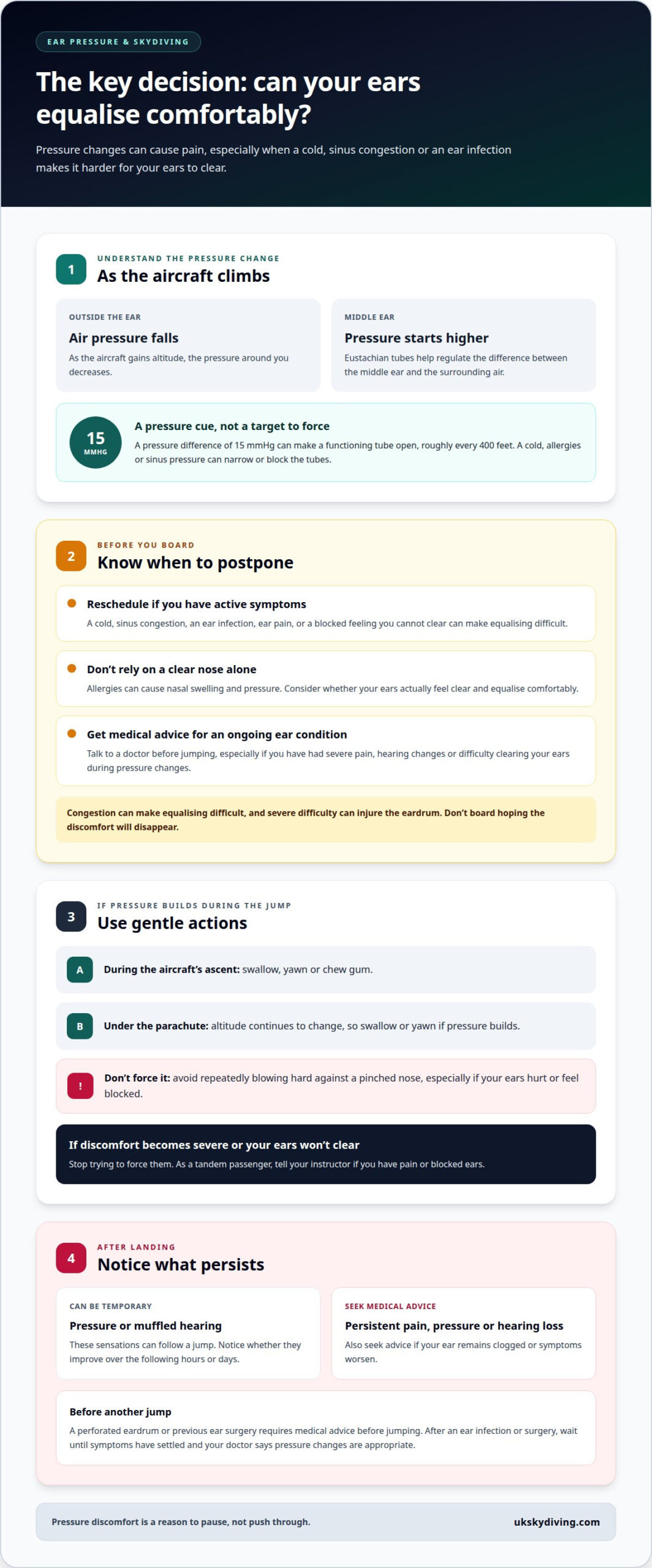
As the aircraft gains altitude, outside air pressure falls while pressure in the middle ear initially stays higher. The eustachian tubes connect the middle ear with the back of the nose and throat, helping regulate that difference. During ascent, a pressure difference of 15 mmHg can make a functioning tube open, roughly every 400 feet.
Notice whether your ears pop naturally as the aircraft climbs. A cold, allergies or sinus pressure can narrow or block the tubes, making pressure harder to equalise and leaving your eardrum feeling full or painful. Don’t mistake difficulty equalising for ordinary ear popping, especially if you’re congested.
-
2. Clear Ear Pressure During Descent
Use gentle actions to ease pressure rather than forcing your ears to pop. Swallow, yawn or chew gum during the aircraft’s ascent. Your altitude continues to change beneath the parachute, so swallow or yawn if pressure builds. Avoid repeatedly blowing hard against a pinched nose, particularly if your ears hurt or feel blocked.
Ear pain can happen when pressure changes faster than the eustachian tubes can adjust. If discomfort becomes severe or your ears won’t clear, don’t keep forcing them. As a tandem passenger, tell your instructor if you have pain or blocked ears. Pressure that remains after landing deserves attention, especially if your hearing seems muffled.
-
3. Check Medical Clearance Requirements
Medical screening can vary between UK skydiving centres, so don’t assume every ear condition has the same clearance requirements. Consider whether you can equalise comfortably and whether you have active symptoms. If you have a cold, sinus congestion or an ear infection, reschedule rather than trying to manage blocked tubes during a jump.
If you have an ongoing ear condition, speak to a doctor before skydiving. Explain the pressure changes involved and whether you’ve had pain, hearing changes or difficulty clearing your ears. This matters even if symptoms seem mild on the ground. Congestion can make equalising difficult at altitude, and severe difficulty can injure the eardrum.
Can Skydiving Hurt Your Ears?
Yes, pressure changes can cause ear pain, especially with a cold, sinus congestion or an ear infection. If you’re considering skydiving with ear problems, cancel or postpone if your ears feel blocked or painful, you’re congested, or you can’t equalise comfortably.
-
Avoid Jumps With Congestion
Reschedule if you have a cold, blocked sinuses or an ear infection on jump day. Congestion can prevent the eustachian tubes from opening freely, making it harder to equalise as the aircraft climbs and descends. A blocked nose, facial pressure or ear discomfort are signs to take seriously before travelling to the dropzone.
Allergies can also cause nasal swelling and pressure, even without a cold. If symptoms leave your ears blocked or make pressure difficult to clear, don’t try to push through the flight. A clear nose doesn’t guarantee your ears will equalise, so consider how your ears actually feel before deciding to jump.
-
Identify Sinus Barotrauma
Pay attention to pain around your cheeks, forehead or behind your eyes as altitude changes. Sinus barotrauma occurs when pressure cannot equalise between the sinuses and the surrounding air. Congestion can trap pressure in those spaces, causing sharp facial pain or a feeling of pressure during flight.
Don’t dismiss facial pain as ordinary ear discomfort if it intensifies during ascent or descent. Sinus and ear pressure can occur together because congestion affects connected passages around the nose and throat. A gentle Valsalva manoeuvre means pinching your nose, closing your mouth and trying to exhale. Stop if it causes pain, and don’t use it to override active congestion.
-
Use Symptoms to Decide Whether to Cancel
Cancel or postpone if you have ear pain, a blocked sensation you cannot clear, an ear infection, or cold and sinus symptoms. These signs suggest pressure may not equalise smoothly. If you’re skydiving with ear problems, a history of severe pain or muffled hearing during pressure changes is also a reason to pause and seek medical advice before jumping again.
Don’t board the aircraft hoping discomfort will disappear once you’re flying. Tell the dropzone about active symptoms and seek medical advice for an ongoing ear condition before planning another jump. A severe pressure event while congested can injure the eardrum. Choosing another day protects your ears and gives you a better chance of enjoying the jump.
Post-jump symptoms and when to seek medical advice
After a jump, seek medical advice for persistent ear pain or pressure, hearing loss, or ears that remain clogged. A perforated eardrum or previous ear surgery requires medical advice before jumping. After an ear infection or surgery, wait until symptoms have settled and your doctor says pressure changes are appropriate.
-
Monitor Symptoms After the Jump
Notice how your ears feel after landing, and whether discomfort improves over the following hours or days. Temporary pressure or muffled hearing can follow a jump, but persistent pain, pressure or hearing loss calls for medical advice. Don’t dismiss an ear that stays clogged after the parachute descent.
Seek medical attention if the blockage continues or symptoms worsen. A ruptured eardrum is rare, but pressure changes can injure it. Sudden hearing changes or ongoing pain deserve prompt attention, rather than repeated attempts to clear your ear. If you suspect a perforation, keep the ear dry and don’t put anything inside it.
-
Seek Advice From an ENT Doctor
Speak to an ear, nose and throat (ENT) doctor if sinus pressure or an existing ear condition makes you concerned about jumping. Explain what happened during the flight, when symptoms began, and whether your hearing or balance changed after landing. These details help the doctor assess pressure-related injury and your ability to equalise.
Don’t rely on a manoeuvre to treat pain that persists after landing. If you have a perforated eardrum or have had ear surgery, get medical advice before planning a jump. After an ear infection or surgery, return only when symptoms have settled and your doctor says pressure changes are suitable. If pressure remains, postpone your next jump until you’ve received advice.
Ear sensations during freefall and descent
Track how your ears feel through each phase, from the aircraft’s climb to landing. The changing altitude and strong wind can make the experience feel different from a passenger flight.
- Notice sensations during the climb. As the aircraft gains altitude, your ears may pop, feel full or sound slightly muffled. These sensations occur as pressure adjusts around the middle ear. Sinuses can add facial pressure, especially if you’re congested. Notice whether both ears clear naturally rather than assuming every pop signals a problem.
A passenger aircraft and a skydiving aircraft don’t offer the same cabin experience. Skydiving planes aren’t pressurised, so changing air pressure can be more noticeable during the climb. If one ear feels increasingly blocked or painful, tell the instructor before exit rather than trying to ignore it.
- Expect a rush of wind in freefall. Skydivers can reach speeds of up to 120 mph, and the rushing air creates a loud, powerful sensation around your head. Wind noise may make hearing conversation difficult. That sound can feel intense without meaning the pressure itself is injuring your ears.
Some tandem students find earplugs helpful for comfort, particularly if they’re concerned about wind noise. Ear protection can reduce noise, but it doesn’t remove the need for your ears to equalise. Follow your instructor’s directions, and don’t adjust equipment during the jump.
- Pay attention under the parachute. After the parachute opens, the wind often feels less forceful than in freefall, but your altitude is still changing. A gentle pop or brief fullness may occur as pressure adjusts. Swallowing or yawning may help, while forcing a painful ear to clear can worsen discomfort.
Notice whether the sensation eases as you descend and land. If sharp pain, blocked hearing or dizziness appears, tell the instructor when it’s safe to communicate. This helps distinguish a brief pressure sensation from symptoms that continue after the jump.
UK Skydiving
UK Skydiving offers a Tandem Skydive Experience for beginners, with you securely harnessed to a professional instructor for a jump from up to 13,000 feet. If ear symptoms have settled and you’re ready to explore a first jump, tandem skydiving lets you experience the climb, freefall and parachute descent alongside an instructor.
Have ongoing pain, blocked hearing, a perforated eardrum or recent ear surgery? Put medical advice first and follow your doctor’s guidance before planning a jump. Once you’re ready, UK Skydiving can help you take the next step towards an unforgettable skydiving experience.
Contact UK Skydiving to talk about your jump.
Take Your Next Step Towards the Sky
If you’re considering skydiving with ear problems, let your recovery and medical advice guide when you plan your next jump. There’s no need to rush. Feeling ready on the ground matters as much as the excitement of taking to the sky.
When you’re ready to explore your options, UK Skydiving offers a Tandem Skydive Experience, an Accelerated Freefall (AFF) Course and Charity Jumps. Choose the experience that suits your ambitions, whether you’re taking your first leap, working towards solo skydiving or jumping for a cause.
A conversation can help you take a considered next step and understand which experience suits your plans. Contact UK Skydiving with your questions, then look forward to the possibility of a remarkable day in the sky.
Frequently Asked Questions
Skydiving Ear Protection: Should You Wear Earplugs?
Earplugs are optional for most skydives, but they may help if wind noise or hearing comfort concerns you. Some tandem students prefer to wear them. Choose earplugs that fit comfortably and follow your instructor’s directions about equipment. Earplugs may make the jump more comfortable, but they are not a substitute for allowing your ears to adjust to pressure changes.
Can Skydiving Cause Temporary Ear Pain?
Yes, a pressure mismatch can cause temporary ear pain, fullness or muffled hearing. These symptoms may settle within a few hours or days. For example, a brief ache that eases after landing is different from pain that persists or worsens. Seek medical advice for ongoing discomfort, pressure or hearing loss instead of assuming every post-jump symptom will clear unaided.
Do Your Ears Pop During Freefall?
Your ears can pop during a skydive, though you may notice it during the aircraft climb or parachute descent rather than in freefall. The sensation varies between people and jumps. If your ears pop without pain, it may simply reflect pressure adjusting. A painful pop, lasting blocked feeling or muffled hearing deserves attention, particularly if it continues after landing.
I seem to have ear pain frequently when skydiving, what can I do to minimise effects and continue jumping?
Don’t keep jumping despite recurring pain without discussing it with a doctor, particularly if the same ear is affected repeatedly. Note whether symptoms start during the climb, freefall or parachute descent, and record any congestion or hearing changes. This pattern gives a doctor useful context. Gentle swallowing or yawning may help equalise, but stop if a manoeuvre causes pain.
Can you skydive with an ear infection or blocked ears?
Postpone a jump if you have an ear infection or blocked ears, especially when congestion makes equalising difficult. Pressure changes can increase discomfort and the risk of injury. Wait until symptoms have settled, and get medical advice if the infection persists or blocked hearing remains. Don’t use earplugs or repeated attempts to pop your ears as a workaround.
How do pressure changes during skydiving affect the ears?
As the aircraft climbs, outside air pressure falls, while pressure in the middle ear needs to adjust through the Eustachian tubes. During descent, the pressure direction changes. If the tubes don’t equalise smoothly, you may notice fullness, popping, discomfort or muffled hearing. Congestion can make adjustment harder, so pay attention to how your ears respond throughout the jump.
Categorised in: Blog