Latest News
-
 4 ways to make your first skydive feel more manageable November 10, 2026
-
 What’s the Scariest Part of Skydiving? How Freefall Feels November 9, 2026
-
 Parental Consent for Skydiving and Young Jumpers November 8, 2026
-
 How to Position Your Body and Breathe During Freefall November 7, 2026
-
 Pressure Changes During Skydiving: Why Your Ears Hurt November 6, 2026
How Long Are You in the Air When Skydiving, Including the Parachute Ride?
October 22, 2026 12:00 amThe jump itself is brief but unforgettable: from leaving the aircraft through freefall and the parachute ride, you’re in the air for about 5 to 7 minutes. If you’re wondering how long you are in the air when skydiving, that’s the practical answer, although your time under the parachute and in freefall will differ.
It’s easy to imagine the whole experience as one continuous rush, but the climb to altitude happens before the jump and adds to your time at the drop zone. Time in the air after exit depends on factors such as exit altitude, body position and the length of the parachute ride.
This guide breaks down the aircraft ascent, freefall and canopy ride, and explains how jump altitude affects each stage. You’ll also see how a beginner’s tandem skydive fits into the picture, so you know what to expect before your jump.
Key Takeaways
- A stable belly-to-earth position typically reaches about 120 mph in freefall, while body position affects speed.
- Jump altitude is a major factor in freefall duration: a higher exit generally means more time before the parachute opens.
- The canopy phase is a different part of the experience, with a calmer pace and time to take in the view.
- Separate the aircraft ascent and any wait to board from the time spent skydiving after exit.
- For a first jump, UK Skydiving’s Tandem Skydive Experience takes beginners up to 13,000 feet securely harnessed to a professional instructor.
How Long Does a Skydive Last?
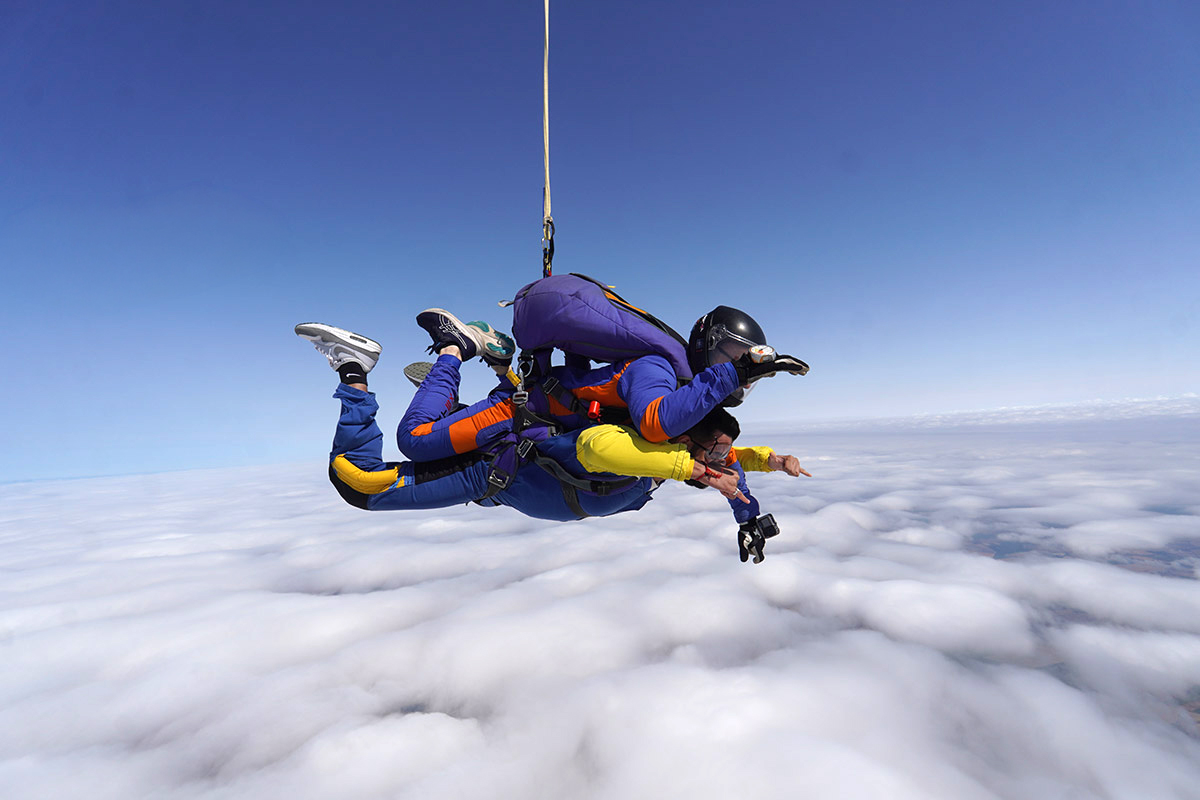
A skydive from aircraft exit to landing lasts about 5 to 7 minutes, including freefall and the parachute ride. A useful way to answer “how long are you in the air when skydiving?” is to distinguish the jump itself from the aircraft journey beforehand.
Factors Affecting Freefall Time
Freefall is the time between leaving the aircraft and parachute deployment. Exit altitude and falling speed determine how long this phase lasts, which is why freefall durations vary.
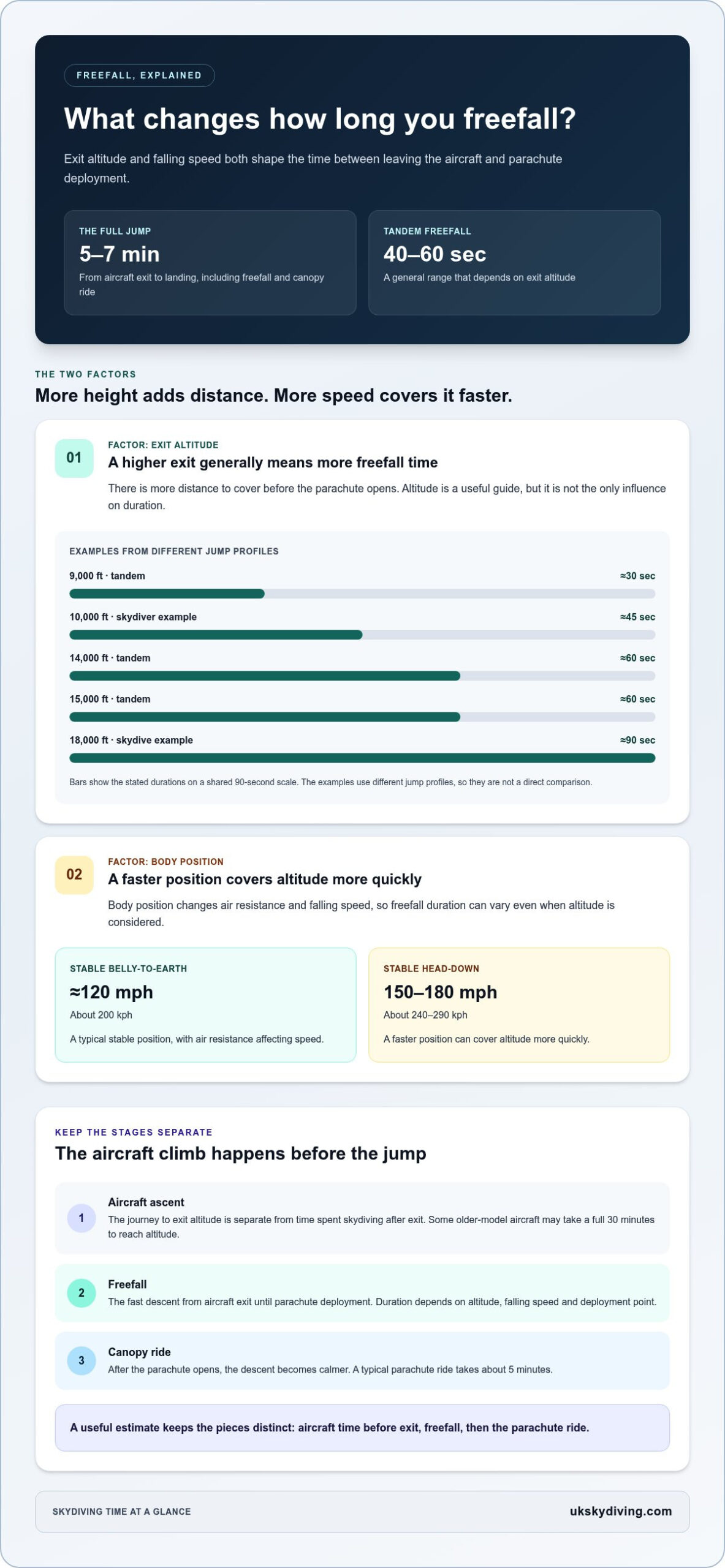
From 10,000 feet, a skydiver freefalls for about 45 seconds at around 120 mph. At 18,000 feet, a skydive typically provides about 90 seconds of freefall. The higher exit gives more distance before deployment, but altitude alone doesn’t determine the duration.
Body position changes air resistance and speed. A stable belly-to-earth position usually produces terminal velocity of 120 mph, or 200 kph. A stable head-down position can reach around 150 to 180 mph, or 240 to 290 kph. Licensed skydivers falling head down can reach speeds upwards of 150 mph, covering altitude more quickly.
For a first-time jumper, “how long are you in the air when skydiving?” means more than just the freefall. The planned exit height, body position and parachute deployment point all affect the answer.
Stages of a Skydive
A skydive progresses from aircraft exit to freefall, parachute deployment and canopy descent. Knowing these stages helps distinguish the brief rush of freefall from the longer ride beneath the open parachute.
After exit, the skydiver accelerates during freefall. Tandem skydivers reach about 120 miles per hour, with typical terminal velocity around 125 mph. When the instructor deploys the parachute, the descent shifts to a controlled canopy ride. Both phases together make up the 5-to-7-minute jump.
Exit altitude provides useful context. Experienced solo skydivers leaving at 13,500 feet in a faster body position can expect 35 to 40 seconds of freefall. An 18,000-foot skydive typically provides about 90 seconds. These examples involve different jump profiles, so they shouldn’t be treated as a direct comparison.
In the UK, weather can affect whether and when a jump goes ahead. Freefall duration depends on factors such as exit altitude, falling speed and deployment point. Weather can affect the schedule, while these factors shape the time spent falling.
Parachute ride duration
After freefall, the parachute opens and the descent continues beneath the canopy. A typical ride takes about 5 minutes, though the full skydive lasts longer.
Total Skydive Duration
The skydive itself lasts from aircraft exit through freefall and the parachute ride. This is separate from the climb to altitude and any time spent waiting on the ground.
The NHS describes a skydive as freefall followed by a parachute ride. Together, those phases usually last about 5 to 7 minutes. The figure includes the fast descent and the slower canopy flight, not the aircraft journey before exit. That difference matters when you picture the experience: freefall is only one part of the time spent in the air.
Freefall Duration by Exit Altitude
Exit altitude is the height above the ground at which a skydiver leaves the aircraft. A higher exit generally means more distance to cover in freefall before parachute deployment.
For tandem jumps, a 9,000-foot exit involves approximately 30 seconds of freefall, while a 14,000-foot exit involves approximately 60 seconds. A tandem skydive from 15,000 feet also gives about 60 seconds. These examples show why altitude is a useful guide, but not the only influence on the time before the canopy opens.
Solo and Tandem Freefall Duration
Solo and tandem freefall durations depend on exit altitude and falling position. Different jump types and positions can produce different durations, so the comparison helps set realistic expectations.
A tandem skydive’s freefall can last 40 to 60 seconds, depending on exit altitude. Experienced solo skydivers, meanwhile, may spend two to three minutes under the parachute after freefall. That canopy time is separate from freefall, so compare like with like: seconds in freefall, then minutes beneath the open parachute.
Once the parachute opens, the descent becomes a distinct phase. An experienced solo skydiver typically spends two to three minutes under the canopy, while a typical parachute ride takes about 5 minutes. These figures describe different contexts, so they shouldn’t be added together as if they were the same jump profile.
For a tandem jump, the instructor usually deploys the parachute around 5,000 feet. The remaining ride gives you time to move from the intensity of freefall to a steadier descent. The exact experience depends on the jump’s exit altitude and the sequence of freefall followed by canopy flight.
Weight and body position can affect how quickly someone falls, but altitude sets the available distance before deployment. A 14,000-foot tandem exit and a 9,000-foot exit offer different freefall examples, while the parachute ride remains a separate part of the overall skydive. Keep those phases distinct when estimating your time in the air.
Tandem skydive plane journey to altitude
The aircraft ascent is part of the overall experience, but it takes place before freefall. Exit altitude shapes the jump itself, while the aircraft and weather can affect the journey upwards.
Plane Journey to Exit Altitude
The plane journey is the climb from the airfield to the height at which the tandem pair exits. This time in the aircraft is separate from the time spent skydiving after exit.
Some older-model skydiving aircraft may take a full 30 minutes to reach the required altitude. The actual climb depends on the aircraft and the planned exit height. Weather can also affect the timing of an aircraft journey or whether the jump proceeds. That means the ascent is part of your day, not part of the freefall duration.
Tandem Skydive Exit Altitudes
Tandem exit altitude is the height above the ground at which the pair leaves the aircraft. A higher exit usually allows more freefall before the parachute opens.
Tandem skydives commonly take place between 10,000 and 14,000 feet above ground level. The planned height gives context for the freefall, but it doesn’t tell you how long the aircraft ascent will take. For instance, a 13,000-foot exit falls within that commonly used range. High-altitude skydiving is defined as a jump above 15,000 feet, which is distinct from that typical tandem range.
Think of the day in separate stages: the ascent takes place inside the aircraft, the jump begins at exit, and freefall ends when the parachute is deployed. Combining these stages can make the time in the air seem longer than the jump itself.
A tandem skydiving experience at the drop zone generally takes 2 to 4 hours from arrival to finish. This covers the broader visit, not just the plane ride or the descent. Check-in, preparation, the aircraft journey and the jump are different parts of that overall timeframe.
Weather can affect when an aircraft can climb and when a jump can take place. A ground delay is different from time aboard the plane: neither changes the exit altitude, but both can affect the day’s schedule. The aircraft’s climb is the journey to the exit point.
Once the aircraft reaches the planned altitude, the tandem pair exits and freefall begins. The instructor deploys the parachute later in the descent, marking the change from freefall to canopy flight. The plane journey is the build-up to the jump, not part of the stages after exit.
For a clearer estimate, keep three questions separate: how high the aircraft climbs, how long the jump lasts after exit, and how long the full visit takes. The typical 10,000-to-14,000-foot tandem range describes the first jump’s exit height. The 2-to-4-hour drop-zone timeframe describes the wider experience.
How altitude affects the experience
Exit altitude determines the distance between the aircraft and the parachute deployment point. That distance affects freefall time, while body position affects falling speed.
For context, tandem jumps commonly take place between 10,000 and 14,000 feet above ground level. UK Skydiving’s beginner experience jumps from up to 13,000 feet, within that range. The exit height tells you where the freefall begins, not its exact duration. Deployment altitude and falling speed also affect how long that phase lasts.
A useful comparison is a jump from 10,000 feet, where a skydiver freefalls for around 45 seconds at about 120 mph. At 18,000 feet, a skydive typically provides about 90 seconds of freefall. The difference illustrates how extra altitude can extend the descent before deployment. These examples describe different jump profiles, not a precise prediction for every person.
Speed changes how quickly the skydiver uses the available vertical distance. A stable belly-to-earth position usually reaches terminal velocity around 120 mph, or 200 kph. A stable head-down position reaches around 150 to 180 mph, or 240 to 290 kph. At the faster speed, a skydiver covers altitude more quickly, so position matters alongside exit height.
Parachute deployment provides the endpoint for measuring freefall. On tandem jumps, the instructor usually deploys around 5,000 feet. For example, a 10,000-foot exit leaves a different distance to that point than a 14,000-foot exit. The altitude figures are measured above ground level, so the difference between exit and deployment height helps explain the time available.
High-altitude skydiving means a jump above 15,000 feet. That label marks a category, not a promise of a particular freefall duration. An 18,000-foot skydive typically offers about 90 seconds, while tandem jumps commonly use lower exit heights. For a first jump, the planned altitude gives useful context, but it should be considered with deployment height and body position.
Training also shapes how a participant experiences altitude. A beginner attached to an instructor follows a planned exit and deployment as part of one coordinated jump. An Accelerated Freefall course focuses on learning to skydive solo, so the training context is different. In either case, altitude is just one part of the experience, not a measure of total time in the air.
How long does a solo skydive freefall last compared with a tandem jump?
At the same exit altitude, freefall time can vary because falling speed and body position affect how quickly a skydiver descends. Comparing jumps from similar heights gives a clearer sense of the differences between solo and tandem skydives.
From 10,000 feet, a skydiver freefalls for about 45 seconds at around 120 mph. A tandem skydive from 10,000 feet typically provides about 30 seconds of freefall. That comparison shows why jump type matters, but it isn’t a fixed rule for every descent. Exit altitude, falling position and the point when the parachute opens all shape the duration.
At 14,000 feet, a tandem skydive usually provides around 60 seconds of freefall. The greater height gives the pair more distance before deployment than a 10,000-foot exit. A solo skydiver’s time also changes with altitude, so comparing solo and tandem figures is most useful when the exit heights are similar.
Body position can explain some of the difference. A stable belly-to-earth position usually produces a terminal velocity of 120 mph, or 200 kph. A stable head-down position reaches around 150 to 180 mph, or 240 to 290 kph. Licensed skydivers falling head down can reach speeds upwards of 150 mph, shortening the time spent covering a given vertical distance.
That doesn’t mean every solo jump is faster than every tandem jump. The figures describe different examples, and the exit altitude matters. Experienced solo skydivers exiting at 13,500 feet in a faster body position can expect 35 to 40 seconds of freefall. An 18,000-foot skydive typically provides about 90 seconds, showing how added altitude can outweigh speed differences.
In a tandem skydive, a beginner is harnessed to an instructor during freefall. Solo skydiving involves learning to control body position independently, and an Accelerated Freefall course is designed to teach those skills. The goals and training contexts differ, so freefall duration alone doesn’t describe the full experience.
Use exit height as your first comparison, then consider body position and deployment. A 10,000-foot solo example and a 10,000-foot tandem example offer a practical reference, while higher exits change the available freefall distance. The whole jump also includes the parachute ride, which is separate from those freefall seconds.
Ready to take the next step towards a skydive? Explore your skydiving experience.
UK Skydiving: Tandem Skydive Experience
UK Skydiving’s Tandem Skydive Experience gives beginners the chance to jump from up to 13,000 feet, securely harnessed to a professional instructor. It’s a natural next step if you’ve learned how altitude shapes freefall and want to experience the jump for yourself.
Prefer to work towards solo skydiving? The Accelerated Freefall (AFF) Course offers a route to learning, while Charity Jumps let you make a skydive part of a fundraising effort. Video and Photo Packages can capture moments from your experience.
Explore the option that suits your plans, or contact UK Skydiving to discuss your next step.
Make your next step your own
Knowing how long you are in the air when skydiving helps set expectations, but choosing the right experience turns curiosity into a plan. You might be considering a first tandem jump, learning through an Accelerated Freefall (AFF) Course, or supporting a cause through Charity Jumps. Each offers a different reason to take to the sky.
Think about what you most want from the experience: the feeling of freefall, the challenge of developing your skydiving skills, or raising funds for a cause. You don’t need to have every detail decided before exploring your options. A conversation with UK Skydiving can help you choose a direction that fits your plans and understand what to consider next.
Ready to turn your interest into a real plan? Start planning your skydive with UK Skydiving. Your first jump could become a story you’ll be excited to tell for years.
Frequently Asked Questions
How long does it take to fly down under your parachute?
A typical parachute ride takes about 5 minutes, though the duration depends on the jump profile and canopy descent. This is the part after freefall, so it shouldn’t be counted as freefall time. For example, a tandem jump’s instructor usually deploys the parachute around 5,000 feet. From that point, you descend beneath the canopy before landing, completing a different phase of the skydive.
What is the Average Skydiving Altitude for Tandem Skydiving?
Tandem skydives commonly exit between 10,000 and 14,000 feet above ground level. That range helps explain why freefall estimates vary between jumps. For example, a 10,000-foot tandem exit typically provides about 30 seconds of freefall, while a 14,000-foot exit usually provides around 60 seconds. Exit altitude describes the height where the jump begins, not the aircraft journey’s duration.
How Long Do You Freefall When Skydiving?
Freefall duration depends on exit altitude, body position and when the parachute is deployed. A tandem jump from 10,000 feet typically gives about 30 seconds, while a jump from 14,000 feet usually offers around 60 seconds. These examples make altitude’s effect easier to picture. They refer only to the time before the canopy opens, not the parachute ride or the wider visit to the drop zone.
How fast do you freefall?
Skydivers generally travel at about 120 mph during freefall. A stable belly-to-earth position usually produces a terminal velocity of 120 mph, or 200 kph, while tandem skydivers typically reach around 125 mph. Body position changes air resistance, which affects falling speed. A stable head-down position can reach around 150 to 180 mph, so experienced skydivers may descend faster than someone in a belly-to-earth position.
How long does freefall last?
Freefall lasts from aircraft exit until the parachute opens, so the exit height and descent speed both matter. An 18,000-foot skydive typically provides about 90 seconds of freefall. By comparison, an experienced solo skydiver exiting at 13,500 feet in a faster body position can expect 35 to 40 seconds. The different examples show why altitude alone doesn’t determine the duration.
Why Don’t All Skydives Go to the Same Height?
Skydives use different exit altitudes because the planned jump profile determines where the aircraft reaches its exit point. Tandem jumps commonly take place between 10,000 and 14,000 feet above ground level, while high-altitude skydiving means a jump above 15,000 feet. A higher exit can allow more freefall before deployment. Different heights therefore change the jump’s freefall experience, not simply the aircraft journey.
How long does freefall last during a typical skydive?
For tandem jumps, freefall can last 40 to 60 seconds, depending on exit altitude. A 9,000-foot tandem exit involves approximately 30 seconds, while a 14,000-foot exit usually gives around 60 seconds. Treat these as examples rather than one fixed duration for every jump. The instructor’s parachute deployment marks the end of freefall, after which the canopy descent begins.
How long is the parachute descent after freefall?
A typical parachute ride takes about 5 minutes after freefall ends. The descent is a separate part of the jump, so add it to freefall when estimating the time from exit to landing. An experienced solo skydiver typically spends two to three minutes under the parachute. The difference between these examples reflects different jump contexts, so they shouldn’t be treated as identical profiles.
Categorised in: Blog