
Latest News
-
 4 ways to make your first skydive feel more manageable November 10, 2026
-
 What’s the Scariest Part of Skydiving? How Freefall Feels November 9, 2026
-
 Parental Consent for Skydiving and Young Jumpers November 8, 2026
-
 How to Position Your Body and Breathe During Freefall November 7, 2026
-
 Pressure Changes During Skydiving: Why Your Ears Hurt November 6, 2026
Charity jump for local hospice: event details and spectator information
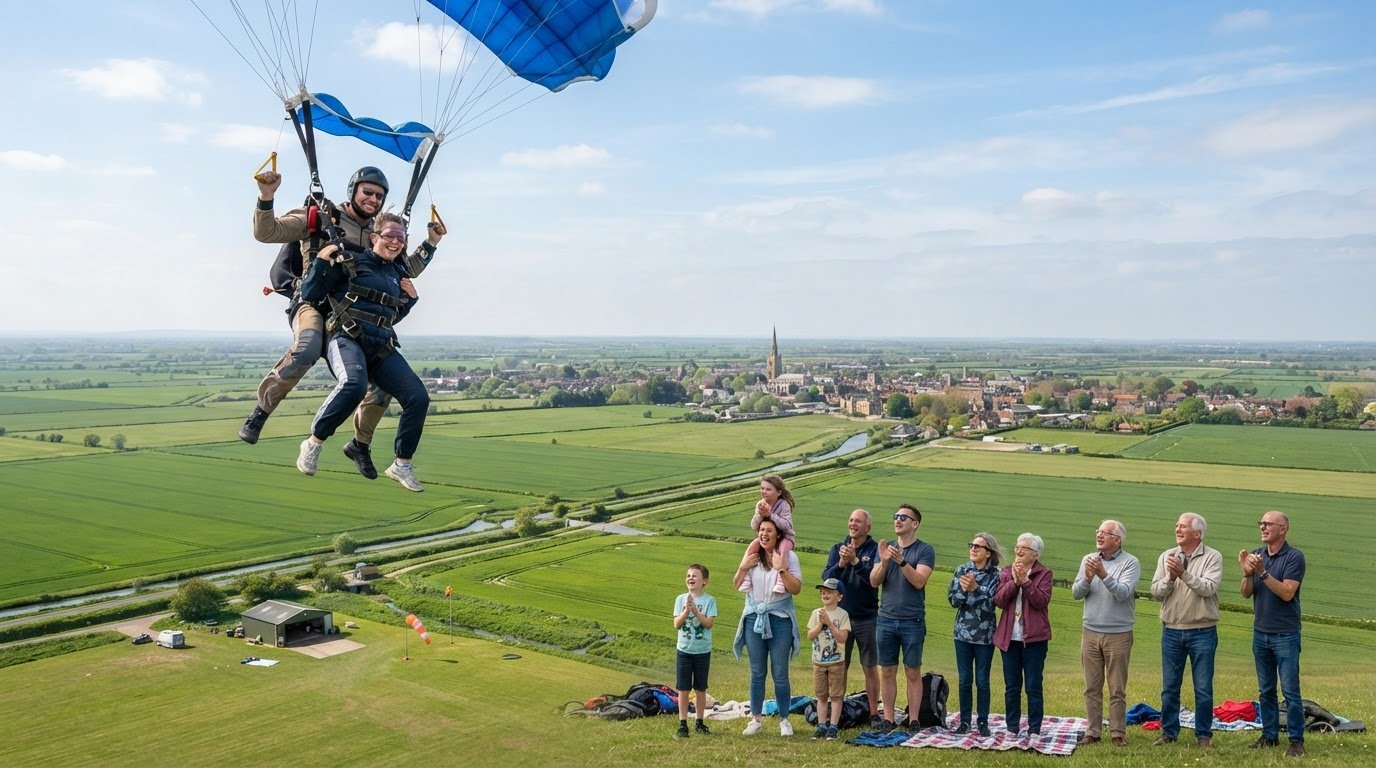
October 21, 2026 12:00 amSpectator access depends on the event. A charity jump for a local hospice may welcome supporters at the drop zone, but the event arrangements determine whether they can watch on site and where they can gather. Don’t assume every jump offers the same viewing options.
It’s natural to want to be there for take-off, the wait and that unforgettable landing. This guide covers the details you need to plan: the tandem skydive, event location and date, registration and fundraising commitments, sponsorship deadline, spectator arrangements, and what happens if weather affects the jump. You’ll also learn how a charity jump works and what to expect on the day, so you can focus on supporting the hospice and cheering the jumper on.
Key Takeaways
- Find out what a tandem hospice skydive involves and how to plan your fundraising around a clear target and deadline.
- Learn which event details to check when planning travel, including the jump date, drop-zone location and spectator arrangements.
- Understand how registration fees and fundraising pledges can differ between hospice events, and what to look for in their terms.
- Get practical guidance on weather-related changes so you know how rescheduling may affect your plans.
- Discover how UK Skydiving’s Tandem Skydive Experience can suit beginners who want to take on a charity jump.
Tandem skydive challenge for hospice fundraising
A tandem skydive can turn a personal challenge into a memorable way to raise funds for hospice care. Before committing, make sure the jump suits your eligibility, meets the event requirements and fits a fundraising plan you can explain clearly to supporters.
Available Charity Jump Types
Tandem skydiving and bungee jumping are two options for a charity challenge. A tandem skydive pairs you with an instructor, while a bungee jump is a different activity with its own setup. Compare what each event involves, where it takes place and its fundraising terms before choosing.
For a hospice appeal, choose a challenge you feel ready to complete and can describe honestly on your fundraising page. Explain the activity, the hospice you’re supporting and how donations will help. A clear message gives family, friends and colleagues a reason to sponsor you.
Participant Eligibility and Consent
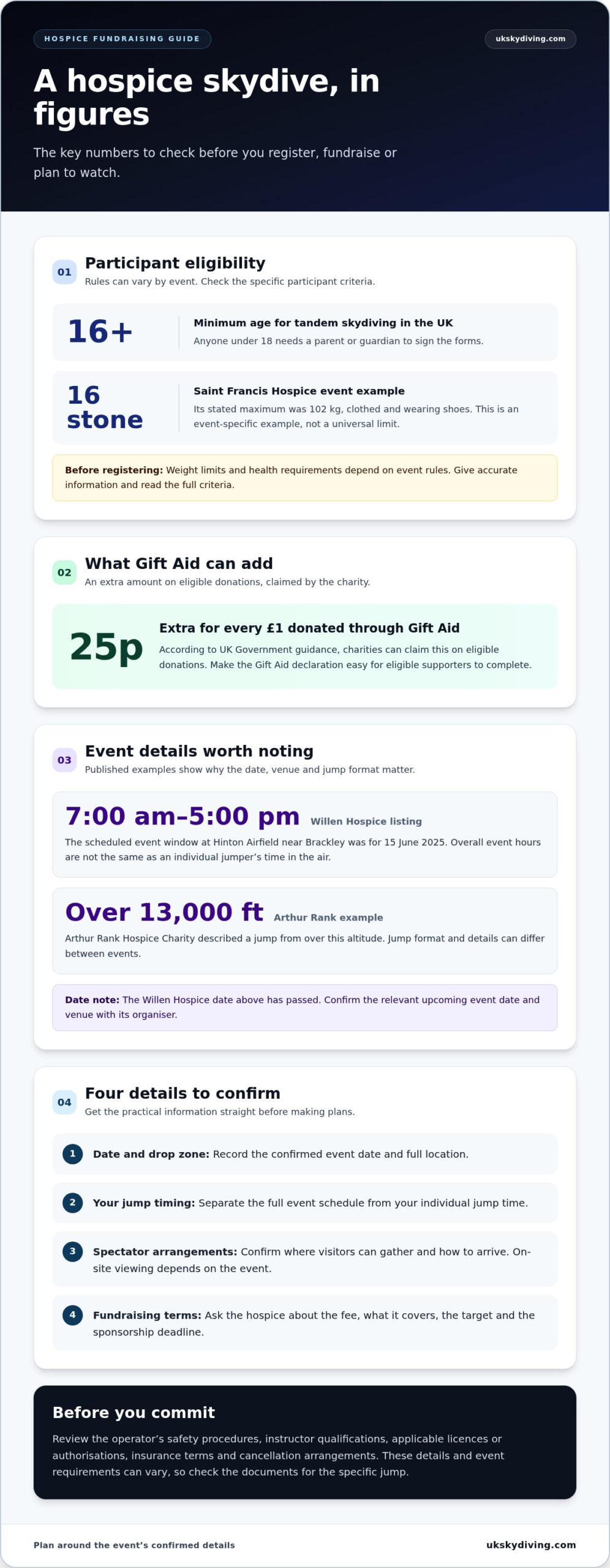
For tandem skydiving in the UK, participants must be at least 16. Anyone under 18 needs a parent or guardian to sign the forms. Weight limits and health requirements can depend on the event’s rules, so read its participant criteria before registering.
For example, the Saint Francis Hospice event sets a maximum weight of 16 stone (102kg), clothed and wearing shoes. Its terms also describe additional requirements for some participants. Give accurate information about your age, weight and health when completing event paperwork, and include a parent or guardian in the process if you’re under 18.
Safety, Licensing and Insurance Checks
Before booking, review the operator’s stated safety procedures, instructor qualifications, applicable licences or authorisations, and insurance terms. Check what the insurance covers, including exclusions, and read the event’s cancellation arrangements. These details help you understand the practical terms of the jump before making a fundraising commitment.
Look for clear information about who supervises the tandem skydive and what participants are expected to do. Some hospice jump information describes participants as harnessed to an instructor qualified by the British Parachute Association. Read the event documents for the specific qualification and arrangements that apply to your jump.
Hospice Fundraising Registration
Start by contacting the hospice fundraising team or named coordinator. Ask how to register, what the registration fee covers, whether a deposit is required, the minimum fundraising target and when sponsorship must be collected. These terms vary between events, so use the hospice’s instructions to plan your budget and fundraising timeline.
Set a clear target and deadline for your appeal, then explain any event expenses to donors upfront. UK Government guidance recommends using a reputable online fundraising platform rather than a personal bank account. Add a short explanation of your connection to the hospice, share the page with specific supporters and post progress updates as the jump approaches. If you are taking on the jump in memory of a loved one, setting up a memorial page through rememberingyou.online can also help you share their story and celebrate their legacy alongside your fundraising.
Gift Aid can increase eligible donations: according to the UK Government, charities can claim an extra 25p for every £1 donated through Gift Aid. Make it easy for eligible supporters to complete the Gift Aid declaration when they give. Once your page is live, keep the hospice coordinator updated about your progress and follow their instructions for collecting or transferring sponsorship.
Event date and location
A hospice jump’s date and drop zone shape the whole day, from travel plans to where families can gather. Read the event listing closely, because dates and venues vary between fundraising challenges.
For example, Willen Hospice scheduled a skydive at Hinton Airfield, near Brackley, for 15 June 2025. The event was listed to run from 7:00 am to 5:00 pm. Those details show why it helps to distinguish the jump window from a participant’s actual time in the air. A full event day can include waiting, preparation and other jumpers’ turns.
That date has passed, so treat it as an example of how hospice events publish logistics, not as a current booking opportunity. Saint Francis Hospice listed skydive dates for 4 October 2026 and 23 May 2027. The October date has also passed. Check that the date you’re planning around is the relevant upcoming event, and note the venue separately. A date alone doesn’t tell you where to travel.
Venue details matter for spectators, too. Confirm the drop zone’s full location and the event’s spectator arrangements before setting off. A hospice may use a jump site without every area being open to visitors. Plan your journey around the stated venue, then follow the event’s directions for arrival and viewing.
Past listings can also help you compare the kind of information an organiser provides. City Hospice scheduled a skydive in Swansea for 24 March 2024. Arthur Rank Hospice Charity described a jump from over 13,000 feet. These examples highlight useful details to look for, such as the hospice name, location, event date and jump altitude. Don’t assume one event’s venue or format applies to another.
Before sharing the event with supporters, save its date and location in one place. Then plan travel with enough flexibility for the listed schedule. If you’re raising sponsorship from family, colleagues or friends, give them the correct venue and date in your fundraising messages. Clear details make it easier for people to follow your progress and spread the word about the hospice appeal.
Use this simple planning sequence:
- Record the hospice’s event date and the drop zone’s full location.
- Separate the overall event hours from your individual jump time.
- Look for spectator guidance and directions before arranging travel.
- Share the same confirmed event details in every fundraising update.
For a clearer picture of the jump itself while planning around a date, see the tandem skydive details.
Registration fee
A hospice skydive’s registration fee is separate from its fundraising target. Read the event terms before paying, so you know what the fee covers, whether it is refundable and how donations reach the hospice. Details can vary between events.
Treat the fee as a booking condition, not automatically as a donation to the hospice. Some event arrangements divide participant payments between jump costs and charitable funds. The event’s breakdown explains how it handles the fee and sponsorship. Don’t describe the full amount as a hospice donation unless the organiser’s terms say that.
Before registering, look for these details in the hospice event information:
- What the fee covers: Check whether it relates to securing a place, the skydive itself or other stated event costs.
- Refund terms: Find out whether the fee is refundable if you withdraw or the event changes.
- Deposit conditions: Check whether a deposit secures your place and whether it forms part of the registration fee.
- Fundraising commitment: Note the minimum target and how the organiser treats sponsorship if you don’t reach it.
- Payment deadline: Record when registration and any remaining balance are due.
For example, if an event asks for a deposit, check whether it is deducted from the total fee or charged separately. That distinction affects how much you need to budget before fundraising begins. Keep the confirmation and payment record with the event terms, so you can refer to them if your plans change.
Separate your personal budget into the registration payment and the sponsorship you’re collecting. Under the event’s stated arrangements, supporters’ donations are intended for the appeal. Your registration payment may have a different purpose. Use the hospice’s wording on your fundraising page, especially if it explains what portion supports jump costs.
Ask the hospice fundraising coordinator for the written fee terms before paying. Keep the answer alongside the event date, minimum fundraising target and sponsorship deadline. If the event has an online registration page, save the terms shown when you book. A clear record helps you explain your commitment accurately to supporters.
Once you understand the fee, build a fundraising plan around the deadline and target. For instance, list the people you’ll approach first, then schedule updates as the jump approaches. Avoid promising that every pound goes directly to hospice care unless the organiser explicitly says so. Accurate wording builds trust and helps supporters understand how their donation contributes.
Use the registration terms to decide whether the event fits your budget and fundraising plan. If a fee is non-refundable, factor that into your decision before booking. A careful read now can prevent confusion later, leaving you free to focus on the challenge and the hospice your effort supports.
Sponsorship deadline
Gift Aid may apply to eligible sponsorship donations made to a hospice charity. Supporters need to complete the appropriate declaration, and the earlier section explains the additional amount charities can claim.
A sponsorship deadline gives you a clear finish line for collecting pledges and meeting the event’s fundraising terms. Check the date in the hospice’s event information, then work backwards to plan your fundraising. Don’t assume the booking deadline and sponsorship deadline are the same. They can apply to different parts of the event.
Willen Hospice’s skydive scheduled for 15 June 2025 had bookings closing on 28 February. Both dates are now in the past, so use them only as an example of how far ahead an event deadline can fall. For a future jump, find the deadline attached to that specific event before you announce your plans.
Once you have the correct date, give supporters a clear timeframe. Add the deadline to your fundraising page and mention it in your first message. For example, explain that sponsorship needs to be collected by the date set by the hospice. This helps donors know when to contribute and gives you time to follow up.
Build a simple schedule around the event’s own requirements:
- Save the hospice’s sponsorship deadline and any separate booking date.
- Launch your fundraising page with the target and deadline clearly stated.
- Share progress updates and remind supporters before the closing date.
- Follow the hospice’s instructions for submitting collected sponsorship.
The parachute jump date isn’t automatically the sponsorship deadline. A hospice may set a collection date to help process donations and meet its event arrangements. Follow the written terms for your challenge, especially if you’re collecting cash as well as online donations.
If your fundraising is behind schedule, contact the hospice fundraising coordinator promptly. Explain how much you’ve raised so far and ask how to meet the event’s stated requirements. Don’t promise supporters that a late donation will count towards the challenge until you understand the hospice’s process. Keep any guidance with your event paperwork.
When sharing your appeal, be transparent about the deadline and where donations go. UK Government guidance recommends setting a clear target and time limit, explaining expenses upfront and using a reputable online fundraising platform rather than a personal bank account. Put those details on the page before asking people to donate.
Save a copy of the event terms and your fundraising updates. If the hospice changes a deadline, follow its latest instructions across your page and messages. Clear dates help supporters act in time and keep your sponsorship plan aligned with the hospice challenge.
Weather-related cancellations and rescheduling
Weather can disrupt a planned jump, so understand the event’s rescheduling process before arranging travel or inviting spectators. A change of date affects more than the jump itself. It can also alter fundraising plans, supporters’ availability and accommodation arrangements.
City Hospice says participants can choose a jump date other than the pre-booked date. This gives participants an alternative when planning their event, but each hospice has its own arrangements. Read the terms for your jump to understand how a weather-related change is handled and what steps to take.
Before booking, find out how the organiser communicates a delay or cancellation. Check which contact method it uses and where updates will appear. Save the event details on your phone, and let supporters know where to look. This helps family and friends avoid travelling to the drop zone based on outdated information.
Build flexibility into your plans. If you’re travelling to the event, review your transport and accommodation conditions before paying. Tell spectators the schedule may change, and avoid making fixed plans around an individual jump time unless the organiser has provided one. A flexible plan keeps the focus on the hospice challenge.
A postponement can affect sponsorship, too. Keep your fundraising page current if the event date changes, and share the revised date with donors. If the hospice sets a collection deadline, follow its instructions on how a rescheduled jump affects that requirement. Don’t assume a new jump date automatically changes the fundraising terms.
Use this checklist when reviewing the event’s weather arrangements:
- Find the organiser’s cancellation and rescheduling terms before booking.
- Save the event’s update channel and contact details.
- Tell supporters how you’ll share a new date or schedule change.
- Review travel, accommodation and fundraising commitments if plans move.
Ask the organiser how it makes and shares weather-related decisions, and what participants should do next. Read the event’s safety information and understand the role of its qualified personnel. Clear instructions help you respond calmly if the original plan changes, without guessing about the revised schedule or travel arrangements.
The wait can be frustrating, especially when you’re ready for an amazing experience. Keep supporters engaged with a short update about the hospice you’re raising money for, even if the jump is postponed. When a new date is shared, update your page and messages so everyone has the same information.
Once you’ve planned for possible date changes, explore tandem skydiving options and take the next step towards your jump.
UK Skydiving: Tandem Skydive Experience
UK Skydiving’s Tandem Skydive Experience gives beginners a way to take on a skydive while securely harnessed to a professional instructor. The jump is from up to 13,000 feet, creating a bold personal challenge that can complement your hospice fundraising plans.
If you’re organising a group appeal or want a jump linked to fundraising, UK Skydiving offers Charity Jumps. Choose the option that fits your goal, then plan your fundraising around the hospice’s target, deadlines and donation arrangements.
Ready to explore your next step? Visit ukskydiving.com.
Take your next step towards the jump
A charity jump for a local hospice can be more than a fundraising milestone. It gives you a personal challenge to work towards and a reason to bring supporters together around care that matters to your community.
Choose the skydiving route that fits your ambition. UK Skydiving offers a Tandem Skydive Experience for beginners, Charity Jumps for fundraising challenges, and an Accelerated Freefall (AFF) Course for people aiming to learn to skydive solo. Each option suits a different goal, so consider whether you want a first jump, a charity event or a course of progression.
Once you know what you want from the experience, take the next step at your own pace. You can contact UK Skydiving about the jump and explore which option fits your plans. Make your choice, bring your cause into focus and turn that first spark of courage into a challenge you’ll remember.
Frequently Asked Questions
Is there somewhere for spectators to go?
Spectator access depends on the event and drop zone. Some arrangements may allow supporters to watch from designated areas, while others may limit access around operational parts of the airfield. The event’s spectator information should explain where families can gather and whether they can watch the landing. Share these arrangements with your group before travelling, so everyone knows where to meet if the schedule changes.
What happens if the weather is too bad to skydive?
The jump may be delayed or moved to another date if conditions prevent it from going ahead. Rescheduling arrangements vary between events. City Hospice says participants can choose a jump date other than their pre-booked date. Keep your fundraising page and supporters updated if the planned date changes, and use the event’s stated arrangements to plan travel and accommodation.
What’s included?
A tandem skydive pairs a participant with an instructor for the jump. What else is included depends on the event’s booking terms, so distinguish the jump itself from optional extras. For example, video and photo packages may be offered separately rather than included in every booking. Read the event description for details of the equipment, preparation and media options covered by your arrangement.
How do I find and book a charity jump for a local hospice in the UK?
How much does a charity jump cost, and what deposit or fundraising target is required?
Registration fees, deposits and fundraising targets are set by each event, so no single amount applies to every hospice jump. The event terms explain which payments secure a place, whether a deposit is part of the fee, and what minimum sponsorship participants are asked to raise. Separate these commitments in your budget, because a booking payment and donor contributions may serve different purposes.
What happens if bad weather or illness causes the jump to be postponed or cancelled?
Weather-related changes follow the event’s rescheduling arrangements. City Hospice allows participants to choose a date other than their pre-booked one. For illness, the booking terms explain how participant withdrawals, date changes and payment conditions are handled. Keep supporters informed if your plans change, and update your fundraising page so donors have current event information and understand how the appeal will continue.
What are the closest jump venues and upcoming event dates for local hospice fundraisers?
The closest venue depends on where you’re travelling from. UK Skydiving operates from a base in Cambridgeshire, while hospice events may use other drop zones. Saint Francis Hospice has a skydive scheduled for 23 May 2027. Hinton Airfield near Brackley hosted a Willen Hospice event in 2025, and that date has passed. Match the hospice’s current event listing with your starting location before making travel plans.
Categorised in: Blog