Latest News
-
 4 ways to make your first skydive feel more manageable November 10, 2026
-
 What’s the Scariest Part of Skydiving? How Freefall Feels November 9, 2026
-
 Parental Consent for Skydiving and Young Jumpers November 8, 2026
-
 How to Position Your Body and Breathe During Freefall November 7, 2026
-
 Pressure Changes During Skydiving: Why Your Ears Hurt November 6, 2026
Ways to Feel More Ready for Skydiving, From the Night Before to Takeoff
October 26, 2026 12:00 amThe night before a skydive isn’t the time for a big night out. Avoid alcohol and drugs, and don’t arrive sleep-deprived. Good mental preparation for skydiving starts with giving yourself the chance to feel rested and focused.
Feeling nervous is completely understandable. You’re preparing for a powerful new experience, and trying to force every doubt away can make it harder to settle. Instead, acknowledge the nerves, steady your breathing and focus on what’s happening in the moment.
This guide will help you manage fear, focus your attention and make calmer choices before jump day. You’ll also learn how skydiving videos and other people’s experiences can make the process feel more familiar, so you can arrive ready to listen, ask questions and take in the adventure.
Key Takeaways
- Use slow, controlled breathing and focus on present-moment sensations to steady your attention before the jump.
- Skip alcohol and drugs the night before, and prioritise rest so you can arrive feeling focused.
- Acknowledge nervousness, picture the experience step by step and tell your instructor how you’re feeling.
- Watch skydiving videos and read first-hand experiences to become more familiar with what to expect.
1. Breathing and focusing attention before a jump
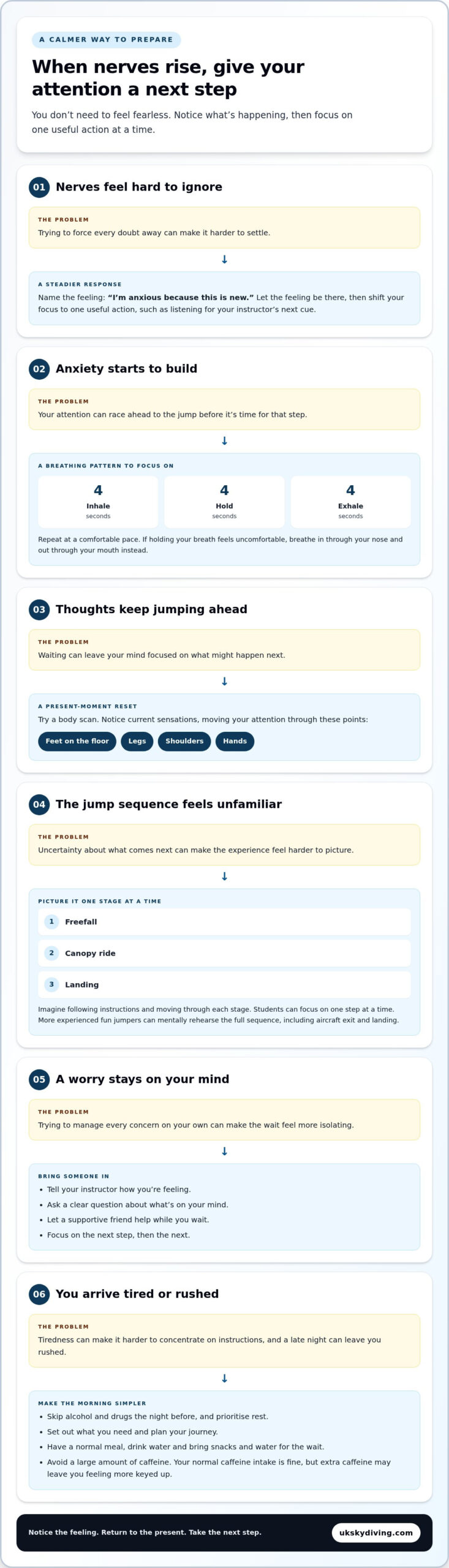
Give your attention a simple task: follow your breath. Try box breathing by inhaling for four seconds, holding for four seconds, then exhaling for four seconds. Repeat at a comfortable pace. If holding your breath feels uncomfortable, breathe in through your nose and out through your mouth instead. Controlled breathing gives you something steady to focus on as anxiety rises.
Bring your attention back to the present with a body scan. The NHS describes this as moving awareness around different parts of your body and noticing current sensations. Start with your feet on the floor, then notice your legs, shoulders and hands. This practical focus can help you settle while waiting, rather than letting your thoughts race ahead to takeoff. It’s a helpful part of mental preparation for skydiving.
Rest matters too. Avoid arriving sleep-deprived, since tiredness can make it harder to concentrate on instructions. The night before, set out what you need and plan your journey so the morning feels less rushed. Give yourself time to eat and drink before travelling to the dropzone.
On the morning of your skydive, have a sensible meal and avoid a large amount of caffeine. Your normal caffeine intake is fine, but extra caffeine may leave you feeling more keyed up. Consider what you eat in the eight hours before your jump. Have a normal meal before going to the dropzone, drink water, and bring snacks and water for the wait. Dehydration can contribute to dizziness and a feeling of instability.
Nerves don’t mean you’re doing anything wrong. Notice what you’re feeling, take a slow breath and bring your focus back to one immediate detail, such as your feet on the floor. If a worry is still on your mind, tell your instructor and ask a clear question. You don’t need to feel calm every moment. Focus on the next step, then the next.
2. Avoiding alcohol and partying the night before
Skip alcohol the night before a skydive, and avoid drugs before your jump. Arriving sober helps you focus on instructions and make clear decisions throughout the experience. A big night out can also disrupt sleep, leaving you tired when you need to pay attention to each step. Choose a quiet evening instead and give yourself time to unwind.
Keep the evening simple. Plan your journey, prepare what you need for the morning, and avoid turning excitement into a late night. Don’t use alcohol or drugs to try to suppress anxiety. They don’t prepare you for the moment at the aircraft door, and they can interfere with staying alert and comfortable during the day.
For UK skydiving, you must be at least 18 and provide proof of age. Weight and health eligibility depend on the applicable jump limits and your medical fitness, rather than one universal figure.
Before a tandem skydive, your instructor explains the required body position, including the arch, and the instructions you’ll follow. You’re harnessed to a professional instructor, and skydiving uses strict safety procedures and backup systems. Listen closely during the briefing and raise any concerns before the jump begins.
Skydiving carries a risk of injury, including during landing, and injuries can vary in severity. Their frequency depends on the circumstances and type of injury, so a single figure doesn’t describe every jump. Follow your instructor’s directions and focus on each stage of the experience.
Indoor skydiving can help you practise body position and get used to airflow. It doesn’t recreate an aircraft exit, the altitude of an outdoor jump or a parachute descent, so treat it as a different experience rather than a full rehearsal.
3. Managing fear in fun jumpers and students
Pre-jump nerves are a normal response to doing something unfamiliar. Rather than fighting the feeling, name it: “I’m anxious because this is new.” Then shift your attention to one useful action, such as listening for your instructor’s next cue. This acknowledges fear without letting doubts take over the whole experience.
Use visualisation to picture a successful jump, from freefall through the canopy ride to landing. Imagine following instructions and moving through each stage, rather than expecting yourself to feel fearless. Students can focus on one step at a time. More experienced fun jumpers may mentally rehearse the full sequence, including aircraft exit and landing.
On the day, stay calm by focusing on the next practical step, asking your instructor questions and telling them how you feel. Supportive friends can also help you feel less alone while you wait. Avoid comparing your reaction with theirs. Excitement and anxiety can occur together, and neither feeling tells you exactly how the jump will go.
Mindfulness can help you notice stress without feeding it. Name what you can see and hear, then bring your focus back to the briefing or the person speaking. Set realistic expectations: the experience may feel intense, and you don’t need to perform like an expert. Students should focus on the actions they’ve been taught, while experienced jumpers can use their established routines. If you have severe anxiety or panic disorder, seek advice from a mental health professional before deciding to skydive. If you write a visualisation prompt, use your own words rather than copying copyrighted material.
Let the feeling be present, then redirect your attention to the skydive instead of giving fear and doubts the whole stage. A supportive friend can make the wait feel less isolating and help ease stress. First-time skydivers can ask their instructor questions before and after the jump; nervous tandem skydivers can also say openly how they feel. Picture freefall, the canopy ride and landing going well to help reshape expectations and ease anxiety.
4. Watching skydiving videos and reading experiences
A well-chosen video can make the jump sequence feel less unfamiliar. Look for footage showing the preparation, instructor briefing, aircraft exit, freefall, canopy ride and landing. Seeing these stages in order gives you a clearer picture than watching a short clip focused only on the aircraft door or the rush of adrenaline.
Pay attention to practical details as well as dramatic views. Notice how the instructor explains body position, how the harness is fitted and what happens after landing. Videos can help you understand the process and equipment, but they don’t replace your own briefing. Your instructors will explain what you need to know for your jump.
Reading other people’s experiences adds another useful perspective. Choose first-hand accounts that describe the whole day, including waiting at the dropzone, the aircraft ride and the canopy descent. One person may describe freefall as thrilling, while another may focus on its unfamiliar sensations. These differences can help you expect a range of reactions rather than one “correct” feeling.
Use a simple viewing routine. First, watch one clear explanation of the jump stages. Next, read an account from someone doing a tandem skydive if that’s your plan. Then write down any questions raised by the video or story and bring them to your instructor. This makes viewing purposeful preparation, not endless scrolling.
Keep the limits of online footage in mind. Edited videos can skip parts of the day, and another jumper’s account can’t predict exactly how your own experience will feel. Use them to build familiarity, not to memorise every movement or compare your nerves with someone else’s. A balanced mix of process-focused videos and personal stories can make mental preparation for skydiving more grounded and give you a clearer sense of what to ask before takeoff.
UK Skydiving: Tandem Skydive Experience
UK Skydiving’s Tandem Skydive Experience gives beginners a way to turn preparation into action. You’re securely harnessed to a professional instructor for a jump from up to 13,000 feet, so you can focus on the experience and follow their guidance. If you’ve watched videos and still feel nervous, use your questions to start a conversation with your instructor before the jump.
Choose a tandem skydive if you want to experience freefall with an instructor rather than train to jump solo. UK Skydiving also offers Video and Photo Packages, so you can capture the occasion and revisit the moment afterwards.
Contact UK Skydiving to explore its Tandem Skydive Experience.
Choose the next step that feels right
Feeling ready doesn’t mean every trace of nerves has disappeared. It means you have a way to meet those nerves, stay present and decide what you want to do next. Let mental preparation for skydiving help you approach the experience with curiosity, rather than pressure to feel completely fearless.
If you’re ready to take the leap, UK Skydiving offers a Tandem Skydive Experience for beginners. If you’re interested in learning to jump solo, explore its Accelerated Freefall (AFF) Course. Charity Jumps offer another way to make a skydive part of a fundraising effort. Choose the experience that fits your reason for jumping, and bring any questions when you get in touch.
Contact UK Skydiving today to explore your next step. Your first jump can begin with one calm, confident decision.
Frequently Asked Questions
What Should You Not Do Before Skydiving?
Don’t skydive after drinking alcohol or taking drugs, and avoid scuba diving within 24 hours of a jump. On the day, leave enough time to arrive without rushing through check-in or instructions. Keep your attention on the briefing instead of relying on a last-minute online video, which can’t replace directions for your specific jump.
How can I mentally prepare for my first skydive?
Make a short plan for the parts you can control. Before leaving home, write down questions you want answered, such as what to do with your arms during the exit. At the dropzone, focus on understanding each instruction rather than trying to memorise the whole jump. This gives your attention a clear task and helps make the day feel more manageable.
What breathing techniques help manage fear before skydiving?
Try box breathing while seated: breathe in for four seconds, hold for four, then breathe out for four. Repeat at a comfortable pace without forcing a deep breath. If holding your breath feels uncomfortable, breathe steadily through your nose and out through your mouth instead. Let your shoulders soften as you exhale, and return to natural breathing if you feel light-headed.
How can I overcome anxiety about jumping out of a plane?
Start by identifying the exact worry, such as the aircraft exit or not knowing what to do with your body. Turn that concern into a clear question for your instructor, then listen to the answer before imagining the next stage. You don’t have to pretend the fear isn’t there. If anxiety feels severe or you have panic disorder, seek advice from a mental health professional before deciding to jump.
Categorised in: Blog