

Latest News
-
 4 ways to make your first skydive feel more manageable November 10, 2026
-
 What’s the Scariest Part of Skydiving? How Freefall Feels November 9, 2026
-
 Parental Consent for Skydiving and Young Jumpers November 8, 2026
-
 How to Position Your Body and Breathe During Freefall November 7, 2026
-
 Pressure Changes During Skydiving: Why Your Ears Hurt November 6, 2026
Public Transport to a Skydiving Centre: Plan Your Trip in 2026
October 6, 2026 10:00 amCould the final few miles matter as much as the train journey? Planning public transport to skydiving centre means looking beyond the trip to March and arranging how you’ll reach UK Skydiving’s base at Chatteris Airfield. Plan that connection before you set off, and you can focus on the experience ahead instead of working out how to get there at the last minute.
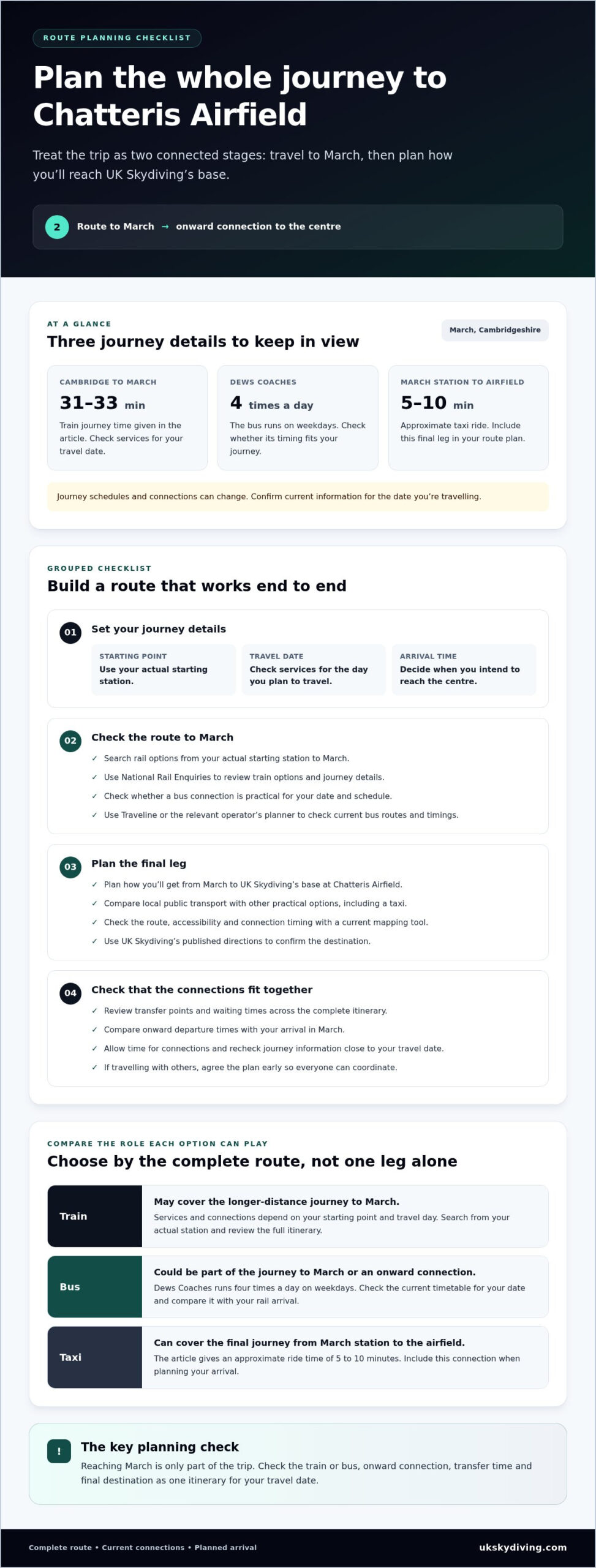
Travel takes a little planning. Trains from Cambridge to March take around 31 to 33 minutes, while the Dews Coaches bus runs four times a day on weekdays. From March station, the airfield is about a 5 to 10-minute taxi ride, so include the final leg when you compare routes. Check current journey information for your travel date, as schedules and connections can change.
This guide compares train and bus options, explains how to plan the onward journey, and offers practical ways to allow for delays and coordinate with friends or charity-jump companions. You’ll have a clearer route to March and a more complete plan for arriving ready for your tandem skydive.
Key Takeaways
- Plan public transport to skydiving centre as one complete trip, including the onward connection from March to UK Skydiving.
- Use National Rail to explore train options from your starting station, then compare them with available bus connections.
- Choose the travel option that suits your starting point, flexibility and onward-connection plan.
- Recheck each connection close to your travel date and leave a sensible buffer so delays are less likely to disrupt your arrival.
- Once you’ve planned the route to March and the final leg, get ready for a tandem jump from up to 13,000 feet with a professional instructor.
Public transport to UK Skydiving: where are you travelling?
You can plan a car-free visit to UK Skydiving with confidence by mapping the entire journey, not just the train or bus to March. Treat reaching the town and getting to the skydiving centre as two connected parts of the trip. That way, you can compare complete routes and decide how to handle the final leg before jump day.
A door-to-door public transport plan connects your starting point to March, then includes the onward journey from the town to UK Skydiving’s base. The UK has a range of transport options, as this overview of transport networks in the United Kingdom illustrates. The right combination for your visit depends on where you’re travelling from and when.
Where is the skydiving centre in Cambridgeshire?
UK Skydiving is based in March, Cambridgeshire. Make March your route-planning destination rather than searching for Cambridgeshire as a whole, since the county includes different towns and transport connections. Once you’ve planned how to reach March, work out how you’ll continue to the centre.
Arriving in March does not complete the journey. Include the onward connection when comparing routes instead of leaving it until you arrive. This is particularly useful if you’re travelling alone, meeting companions in town or coordinating a charity jump as a group.
What should you know before planning the trip?
Start with three details: your starting point, travel date and intended arrival time. These give you a practical basis for comparing routes and checking whether the complete itinerary fits your day. If others are travelling with you, agree on the plan early so everyone can coordinate their connections.
Public transport schedules can vary by date and time. A route that looks convenient on one day may not suit another, so check current journey information for the date you’re travelling. Look at both the journey to March and the onward connection to UK Skydiving.
Think of the public transport to skydiving centre journey as one itinerary with two stages: get to March, then complete the final leg. With your starting point and intended arrival time in mind, you can compare the available connections and see where you may need extra time.
How to plan public transport to the skydiving centre
Build your route in stages, then check that the connections work together on your travel date. This keeps your public transport to skydiving centre plan based on current journey information, rather than a route that suits a different day or time.
- Check rail. Enter your actual starting station and travel date, then search for train journeys to March. National Rail Enquiries is a useful place to review rail options and journey details.
- Check onward travel. Look for bus connections from March that could help with the remaining journey. Use Traveline or the relevant operator’s journey planner to check routes and timings for your date.
- Review the whole route. Put the rail and onward connections together. Check transfer points, waiting times and whether the complete itinerary gets you to the centre when you intend to arrive.
How can you check train and bus connections to March?
Begin with your actual starting point, not a nearby major station that you assume will be more convenient. Search for rail journeys to March on the date you plan to travel, then compare the options that suit your schedule. Train routes and connections depend on your origin, so check the results rather than assuming a direct service or a particular timetable will apply.
Next, see whether a bus is practical for the remaining journey. Check the relevant operator’s current planner or use Traveline, and compare departure times with your rail arrival. A connection shown in a general route search may not run at a useful time on your travel date, so confirm the details in current journey planners.
How should you plan the last leg to the centre?
Once you’ve found a way to reach March, plan the final connection to UK Skydiving separately. Compare local public transport with other practical options, and use a current mapping tool to review the route, accessibility and connection timing. Don’t assume that a short-looking distance is walkable or suitable for everyone.
Use UK Skydiving’s published directions to identify the correct destination, then compare them with the route shown in your mapping tool. Check the full itinerary for your travel date, including any changes or gaps between connections. Planning the last leg now turns separate train, bus and onward-travel searches into one workable journey, leaving you more time to focus on the experience ahead.
Train, bus, or taxi: compare options for reaching March
The best option depends on where you’re starting and how you’ll cover the final part of the trip. Rail may suit the longer-distance part of your journey to March, while a bus or taxi could work for an onward connection. Treat each as one part of the route, then check that the complete journey fits your chosen date and arrival time.
| Option | Journey role | Flexibility | Planning needs |
|---|---|---|---|
| Train | May cover the longer-distance journey to March, depending on your origin. | Depends on the services and connections available that day. | Search from your actual starting station and check the complete itinerary. |
| Bus | Could be part of the journey to March or a possible onward connection. | Depends on the route and timetable for your travel date. | Check current operator information and whether timings connect with your other transport. |
| Taxi | May be a practical option for a final leg where suitable. | Can offer a different kind of onward flexibility, subject to local availability. | Check availability, journey details and fare for the date and time you need. |
These are options to investigate, not guaranteed connections to the centre. Routes, availability and fares can change, so check them for your chosen date before settling on a plan. The UK Government’s integrated transport strategy also highlights the role of connected journeys, including links between longer trips and their first or last legs.
When might travelling by train make sense?
Rail can form the main part of a door-to-door plan, but it may not take you all the way to your destination. Search from the station you’ll actually leave from and review the options to March for your travel date. Then decide which onward connection fits your arrival. Services and connections vary, so base your plan on the journey details for that day.
How do you decide on the final connection?
Make the whole route work for you, from your starting station to the final leg. Once your travel plan is taking shape, you can also explore the tandem skydiving experience you’re heading to.
Plan your arrival, connections, and backup for jump day
A well-planned journey leaves room for the unexpected. A delayed train or a change to onward transport can affect the next part of your itinerary, so avoid planning to arrive just as one connection ends. Build in a sensible buffer. Use your intended arrival time and current journey information to decide how much margin is practical for your route.
How can you reduce the risk of a missed connection?
Check service updates shortly before setting off, then keep an eye on them as you travel. Review the full route, including the final leg to UK Skydiving, because a change to one service can affect the connections that follow. Save your route and relevant operator updates on your phone so you can refer to them during the journey.
Prepare a backup for the last leg before travelling. Note another suitable local option rather than trying to find one from scratch if your original connection changes. A saved timetable screenshot or an old route example does not confirm that a service is running, so recheck live information for your travel date.
What should groups and charity jumpers coordinate?
If you’re travelling with friends or organising a charity jump, share the route plan and agree where you’ll meet. People may start from different places and arrive on different connections, so make sure everyone knows what to do if someone is delayed. Choose one person to share travel updates and confirm that everyone knows how to reach them.
These simple checks make the public transport to skydiving centre journey easier to manage, leaving you with less to sort out on jump day. Once your travel plan is taking shape, explore tandem skydiving at UK Skydiving.
Arrive ready for your UK Skydiving experience in March
You’ve planned the journey to March. Now bring the pieces together: reach the town, arrange the final leg to UK Skydiving, then check the complete itinerary from your starting point to the centre. Reviewing the route helps you spot gaps between connections before setting off, so you can turn your attention to the adventure ahead.
This approach works whether you’re a first-time jumper or travelling as part of a charity group. Agree how you’ll get to March, how you’ll make the final connection and what you’ll do if a service changes. If you’re in a group, share the plan so everyone knows where to meet and who to contact if travel doesn’t go as expected.
What is the tandem experience like for a first-time jumper?
Tandem skydiving is UK Skydiving’s beginner option. You jump with a professional instructor, with jumps from up to 13,000 feet. If you’re new to skydiving, read the tandem skydiving first-jump guide to learn more about the experience you’re travelling for.
Having your travel plan ready can help you feel more settled as jump day approaches. Keep your route and onward-travel details easy to access, particularly if you’re coordinating with companions or fellow charity jumpers.
What should you do before setting off?
Before you leave, recheck the journey to March, your final-leg plan and current service updates. Follow UK Skydiving’s published visitor directions and experience guidance, and make sure your route details reflect your travel date rather than an old screenshot or example.
These final checks make public transport to skydiving centre planning more straightforward. Reach March, complete the last leg and review the itinerary once more. Then get ready for the moment you step into the sky.
Plan your skydiving experience and start looking forward to your jump.
Make your March trip part of the adventure
A smooth car-free visit starts with one complete plan. Check how you’ll reach March, arrange the final leg to UK Skydiving, then review every connection and current service update for your travel date. Allow a sensible buffer and agree on a shared arrival plan if you’re travelling with friends or joining a charity jump.
That’s the key to making public transport to skydiving centre travel manageable: plan beyond the train or bus journey and include how you’ll reach the centre itself. With the logistics in hand, you can focus on what brought you to March.
UK Skydiving’s tandem jumps are designed for beginners and take place with a professional instructor, with jumps from up to 13,000 feet. It’s a big experience, and a little preparation can help you feel ready for the day.
Ready to take the next step? Explore your tandem skydiving experience and start planning your jump.
Frequently Asked Questions
How do I get to a skydiving centre by public transport?
Plan the journey from your starting point to March, Cambridgeshire, then work out how you’ll continue to UK Skydiving. Search rail options to March and check whether a bus or another onward option fits your arrival. For reliable public transport to skydiving centre planning, verify every part of the itinerary for your travel date, including connection times and current service updates. Don’t assume a route or timetable will be the same every day.
Is there a train station in March, Cambridgeshire?
Yes, March has a railway station. Check National Rail for current station details, services and journey information for your travel date. Reaching March is only one part of the trip. Plan the final leg from the station to UK Skydiving separately, and review the complete route so you know how the connections fit together.
Can I get from March station to the skydiving centre by bus?
A bus may be an option, but don’t assume a particular route serves the centre or runs at a suitable time. Check current local bus information for your travel date and compare the journey with UK Skydiving’s published directions. If the timetable doesn’t align with your arrival in March, plan a suitable backup for the final leg. Checking in advance can prevent a last-minute scramble after your train journey.
How do I plan the last part of the journey to a skydiving centre?
Compare current onward public transport with other practical options, then check the route and timings for your travel date. Consider how much luggage you’ll have, any accessibility needs and whether companions are travelling with you. A connection that suits one person may not suit a group. Review the full journey from your starting point to the centre, including transfer time, rather than planning only as far as March.
What should I do if public transport is delayed on jump day?
Check live updates from your transport operators before setting off and during the journey. If a service is delayed, use the backup option you planned for the final leg and review how the change affects your remaining connections. Keep UK Skydiving’s published arrival guidance handy and follow it as you travel. Allowing a sensible buffer gives you more room to manage disruption.
Can I travel to UK Skydiving by public transport from London?
How early should I arrive for a tandem skydive?
Use the arrival guidance for your tandem experience to determine when to be at the centre. Don’t rely on a general check-in time from another visit or source. Plan your public transport connections around the guidance you’ve been given, and allow time for the journey, transfers and final leg to the skydiving centre in March. Check current service updates before you leave so you can adjust your travel plan if needed.
Categorised in: Blog