
Latest News
-
 4 ways to make your first skydive feel more manageable November 10, 2026
-
 What’s the Scariest Part of Skydiving? How Freefall Feels November 9, 2026
-
 Parental Consent for Skydiving and Young Jumpers November 8, 2026
-
 How to Position Your Body and Breathe During Freefall November 7, 2026
-
 Pressure Changes During Skydiving: Why Your Ears Hurt November 6, 2026
Facilities at a Skydiving Centre: What to Expect Before You Jump
October 8, 2026 12:00 amKnowing what happens on the ground can help you feel more prepared for a skydive. The facilities at a skydiving centre shape the practical parts of the day, from arriving and waiting to meeting your companions after landing. If friends or family are coming along, it’s worth thinking about how they’ll spend their time too.
At UK Skydiving’s base in March, Cambridgeshire, beginners can experience a tandem jump securely harnessed to a professional instructor. The centre also offers charity jumps and Accelerated Freefall courses, so what you’ll need to plan depends partly on why you’re visiting.
This guide covers the facilities that can make a visit more comfortable, what to consider when planning your trip and how to prepare for time at a drop zone. It also explains how to think about practical details such as eating, waiting and travelling, without assuming that every centre has the same setup. With a few decisions made in advance, you can arrive ready to focus on the experience.
Key Takeaways
- Facilities differ between skydiving centres. Prioritise the details that matter to your visit instead of expecting every location to have the same amenities.
- Plan for each stage of jump day, from arrival and preparation to waiting and departure, and leave room for schedules to change.
- Consider who’s coming with you and how their needs affect your plans.
- Plan your transport, arrival and arrangements with companions before visiting the March, Cambridgeshire centre.
- Use your reason for visiting, whether it’s a first jump, a charity jump or a training course, to decide which practical details to prioritise.
Facilities at a skydiving centre: what visitors may need on the day
A skydiving centre’s facilities are the spaces and amenities that support visitors before and after a jump. Examples might include somewhere to sit while waiting, a place to get refreshments, or areas used for briefings and preparation. The setup varies by location, so use information about the centre you’re visiting rather than treating one drop zone’s facilities as typical of all centres.
Facilities shape the time around the jump, not just the jump itself. They can help jumpers and companions feel more comfortable and understand where to go. It’s useful to distinguish visitor amenities from operational spaces. A place to sit serves a different purpose from areas used for aircraft, landing or other skydiving activity.
Which amenities can make a full visit more comfortable?
Think about how you and your companions will spend time on site, as well as the moment of the jump. Seating, toilets, refreshments and sheltered waiting areas are examples of amenities to consider when planning a visit. These details may matter more if your group expects to wait or wants somewhere indoors to pause. Don’t assume they’re available at every centre.
Companions may also want to know where they can wait and whether there’s a place to watch. Their priorities may differ from yours: a jumper might focus on arrival instructions and preparation, while friends or family may be more concerned with seating and refreshments. Separate what you need for the day from optional extras that would simply be nice to have.
Facilities can vary considerably. For example, the Wikipedia article on Skydive Chicago Airport describes amenities including camping, showers, a shop and a café. These are details about one centre, not a checklist of what to expect at a UK drop zone.
What spaces support the skydiving experience?
Briefing and preparation spaces are another part of a centre’s setup. The arrangement varies between locations, but understanding where to go and how the visit is organised can make arrival easier to navigate. If it’s your first jump, knowing what to expect on the ground can help you follow each stage of the experience.
Operational areas have a different role from visitor amenities. Aircraft and landing areas support skydiving activity and aren’t simply places for visitors to gather. Don’t assume that a viewing area is available or that every part of a drop zone is open to visitors. Follow the directions and staff guidance provided on site, and use designated visitor spaces.
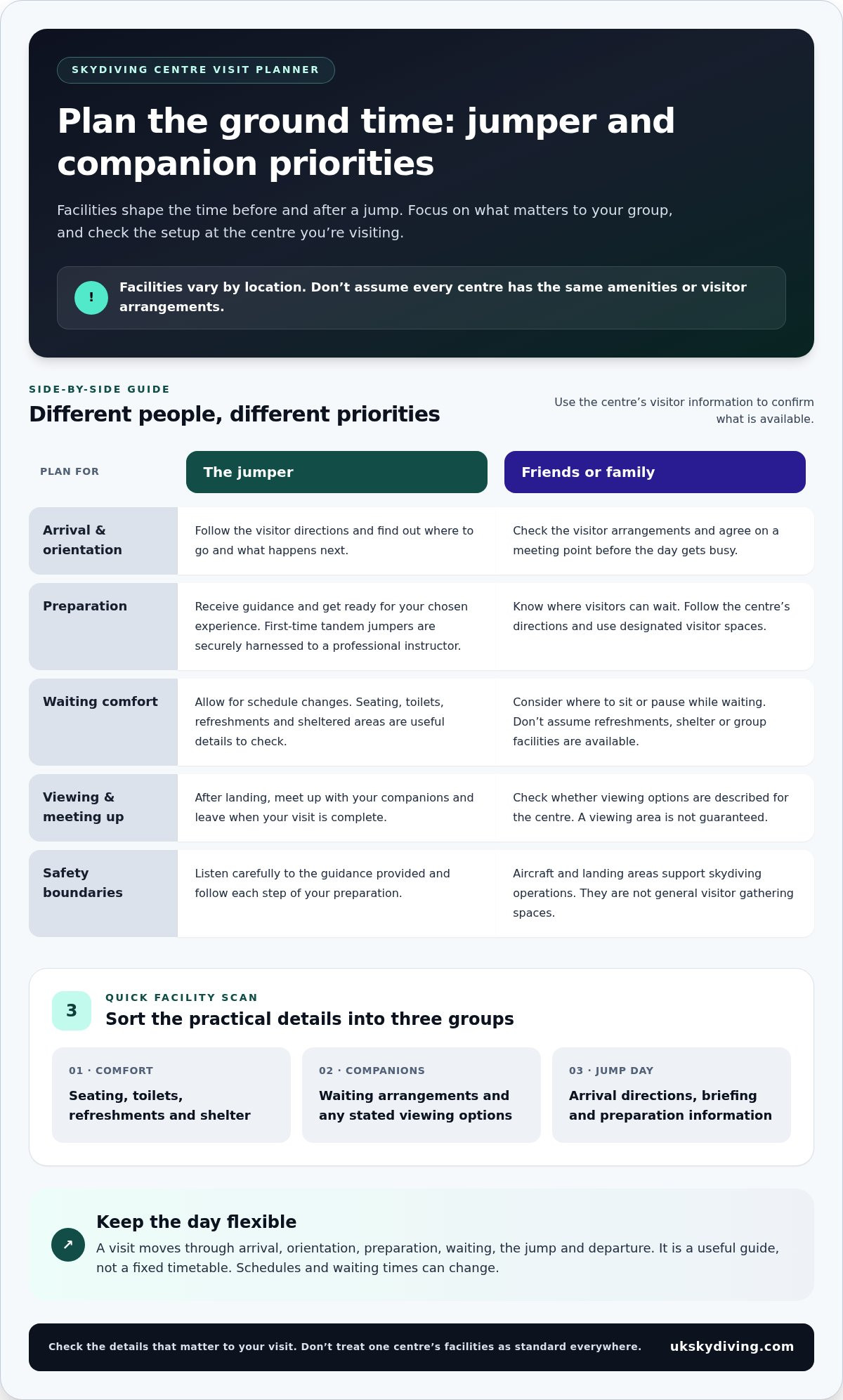
As you plan, sort the practical details into three groups:
- Everyday comfort: seating, toilets, refreshments and shelter.
- Companion arrangements: where visitors can wait and any viewing options described for the centre.
- Jump-day orientation: arrival instructions and information about briefing and preparation.
This simple check helps you focus on what will make your visit easier, without mistaking a feature at one location for a standard facility everywhere.
How facilities support a skydiving day from arrival to jump
A jump day moves through several stages, and knowing what each involves can make the visit easier to follow. You’ll arrive, get oriented, receive guidance and prepare, then wait for the jump and leave when your visit is complete. This is a useful way to think about the day, but it isn’t a fixed timetable. Schedules and waiting times can change, so leave flexibility in your plans.
A typical visit moves from arrival and orientation to preparation, waiting, the jump and departure. Each stage has a different focus:
- Arrival: Get to the centre and follow the visitor directions.
- Orientation: Find out where to go and what happens next.
- Preparation: Receive guidance and get ready for your chosen experience.
- Waiting: Allow for changes to the schedule and make yourself comfortable where possible.
- Jump and departure: Take part, meet up with your companions and leave when your visit is complete.
What should first-time tandem jumpers expect at the centre?
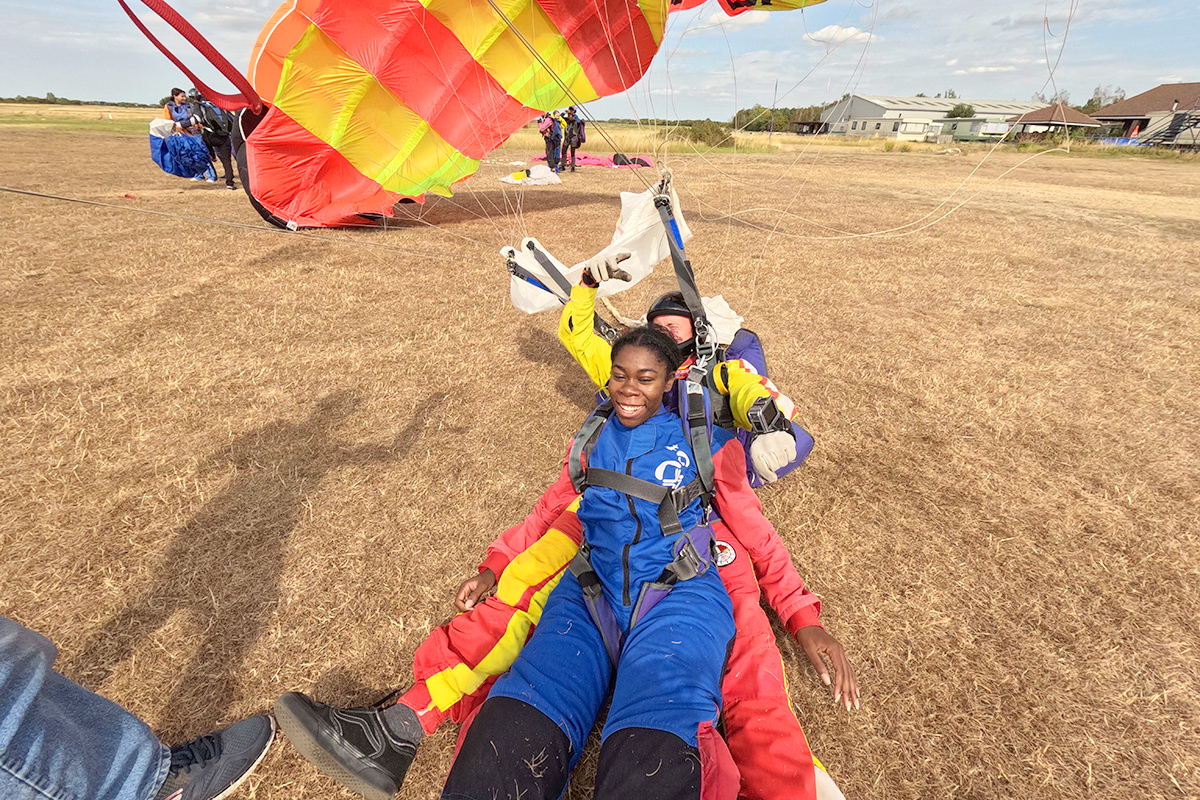
A tandem skydive is an option for people experiencing a jump for the first time. You’re securely harnessed to a professional instructor, who guides you through the experience. You’ll receive guidance before taking part, so listen carefully and follow each step. Focusing on what’s happening now can make the build-up easier to follow, even when you’re excited.
For a fuller picture before you arrive, read this tandem skydiving first-jump guide. Your visit includes more than the time in the air. Preparation and waiting are also part of the day.
Some parts of a drop zone are dedicated to operations rather than general visitor use. The US Federal Aviation Administration’s FAA Advisory Circular on Parachute Operations provides background on parachute operations in the United States. It isn’t a guide to UK requirements, but it illustrates why operational areas and visitor facilities have different purposes.
How can companions and groups plan their time on-site?
If friends or family are coming, include their plans in your preparation. They may spend time waiting, so it helps to understand the visitor arrangements and any viewing options described for the centre. Don’t assume that there will be a viewing area, refreshments or facilities for groups. Plan around the information provided for your visit.
Agree on a meeting point before the day gets busy. Keep your schedule flexible because the time between arrival and the jump can vary. If you’re travelling as a group, decide how you’ll stay in touch and where you’ll meet after the jump. Planning a visit to UK Skydiving in Cambridgeshire gives you the chance to organise these details in advance and focus on the experience when jump day arrives.
How to compare skydiving centre facilities for your needs
Start with your plans, not a long list of amenities. Facilities at a skydiving centre can support comfort, preparation, companions or training, and the details that matter most depend on why you’re visiting. Separate essentials, such as clear arrival instructions, from optional features, such as refreshments or a place to watch. Extras can be useful, but they aren’t universal.
Use the table to decide which details to prioritise. Treat each item as a prompt for planning, not an assumption that a particular centre has a specific facility.
| Your priority | Useful details to look for | What may be optional or location-dependent |
|---|---|---|
| Comfort | Arrival directions, information about waiting and practical guidance for the day. | Refreshments, sheltered seating or other places to spend time between stages. |
| Companions | How visitors should plan their time and where to meet the jumper afterwards. | Viewing areas, group spaces and amenities for people who aren’t jumping. |
| Training | How preparation and instruction are organised for the experience you’ve chosen. | Dedicated training rooms or other specific spaces, which can vary by centre. |
| Journey planning | Location details, arrival guidance and information that helps you plan transport. | On-site overnight options or other facilities that may affect a longer visit. |
Which facility details matter most for a first jump?
For a first tandem jump, prioritise knowing where to go, what preparation involves and how you’ll be guided before taking part. A comfortable place to wait may be useful, but clear explanations and staff guidance are also important parts of understanding the experience. If you want more context about common safety questions, read this honest guide to skydiving safety.
How do needs differ for charity jumps and AFF courses?
Charity jumpers may be coordinating with a sponsored group, so agreeing on arrival plans and where to meet afterwards can help the day run smoothly. If you’re taking an Accelerated Freefall (AFF) course, focus on how the ground training and instructor guidance fit into your preparation. These experiences have different aims, so compare how each is organised rather than concentrating only on visitor comforts.
Facility descriptions alone don’t establish the quality of training or safety. The Parachute Industry Association (PIA) offers wider parachuting-industry context, including a focus on training and safety. Use that as background, and use the information for your chosen experience to understand how the visit is organised.
Rank your priorities before making plans. A first-time jumper may value preparation guidance, a charity group may focus on coordination, and an AFF student may prioritise training. Optional amenities can make a visit more comfortable, but the most useful plan is the one that reflects your reason for being there.
Planning your visit to a Cambridgeshire skydiving centre
UK Skydiving’s base is in March, Cambridgeshire, serving visitors from North London and beyond. Planning ahead can make the day easier to manage, especially if you’re travelling a distance or bringing companions. Think through your journey, arrival arrangements and how you’ll keep personal plans flexible if the schedule changes.
Facilities are one part of planning a skydiving visit. Knowing where you’re going, what your booking involves and how your group will organise itself can help you arrive ready to focus on the experience.
What should you plan before travelling to March?
Start with the information for your chosen experience. Read the visit details and arrival guidance so you know what to expect when you reach the Cambridgeshire base. Then plan your journey to March using reliable travel information for your starting point. The best route and travel time depend on where you’re coming from, particularly if you’re travelling from North London or further afield.
Give yourself time to organise the practical details. Decide how you’ll get to the centre, who is travelling with you and where your companions will meet you. If several people are coming, agree on a simple plan before the day instead of relying on last-minute messages. Keep other commitments flexible too. Weather and operational requirements can affect skydiving schedules, so avoid planning around an assumed finish time.
- Before travelling: Read the booking and arrival information for your experience.
- For transport: Plan the journey to March from your location without assuming a particular route or travel time.
- For companions: Agree how you’ll stay in touch and where you’ll meet after the jump.
- For your wider plans: Leave room for the day’s schedule to change.
How can you prepare for changing conditions?
Skydiving takes place outdoors, so choose clothing that feels suitable for spending time outside while you wait. Don’t expect the day to follow a fixed timetable. Weather can affect skydiving operations, and schedules may change as conditions develop. Keep your plans flexible and follow the guidance provided for your visit. If you’re curious about the sensations of the jump itself, this guide to what skydiving feels like can help you picture the experience.
If you’re travelling from North London or further afield, planning ahead can be straightforward. Organise transport, read your booking details, prepare your companions and leave room in the day for changes. Ready to plan a visit to the March base? Explore UK Skydiving experiences and get set for a day that could become a lasting memory.
Experience skydiving with UK Skydiving in Cambridgeshire
UK Skydiving’s base is in March, Cambridgeshire, and serves people travelling from North London and beyond. Your reason for visiting shapes the experience, whether you’re trying skydiving for the first time, raising money for a cause or starting a structured training course. Knowing your goal also helps you focus on practical details that matter to you, rather than assuming every visitor needs the same things from a centre.
Facilities are just one part of a skydiving experience. Preparation, guidance and the type of jump you choose all shape your day. Here’s how UK Skydiving’s experiences differ.
Choose the skydiving experience that fits your goal
Tandem skydiving is for people experiencing a jump for the first time. You’re securely harnessed to a professional instructor, who guides you through the experience. Charity jumps combine skydiving with fundraising, making the jump part of a shared cause. Accelerated Freefall (AFF) is structured training for people working towards solo skydiving. Each option has a different purpose, so consider what you want from your visit before choosing.
- Want to experience a skydive? A tandem jump is the first-jump option.
- Want to raise funds? A charity jump brings fundraising and skydiving together.
- Want to learn the sport? AFF is a training route towards solo skydiving.
Your choice can also guide your plans. A first-time tandem jumper may want to understand what the experience involves and feel ready to take part. A charity group may need to coordinate its fundraising plans. Someone starting AFF is preparing for structured training with instructor guidance. Match your questions and expectations to the experience you’ve chosen.
Make your first step towards a jump
It’s natural to feel nervous before doing something new and exciting. Take the experience one step at a time and follow the guidance provided so you understand what happens next. If you’d like to capture the memory, UK Skydiving also offers photo and video packages. They’re an optional way to keep a record of your day.
Choosing the right experience gives your visit a clear purpose, whether that’s a first jump, a fundraising challenge or the start of training. You can then plan around the details that suit your goal and travelling companions. If you’re visiting from North London or elsewhere, March is the Cambridgeshire base to plan towards. Ready to take that first step? Explore skydiving experiences with UK Skydiving and start planning your visit.
Turn your plans into a day to remember
Choosing the right facilities at a skydiving centre means thinking about what will help you feel prepared. Before booking, decide which practical details matter most and use them to plan a visit that feels manageable from the moment you set off. Preparing for arrival, waiting and time with your companions leaves more room to focus on the experience you came for.
You don’t need to have every detail figured out before exploring your options. Start by understanding the experience that appeals to you, then make a plan that suits your needs. Your first leap begins with a decision, and it could become a memory you carry for years.
Explore skydiving experiences at UK Skydiving and take your next step towards an unforgettable day.
Frequently Asked Questions
What facilities are usually available at a skydiving centre?
Facilities vary. A centre may have visitor amenities such as toilets, seating and places to get refreshments, as well as spaces for briefings and preparation. Treat facility descriptions as specific to the location rather than as a standard checklist. When planning, consider what would make your visit easier, such as somewhere to wait or clear directions for arriving and getting oriented.
Can friends and family come to a skydiving centre?
Visitor arrangements and viewing options differ between centres. Plan your companions’ day around the visitor information for the location, and let them know that the schedule may change. Agree on a meeting point and how you’ll stay in touch, so everyone knows how to regroup if you’re in different areas during the visit.
Is there somewhere to eat at a skydiving centre?
Food and drink arrangements vary, so don’t assume refreshments are available at every drop zone. Plan meals as part of your visit, especially if you expect to spend a while at the centre or are travelling with companions. Your booking and visit information can help you plan around the arrangements for your day.
What should I bring to a skydiving centre?
Bring your booking information and anything the visit guidance asks you to have with you. Choose comfortable clothing for spending time outdoors, and consider an extra layer if you’d feel more at ease with one. Keep personal belongings manageable so you can focus on the instructions and your experience. If you’re travelling with companions, plan what they’ll need for their time at the centre too.
How long will I spend at a skydiving centre?
There isn’t a fixed visit length that applies to every jump day. The time on site can depend on the experience, the schedule and conditions affecting operations. Leave flexibility in your plans rather than arranging an important commitment immediately afterwards. If you’re travelling with others, make sure they know that the day’s plans may shift too. Use the information for your booking to plan for your visit.
Are facilities the same at every UK skydiving centre?
No, facilities differ between UK centres. One location may have particular places to eat, wait or stay, while another may have a different setup. Focus on the details that affect your plans, such as arrival information, arrangements for companions and amenities that would be useful during a wait. A feature at one drop zone isn’t necessarily available at another.
What skydiving experiences can I do at UK Skydiving in Cambridgeshire?
UK Skydiving offers tandem skydives for beginners, charity jumps, Accelerated Freefall (AFF) courses, and photo and video packages. A tandem jump lets you experience skydiving while securely harnessed to a professional instructor. Charity jumps combine skydiving with fundraising, while AFF is structured training for people working towards solo skydiving. Choose the experience that best matches your reason for visiting.
Categorised in: Blog